


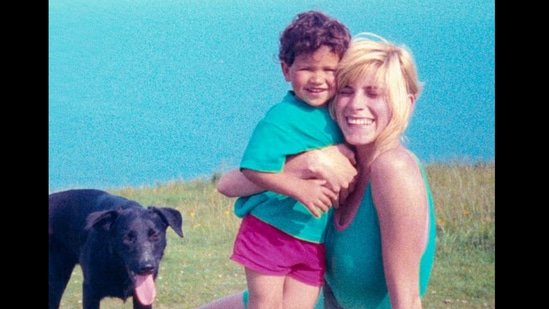
Netflix’s new documentary The Murder of Rachel Nickell has brought renewed attention to the 1992 killing of 23-year-old Rachel Nickell. The documentary revisits how Robert Napper, a serial sex offender and later convicted killer, escaped detection for years while authorities focused on an innocent suspect, Colin Stagg.

Napper, a serial rapist, was free throughout that period and continued to perpetrate horrific crimes until nearly ten years later, when improvements in DNA technology ultimately connected him to Rachel’s murder.
Rachel Nickell was murdered on July 15, 1992, while walking her dog on Wimbledon Common in London with her two-year-old son, Alex. She was sexually assaulted and stabbed 49 times in broad daylight. Alex, who was unharmed physically, became the sole witness to the attack.
Netflix has also released a dramatized series, The Witness, that hinges on Alex and his account of Nickell’s murder investigation.
Read more: The Witness on Netflix: What happened to Rachel Nickell? Real story behind brutal murder
Who is Rachel Nickell’s killer, Robert Napper?
Robert Clive Napper, born in London in 1966, was already linked to a series of violent sexual attacks in southeast London before Rachel Nickell’s murder. Police had been aware of Napper for years before the Wimbledon Common crime, and he was frequently referred to as the “Green Chain Rapist.”
Napper was also convicted of the murder of Samantha Bisset, a single mother, and her four-year-old daughter Jazmine in their Plumstead home. Jazmine had been sexually raped and suffocated, while Samantha had been stabbed and disfigured. Napper murdered the mother and daughter a year after Nickell’s murder in November 1993.
According to accounts revisited in Netflix’s documentary and the new series The Witness, following witness suggestions and accusations from his mother, who allegedly told police that her son had confessed to a rape, investigators got the chance to investigate him more thoroughly. But those leads were not successfully followed up on.
André Hanscombe, Nickell’s partner, said, “The attack Alex [Rachel’s son] witnessed was preventable. Rachel’s death was preventable. Samantha and Jazmine’s deaths were preventable. If the police had done their job properly, he’d have been taken off the street.”
Instead, Colin Stagg, a local man with no forensic connections to the crime, became the focus of the investigation. In an effort to get a confession, police even initiated a controversial undercover “honeytrap” operation. Stagg spent over a year in detention and faced years of public suspicion before the case against him fell apart in court.
Also read: Bring me the Beauties: Shocking true story behind docuseries; all on Eternal Values cult
How did Robert Napper get caught?
Rachel Nickell’s case remained unsolved until advances in DNA testing transformed the investigation.
While police pursued the wrong suspect, Napper remained free, committing further crimes and killing Samantha and Jazmine. Investigators eventually connected fingerprints found at the crime scene to Napper, leading to his arrest.
A search of his home uncovered disturbing evidence in a red tool box that contained knives, a book about strangulation and a map marked with notes about potential locations, including near where Rachel was killed.
Officers in the documentary stated that he regularly referred to himself in the third person and provided strange responses. He was later diagnosed with paranoid schizophrenia and detained in Broadmoor Hospital.
Forensic scientist Dr Angela Gallop’s team re-examined evidence collected from Nickell’s body and identified a male DNA profile. After ruling out Colin Stagg, investigators matched the DNA to Napper, who was already being held at Broadmoor.
He was charged in 2007 and, in December 2008, admitted to manslaughter on the grounds of diminished responsibility due to severe mental illness.
Where is Robert Napper today?
Napper, who is detained under Sections 37 and 41 of the Mental Health Act of 1983, is presently in his late fifties.
Today, Napper remains detained indefinitely at Broadmoor Hospital, a high-security psychiatric facility in Berkshire. He is subject to restrictions under the UK Mental Health Act, making any release highly unlikely.
