



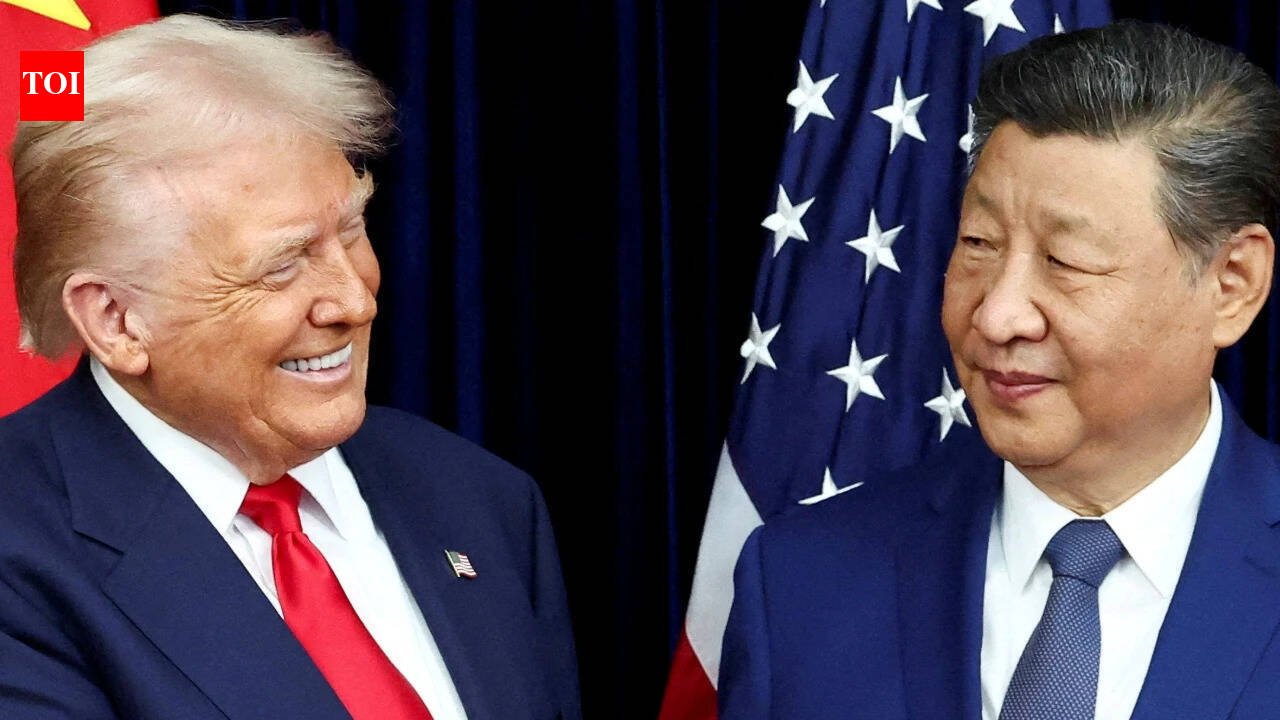
The handshake will last seconds. The bargaining could shape the next phase of the world’s most consequential rivalry.When Donald Trump and Xi Jinping sit down in Washington on September 24, neither man arrives empty-handed. Trump can threaten tariffs, restrict China’s access to American technology and wield the world’s dominant financial system. Xi can retaliate through China’s vast manufacturing base, its grip on rare earths and its economic relationships with countries Washington wants to pressure.Also read: Five reasons India should watch Trump-Xi handshakeThere is a useful historical precedent for the idea that US-China summits are less about friendship than mutual necessity. When Richard Nixon travelled to Beijing in 1972, Washington and Beijing were still formally estranged after more than two decades of hostility. Yet both had strategic reasons to talk. The United States wanted to reshape the Cold War balance against the Soviet Union; China wanted to counter Moscow and break out of its diplomatic isolation. The resulting Shanghai Communiqué did not erase their disagreements, particularly over Taiwan. It created a framework for managing them. Seven years later, Washington and Beijing established formal diplomatic relations.More than half a century later, the question is not who is stronger. It is who has the better cards on the issues that matter most.Here are five cards Trump and Xi bring to the table:
A fragile truce, not a friendship
Trump’s second term began with tariffs on Chinese goods justified partly by concerns over fentanyl trafficking. China retaliated, and the confrontation escalated through 2025 as both sides imposed tariffs and export restrictions. By the autumn, Trump was threatening tariffs as high as 100% on Chinese imports, while Beijing was tightening controls on critical minerals and rare earths.
The May agreement gave Trump several concrete commitments to point to, but the key question is how much of Beijing’s pledge has actually translated into deliveries.
The confrontation eventually produced a truce. At their meeting in Busan in October 2025, Trump and Xi agreed to reduce some tariffs and export restrictions, while China agreed to suspend expanded rare-earth controls and take measures against the export of fentanyl precursor chemicals. The arrangement eased immediate pressure without resolving the underlying disputes.The May 2026 meeting in Beijing produced another round of commitments. The two sides agreed to establish Boards of Trade and Investment, while China committed to buying American agricultural products and 200 Boeing aircraft. But progress since then has been mixed. Chinese purchases of US farm goods have fallen short of the levels promised, the Boeing commitment has yet to materialise fully, and the investment board has moved slowly.That is the backdrop to Washington: Not a new partnership, but a relationship that has stabilised just enough to keep functioning.
Trade: Trump’s tariffs vs Xi’s resilience
Trump’s most obvious card remains the US market.America is still one of the world’s largest consumer economies, and Chinese exporters have a great deal to lose if access to it becomes significantly more expensive. Washington can therefore threaten to raise tariffs again if Beijing fails to deliver on existing commitments.The November deadline gives Trump another lever. The current trade truce is due to expire then, creating a natural point at which tariffs and other restrictions could be revisited.
US imports from China have fallen sharply since 2024, but the trade deficit remains substantial.
Xi’s counter-card is resilience.China has taken a substantial hit to direct trade with the US, but it has not responded by capitulating. Instead, Chinese exporters have increasingly looked to other markets, while Beijing has retained control over several products and supply chains that American industry still needs.Even where China has offered concessions, they have not necessarily amounted to a complete surrender of leverage. Ahead of the summit, Chinese purchases of US soybeans increased, but the scale remained below the levels Washington has been seeking. The May agreement itself illustrates the problem: Beijing promised significant purchases, yet implementation has been slower than the US expected.There is another reason Xi needs stability. China’s economy is facing weak domestic demand and a prolonged property downturn, while Beijing has set a 2026 growth target of 4.5% to 5%. That gives Xi an incentive to prevent another tariff shock.
The tariff battle has repeatedly shifted between escalation and temporary relief.
Trump can make access to America more expensive. Xi has demonstrated that China can absorb considerable pressure without simply giving Washington everything it wants.
Rare earths: China’s chokehold vs America’s alternatives
If trade is Trump’s broadest economic weapon, rare earths may be Xi’s sharpest.China has used this leverage before. In 2010, during a diplomatic dispute with Japan over disputed islands in the East China Sea, Beijing restricted exports of rare earths to Japan. The episode jolted governments and manufacturers that had come to depend heavily on Chinese supplies. Japan responded by building stockpiles, finding alternative suppliers and investing in recycling and processing capacity. The lesson was straightforward: Even when China does not control every mine, its dominance of processing can give Beijing disproportionate influence over the supply chain.China dominates the mining and, particularly, processing of rare earths used in electric vehicles, electronics, renewable-energy equipment and defence systems. Reuters reported this week that China controls up to 70% of global rare-earth mining and more than 85% of refining and production. That gives Beijing influence far beyond the amount of ore actually mined inside China.The timing matters.China’s suspension of its expanded rare-earth export controls is tied to the broader trade truce, which is due for review in November. Washington therefore has an immediate interest in ensuring that Chinese exports continue without disruption. Recent Chinese shipments of rare-earth magnets to the US have already fallen, according to customs data, adding to concerns about supply security.The US and its allies are trying to build alternative mines, processing facilities and supply chains. Washington has also been looking beyond traditional sources of critical minerals, including through efforts to secure supplies from partners.
China’s advantage lies not only in mining rare earths but in processing them.
But diversification takes years.That is the imbalance. Trump can promise that America will become less dependent on China; Xi can influence a supply chain that American manufacturers need today.China does not necessarily have to shut exports completely to exercise leverage. Delays, licensing requirements and uncertainty can be enough to force companies to rethink their supply chains.That makes rare earths more than a trade issue. It is a test of whether the US can turn its long-term strategy of reducing dependence on China into something that gives it bargaining power in the short term.
AI and chips: America’s edge vs China’s catch-up
Technology should, at first glance, be Trump’s strongest card.The US still has major advantages in advanced chip design, leading AI companies and access to the most sophisticated semiconductor ecosystem. Washington can restrict China’s access to advanced computing hardware and the technology needed to manufacture it.But the relationship has become more complicated.The US has recently shown that its chip controls are not necessarily absolute. Washington has allowed some Nvidia H200 chips to be sold to Chinese customers under conditions, while Beijing has simultaneously pushed Chinese companies towards domestic alternatives.
The Trump-Xi Summit still holds promise; the reality is that China and the US need each other more than they care to admit.
An analysis in The Hill
China’s card is its ability to build around restrictions.Huawei has been expanding its Ascend AI-chip ecosystem, while Chinese technology companies are investing heavily in domestic hardware and software. The more capable those alternatives become, the less effective American export controls become as a long-term instrument of pressure.This does not mean China has erased America’s technological advantage. It has not.If China remains dependent on Nvidia and other American technology, Washington has considerable leverage. If Chinese companies can increasingly operate on domestic chips, America’s ability to use technology access as a bargaining tool diminishes.
We’re leading China in AI … And frankly, I want to keep it that way, because whoever wins AI, wins.
Donald Trump on September 16.
That explains why the emerging AI dialogue matters. It is not necessarily evidence that the two countries are moving towards technological cooperation. It may simply be an attempt to prevent competition from becoming completely uncontrolled.For Trump, the challenge is preserving America’s technological lead without creating incentives for China to accelerate the development of alternatives. For Xi, the challenge is reducing dependence on American technology without sacrificing access to the world’s most advanced systems.
Taiwan: America’s security umbrella vs China’s red line
Then there is the card neither side can afford to treat casually.Taiwan sits at the intersection of America’s military strategy in Asia, China’s territorial ambitions and the global semiconductor industry. That makes it both a security issue and an economic one.Also read: $14 billion Taiwan arms deal hangs over Washington talksWashington’s leverage comes from its long-standing security relationship with Taiwan and its position as the island’s principal supplier of advanced weapons. A proposed $14 billion US arms package for Taiwan has become part of the wider political discussion surrounding the summit, while Beijing continues to demand limits on American military support for Taipei. Reuters reported that Xi is expected to press Trump on US arms sales to Taiwan and seek changes in Washington’s approach.Xi’s leverage comes from the fact that Taiwan is one of Beijing’s most important red lines. Chinese officials have repeatedly warned that mishandling the issue could push US-China relations into dangerous territory. Xi made the point directly during his May meeting with Trump, saying mishandling Taiwan could take the relationship to a “dangerous place”.
If it is handled properly, the relationship between the two countries [China and the US] will remain generally stable. If it is not handled well, the two countries will collide or even conflict, pushing the entire Sino-US relationship into a very dangerous situation
Xi Jinping in May 2026
That gives Beijing the ability to raise the stakes on an issue where Washington has to calculate the consequences carefully.Trump, meanwhile, has shown that he views Taiwan as part of the broader US-China bargaining relationship. That creates a difficult balancing act. Any effort to extract concessions from Beijing by putting pressure on Taiwan risks unsettling Taipei and America’s regional partners.The result is an unusually delicate piece of leverage.Washington can arm Taiwan. Beijing can raise the cost of doing so. Neither side can afford to discover where the other’s red line actually lies.
Russia and Iran: America’s sanctions vs China’s relationships
The fifth card is less obvious, but it could reveal how far the rivalry extends beyond bilateral trade.Washington has considerable financial leverage through the dollar, sanctions and access to the US market. Trump can threaten countries and companies that help Russia and Iran evade American restrictions, potentially putting Chinese businesses in the crosshairs.China, however, has spent years developing economic relationships that reduce its exposure to US pressure.Its relationship with Russia is particularly important. China remains a major buyer of Russian energy, while Beijing has also maintained significant economic ties with Iran. That creates another bargaining problem for Washington: How much pressure can it apply to China without damaging the wider economic détente it is trying to preserve?This is where America’s theoretical leverage and its willingness to use it can diverge.Washington may have the ability to impose severe costs on Chinese companies. But doing so against the world’s second-largest economy could invite retaliation and undermine cooperation on the very issues Trump wants to stabilise.The Chinese calculation is different. Beijing can argue that its relationships with Moscow and Tehran are matters of sovereign economic policy and reject what it regards as unilateral American sanctions.That does not mean China is immune to US pressure. It means that Beijing has options.
So who actually holds the cards?
The most revealing part of the Trump-Xi meeting may come after the cameras leave.For all the talk of breakthroughs, handshakes and state dinners, neither leader can afford to give away too much. Trump needs China to make concessions without making the US economy pay too high a price. Xi needs stability without appearing to bend to Washington. That leaves both men with an incentive to claim progress while keeping their most valuable cards in reserve.And that is why the question of who has the leverage cannot be answered by a single summit. The more revealing date comes later.November 10.That is when the current trade truce is due for review, alongside the suspension of China’s expanded rare-earth controls. By then, the grand ceremony of Xi’s Washington visit will be over. What matters will be whether the two governments have found enough common ground to extend the arrangement or whether the pressure points that brought them to the negotiating table in the first place begin to close again.So now the real question is who can afford to play the next card.
