






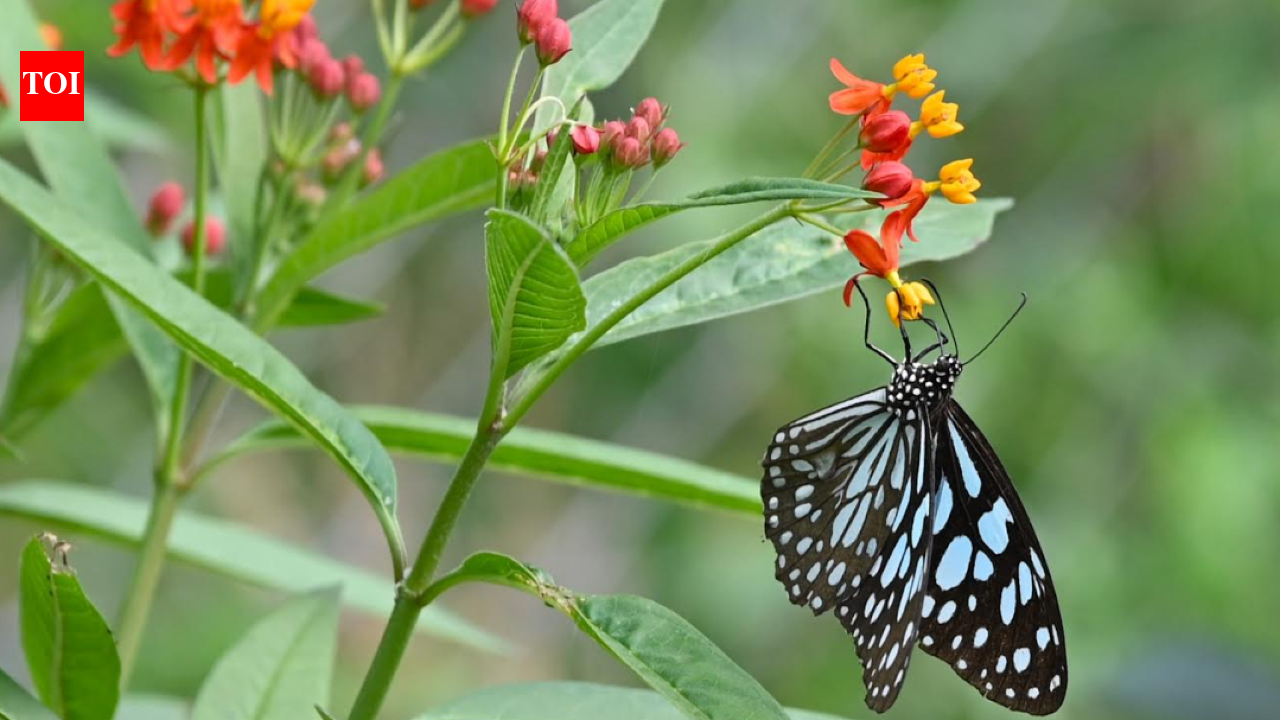
COIMBATORE: Many butterfly parks that have come up in Tamil Nadu over the years depend mostly on exotic and import flora which quickly become invasive and threaten ecological imbalance. But now Coimbatore is seeing a pioneering move for creating pollinator havens featuring only native flowering species. The Tamil Nadu forest department is collaborating with the Centre for Urban Biodiversity Conservation & Education (CUBE) and the Rotary Club to launch “nectar gardens” with native flora, which is a first-of-its-kind endeavour due to its strict policy against imported plant species. Organisers emphasise that the initiative aims at building balanced, self-sustaining micro-ecosystems rather than purely aesthetic, single-purpose attractions.The pilot phase of the initiative has taken root on the grounds of the district forest officer’s (DFO) office in Saibaba Colony. Volunteers and forest officials have cleared empty space on the campus to plant 18 distinct varieties of native perennial flowering plants.“Unlike the annual varieties commonly found in traditional ornamental landscapes, these native perennials require far less intensive maintenance once established. Within six months, the plot will transform into a thriving sanctuary. It will provide a continuous food supply not just for local butterflies, but for a diverse array of bees and other beneficial insects essential for urban pollination,” says Coimbatore district forest officer N Vengatesh Prabhu.He says conventional parks rely heavily on imported exotic plant species to ensure immediate visual appeal. These plants produce large, vibrant flowers that successfully attract adult butterflies, but they present severe ecological drawbacks, he says.“Exotic species are frequently brought in because they look highly attractive and grow rapidly,” says Dr Vinny R Peter, secretary of CUBE. “However, these plants quickly become invasive. They proliferate aggressively, choke out native vegetation and ultimately diminish local plant diversity,” he adds.Furthermore, while bright exotic flowers serve as effective aggregate points where many butterflies gather on a single bloom, they fail to support the broader reproductive and ecological needs of local insects.Over reliance on non-native flora has contributed to a sharp decline in regional plant species, threatening the stability of the local food chain. To reverse this trend, CUBE conducted a year-long ecological study at the Singanallur Lake Butterfly Park, a recognised urban biodiversity conservation zone where researchers have documented more than 200 distinct species of butterflies. Following this research, the organisation identified 60 native plant species perfectly suited for urban nectar gardens. The list includes non-proliferating native varieties of Lantana (native strains that do not spread invasively), Barleria species, Curculigo species and Kleinia species.The long-term vision extends far beyond govt land. The plan is to expand nectar gardens into public parks, corporate spaces, residential apartments and private homes. Citizens with limited space can acquire these native plants directly from the organisation to establish miniature pollinator havens on their balconies or terraces. “By decentralised planting, we hope to stitch together a green corridor across Coimbatore, ensuring that the city’s essential insect populations can migrate and thrive amid urban expansion,” says Vinny Peter.


