






By September 2026, Ladakh is once again preparing to celebrate itself. From 26 to 28 September, Leh is alive and throbbing with a vibrancy that it prepares for the entire year with a bated breath. The resonance of this extravaganza permeates the region’s dance, music, cultural heritage, archery, polo and what you have tucked between the geographical limits of this cold desert, notwithstanding the intra- distances between these limits.
The festival brings together cultural groups from different parts of Ladakh and offers the visitors a razzmatazz of colours, sounds, smells and sights which hitherto were an unchartered territory for most of them. The encapsulation of the entire Himalayan landscape via this unique celebration is unparalleled in the sub-continent.
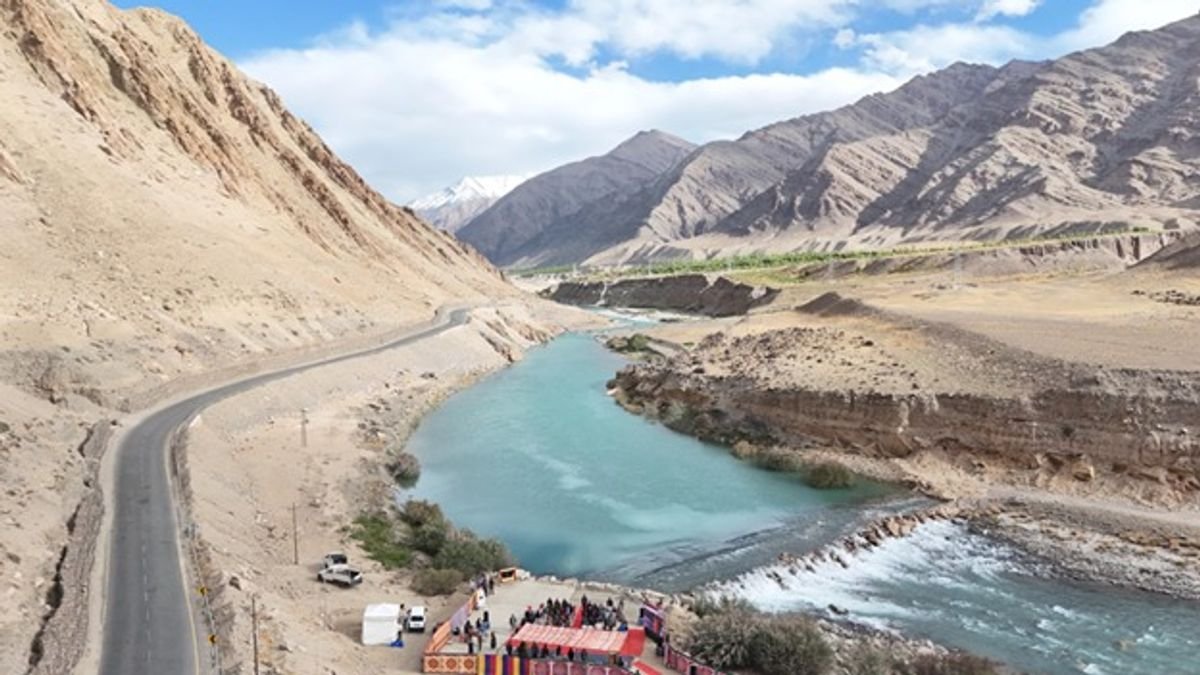
As I read about the festivities taking place in Leh from 26 to 28 September this year, my thoughts raced back exactly thirty years ago – to September 1996. I was then on my return from ‘OP Meghdoot’ after completion of my tenure in the Siachen Glacier, on what the army calls ‘R&R’—Rest & Refit’. The Ladakh of 1996 was a very different place then. And yet strangely, the mountains seem unchanged. The same enormous walls of rocks rise towards an impossibly azure blue skies, the same stark landscape stretches towards the horizon.
The same monasteries cling precariously to the hillsides; prayer flags flutter in the mountain winds, with the people continuing to preserve traditions that have survived generations. But the world around Ladakh has changed dramatically. In 1996, a visit to Ladakh felt like an expedition. In 2026, it has become a destination. And somewhere between those two Ladakhs lies a personal memory that has remained with me for three decades.
From the glacier to the festival
Coming down from Siachen in 1996 was an experience in itself. The glacier is a world apart—immense, austere, and unforgiving. At those altitudes, nature permits no casual relationships. Ice, snow, crevasses, wind and altitude dictate the rhythm of life. One becomes acutely conscious of the value of warmth, food, sleep and the biggest intangible of human existence—the companionship on which rests the entire façade of your tenure. Then came the R&R, and Leh.
I still remember the remarkable contrast. Only a short time ago, my world had been dominated by snow and a deafening silence. Now I found myself surrounded by colour, music, laughter and people dressed in their traditional finery. The ‘Ladakh festival’ seemed almost like an antidote to the surreal world of Siachen—for a human being not to lose his marbles. The glacier represented endurance; the festival, celebration; one was about surviving the elements, the other was about celebrating life. That juxtaposition made the experience particularly branded in my psyche forever.
Thirty years later
Now in September 2026 , Ladakh is celebrating once again. The festival has acquired a much more organised and prominent place in the tourism calendar of not only the UT but India as a whole. The UT administration has included the Ladakh festival among its designated ‘UT-level festivals’ with fixed dates announced for the future year as part of its broader approach to give more traction to the ‘celebrate Ladakh’ calendar. The sole objective being—to promote tourism, with Ladakh’s cultural traditions as the centrality of the whole efforts.
This year’s festival in Leh, from 26 to 28 September, brings together the familiar ingredients of Ladakhi cultural life –traditional music and dance, colourful costumes, local crafts, archery, polo, and cultural performances. And as I think of the crowds gathering in Leh from 26to 28 September, I cannot help wondering what the younger me of September 1996 would have thought of this vastly transformed Ladakh. Perhaps he (self) would have been astonished. Moreover, he would have felt that, beneath all the changes, the soul of Ladakh remains exactly where it was.
The pageantry of Ladakh
One of the most enduring memories of that festival was its colour. Why I am saying this was primarily due to my eyes having got accustomed to the monotony plus shimmering whiteness of Siachen for so long that they felt as if no other colour existed on this planet. Ladakh then and even now is, at first sight, a land of browns, greys , ochre and whites. The mountains appear almost monochromatic. Yet when people come out in their traditional dresses and attire, the landscape suddenly acquires an altogether different hue.
Colourful robes, elaborate headgear, traditional ornaments, musicians, dancers, monks in their ceremonial costumes—and the rhythmic sounds emanating from their age-old instruments weave an atmosphere of surrealistic ambience. Today, photographs and videos can bring much of that spectacle instantly to anyone with a smart phone. In 1996, all of the above seemed a scene straight from a Sci-Fi Movie. One only remembered these scenes thirty years back with a tad of photos taken from the old ‘Yashica Zoomtec -70’ camera now and then. And perhaps that is why the memories have lasted so long.
The masked dancers
Then, as now, Ladakh’s cultural identity was inseparable from its Buddhist heritage. The traditional masked dances—the spectacular ‘Cham’ performances associated with Ladakhi monasteries –possess a visual drama of their own. Monks appear in elaborate masks and costumes, moving to the measured rhythm of traditional music. To an outsider, it may look all theatrics—but it is much more than that. The performances embody religious and philosophical themes and traditionally depict the struggle between the opposing forces and the triumph of good over the evil.
The official district administration of the UT of Ladakh describes this monastery festivals as dance-dramas in which masked monks enact aspects of Buddhist philosophy. Standing there in 1996, I may not have appreciated every layer of symbolism, but appreciate I did the entire spectacle. More importantly, I sensed that I was witnessing something much older than myself. A civilisation was performing its memory.
The Ladakh that was
When I look back at the photographs of Ladakh today, I sometimes find myself comparing them with the Ladakh stored in my memory. Thirty years back, that was not the scenario which is now visible. The roads were far and few; connectivity were contingent to good/fair weather conditions prevailing in the region. The airport at Leh struggled with obsolete cum rudimentary infra, to say the least; with air traffic restricted mostly to military aircrafts.
Now, with the UT having decided to widen the vistas of tourism in this high-altitude wilderness by opening the airbases of Thoise and Kargil to civilian traffic, as never before, an opportunity has sprung up for the locals to latch on. Hotels, cafes, homestays and the ilk have mushroomed, with the digital connectivity too climbing onto this bandwagon of newfound interest of Ladakh tourism.
The Ladakh of 2026
The September of 2026 also reflects a conscious effort to present Ladakh as more than a summer sightseeing destination. The UT administration’s celebration of Ladakh’s calendar has brought a number of important festivals under a more structured tourism framework. The Ladakh festival is one of the nine designated UT-Level festivals intended to strengthen Ladakh’s cultural identity and promote tourism throughout the year.
This festival has been joined by other cultural and sporting events, making the month a spectacular period of extravaganza. The place where, after months of staying perched on some of the most precarious mountains of the world during ‘OP Meghdoot’, I rediscovered the simple pleasure of watching people celebrate life.
(The writer is a retired army officer and a regular scribe of RK. He can be approached at his email: [email protected])


