



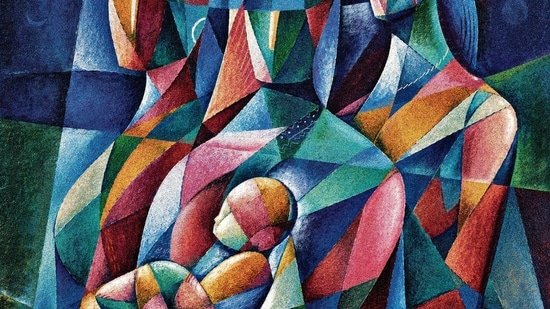
There is so much we are still learning about mothers and babies.
In the third trimester (months 7, 8 and 9), for instance, a woman begins to pass on to her baby the antibodies for every disease or infection she has ever had. As a result, the baby is born with more immunity than the mother had at birth.
That’s just one way the female body protects the foetus.
The role of the tribe soon kicks in.
The first thing a baby learns to do is cry. It learns this the way a baby giraffe learns to totter, and a whale calf learns to surface for air — and for the same reason. Each creature is learning the first thing it will need to do in order to survive.
A giraffe that cannot walk is someone else’s lunch; a whale that cannot rise to the surface, drowns. And a baby knows that its life depends on the fact that someone nearby has bonded with it, and so it cries, as a way to call out to that person to help it survive.
These are the warm, fuzzy details. There are far less fuzzy ones, often involving the bodies of women. And two books released in recent months, by researchers separated by continents but united by theme, are now offering fresh insight into the fuzzy, surprising and just plain dark sides of pregnancy, birthing and motherhood.
Lucy Inglis, 49, a cultural historian, lives in London with her husband and their dog and had suffered through 10 miscarriages when she decided to look outwards and trace the way childbirth has shaped the world. Her book is Born: A History of Childbirth.
Cat Bohannon, 47, an American researcher, lives with her husband and two children in Seattle. Her book, Eve: How the Female Body Drove 200 Million Years of Human Evolution, explores surprising ways in which modern science has neglected the female body, the very crucible that keeps the species alive.
BORN: A HISTORY OF CHILDBIRTH
It was coming to terms with childlessness that prompted Inglis to explore ways in which the experience of childbearing and motherhood had changed, and ways in which it hadn’t.
She found surprises at both ends of her timeline.
Ancient reproductive medicine, for instance, was far more advanced than we give it credit for, she says. Ancient Egypt had a pregnancy test that apparently does work: a woman urinated on barley and wheat seeds, and if both sprouted plants, it meant she was pregnant. Modern research has found the test works “in about 70% of cases,” likely because pregnancy-related hormones can boost seed germination.
At the other end of this continuum, the modern woman rightly wishes to believe she has more agency and control than the generations that came before, Inglis points out. “But this is at least in part a false truth.”
To cite one example, she describes how AI-led programs are currently combining with policy to create data lakes containing female-only information that extends to reproductive choices. “In certain countries, patients and doctors who must submit details following an abortive procedure, for example, will now find that data aggregated into a data lake attached to names, personal details and medical records.”
What does one make of a slide of this sort?
“It is both reassuring and discomfiting to learn that the history and lived reality of women has always been a case of one step forward, two steps back, or two forward and one back,” Inglis says. “The best we can hope for is the latter, and for this, we must keep striving. That’s the lesson I take away from it all.”
EVE: HOW THE FEMALE BODY DROVE… EVOLUTION
Bohannon’s book focuses on how women’s reproductive labour has been erased from history, with the female body relegated to the status of “a background factory or mechanism”.
For a species as weak as ours, with one of the longest gestation periods of any mammal, we have paid shockingly little attention to women’s bodies, she points out. One would think that if a default had to be chosen, it would have been the female, “which really is the fulcrum of evolution”.
Instead, we have centuries of medical research that does not account for how sexual biology affects outcomes — symptoms, treatment, pain levels, recovery, or immunity and sickness itself. In this way, “through the entire research pipeline, women’s health has been compromised at every level. As a result, we still don’t have foundational knowledge across a shocking array of conditions.”
Because of that absence of foundational research, Bohannon argues, “we cannot help but badly serve women patients. We haven’t even figured out how female bodies process pain medications differently, or metabolise certain drugs differently, and these are the bodies that keep the species alive.”
Her book explores the dangers of still treating women as the “side character” in the human story. Like Born, Eve unfolds in surprising ways. Bohannon explores urbanisation, for instance, from the perspective of the female body.
“When people talk about how cities grow, they talk about infrastructure, habitation, food and water supply. They almost never talk about human reproduction, which is really how populations grow,” she says. This is one indication of how the story of the female body is intricately woven into the story of humanity, she adds, and needs to be studied and accounted for as such.
“So, just do the damn research,” Bohannon concludes. “Given that there are likely many ways to keep women healthier, and make pregnancy and childbirth safer and more comfortable, let’s focus attention and resources there, if not for the women, then for the sake of us all.”


