Many, like one of the founding fathers of liberalism, John Stuart Mill, thought that the tyranny of the majority to be feared was often the tyranny of the uneducated majority. This was part of the reason why Mill advocated more political say in public affairs for the educated. A dim view of the less educated was shared by many other early liberal thinkers, like Voltaire and Johann Gottlieb Fichte. It was scarcely conceivable to these liberal thinkers that the educated elite would emerge as a very powerful block in liberal democracy, ruling from the commanding heights of business, government, bureaucracy, and civil society.
Liberalism’s tensions paled in comparison to the agenda of constraining the power of unelected monarchs, authoritarian leaders, and industrialists as rich as Croesus (or at the very least as rich as John Rockefeller). They were nonetheless quite thorny. The main conflicts centered on intolerance and ignorance (though there was also another, intersecting problem of inclusion, to which I return in chapter 5). On the one hand, all ideas could be advocated. On the other, many in the masses advocated intolerance. On the one hand, everybody should have the freedom of expression and choice. On the other, some liberals quickly concluded that only the educated recognized the values of these freedoms and had the expertise to wield them for societal gain, so they should have more say in public decisions than those who were more ignorant.
It was thus understandable for some to turn to social engineering as part of the liberal agenda. By social engineering I mean efforts to shape the values and thoughts of a population—forcefully and without critical thinking or debate. Social engineering can be top-down, led by the state, or spearheaded by powerful constituencies within society. Social engineering isn’t unique to liberalism and liberal activists. Every regime, regardless of its ideological commitments, engages in some amount of it. Almost every political philosopher, going back to (the not-so-liberal) Plato, agreed that the inculcation and cultivation of certain values—and, yes, indoctrination—was essential for the flourishing of the institutions they preferred. Plato, just like Aristotle, favored state-controlled education, lest “ignorance, the root and the stem of every evil,” prevail.
Education, the bedrock of our modern society, was first and foremost a method of indoctrination. Religion may or may not be the “opium of the people,” as Karl Marx opined, but it has always been a way of changing people’s behavior via inculcation of morals and rituals, communal enforcement, and inducement of rewards in the after-death. So was education for the most part (except the after-death bit).
Social engineering is a troublesome issue for the liberal agenda. Most liberals would subscribe, in the abstract, to the view that every school of thought, no matter how intolerant, should be respected and allowed to be aired. Nevertheless, the belief that those committed to liberalism could educate and convince the intolerant to become more open-minded was always in the background.
What would be the limits to such convincing? Is it okay to have an education system that tries to inculcate the values of the liberal elites in everybody? What about civil society, media, and leading corporations pushing for the same values? Is it acceptable to pulverize the norms and traditions of communities that support intolerance? What are the limits to social pressure? Opprobrium? Ostracism?
Put differently, the extent and form of convincing matters, especially for liberalism. Arguing for certain values—and doing so in a way that is consistent with critical thinking and debate and that brings people together under shared moral principles—is very different from social engineering efforts that impose such values without any room for disagreement.
Although dilemmas about tolerating the intolerant and whether people should be turned into “better” free citizens were inherent to liberalism from the get-go, the challenges of adapting to a postindustrial society while liberalism itself was in control were entirely new.
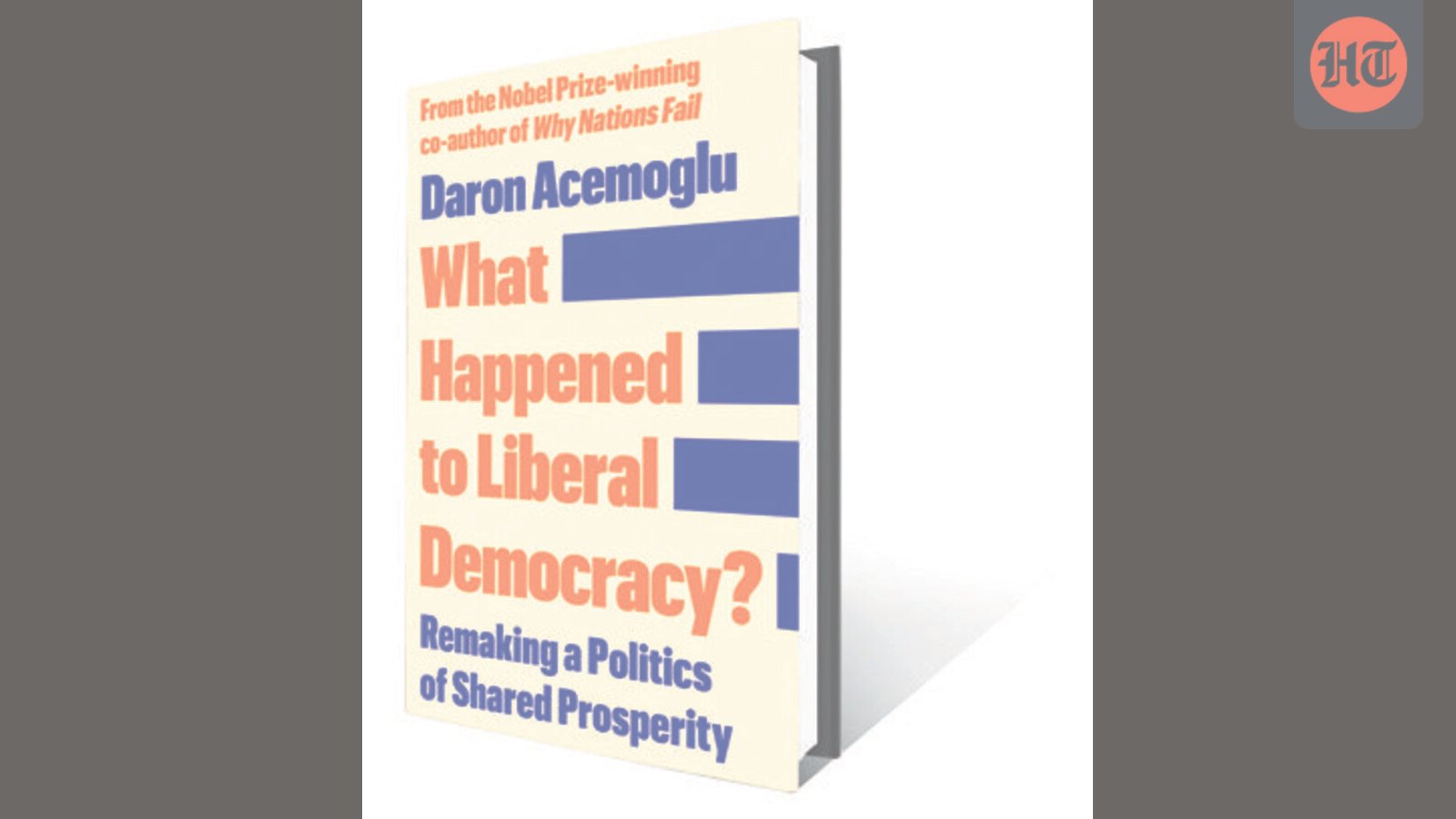
(Excerpted with permission from What Happened to Liberal Democracy? Remaking a Politics of Shared Prosperity by Daron Acemoglu, published by Profile Books; 2026)