



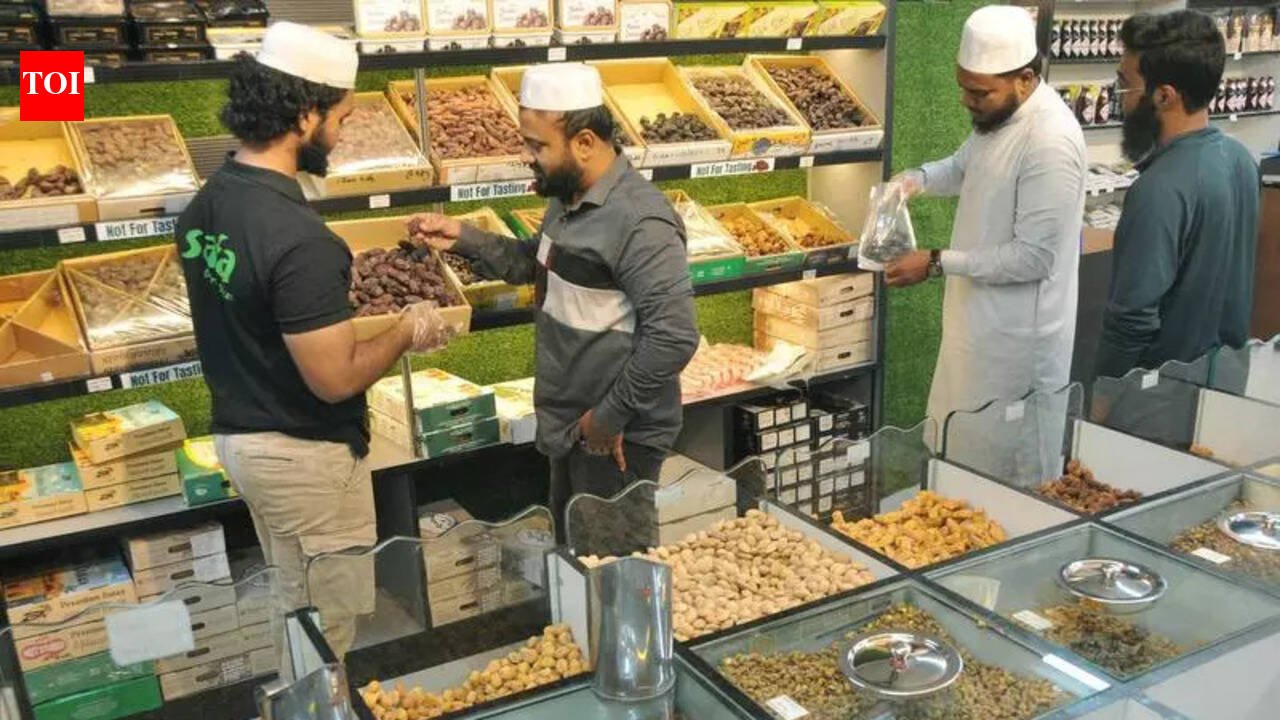
Hyderabad: The repercussions of the West Asia crisis are being felt back home in Hyderabad’s dates and dry fruits stalls. With shipping routes closed and supply from Iran stopped, traders say these products — essentials during Ramzan — may soon be out of stock. Already, traders say the shortage has led to a sharp jump in costs, with dry fruits that were being sold for 1,800 per kg until recently now available for no less than 2,300 per kg. Similarly, there has been a 50% surge in the price of dates from 210 to 350.“Dry fruits are imported only from two countries — Afghanistan and Iran. Figs and pistachios are mainly imported from Iran. These prices will rise further if supply fails to resume,” said Sudeep Bhati, owner of Dry Fruits Hub in Afzalgunj. Aman Khan, owner of a dry fruits shop in Tolichowki, said that lack of access to the Chabahar port in Iran too has contributed to the rising cost of dry fruits.Customers rue the high rates, saying dry fruits have now become a luxury.Parveen Khan, a resident of Tolichowki, said, “No one expected such a situation to arise. At a time when we need dry fruits the most to prepare dishes for Eid, the rates have gone up. Just 200 gm of pistachios has cost me 700.”Another consumer, Reshma Bano from Attapur, said, “I buy dry fruits every Ramzan and Eid, but this time it was different. After hearing the prices, I changed my mind and have cut down on my consumption. They are increasingly becoming a luxury item. Our govt ought to do something about it.” Apart from dry fruits, traders say prices of other commodities too have skyrocketed. “Fruits such as Egyptian oranges, Turkish and Iranian apples, and fruits shipped from European countries have gone up by 70%. The cost of shipping container, which was $1,500, is now $5,500,” said Mohammed Asim Ansari, a wholesale dealer, adding that the cost of figs and pistas has shot up by 40% to 50% in the last few days.Some local shopkeepers, meanwhile, said that though the situation is concerning, they have not increased prices of dates and continue to sell them at previous rates as the present stock was bought before the conflict began. “But that might change if the war continues and the shortage becomes too severe,” said one of them from Banjara Hills.


