



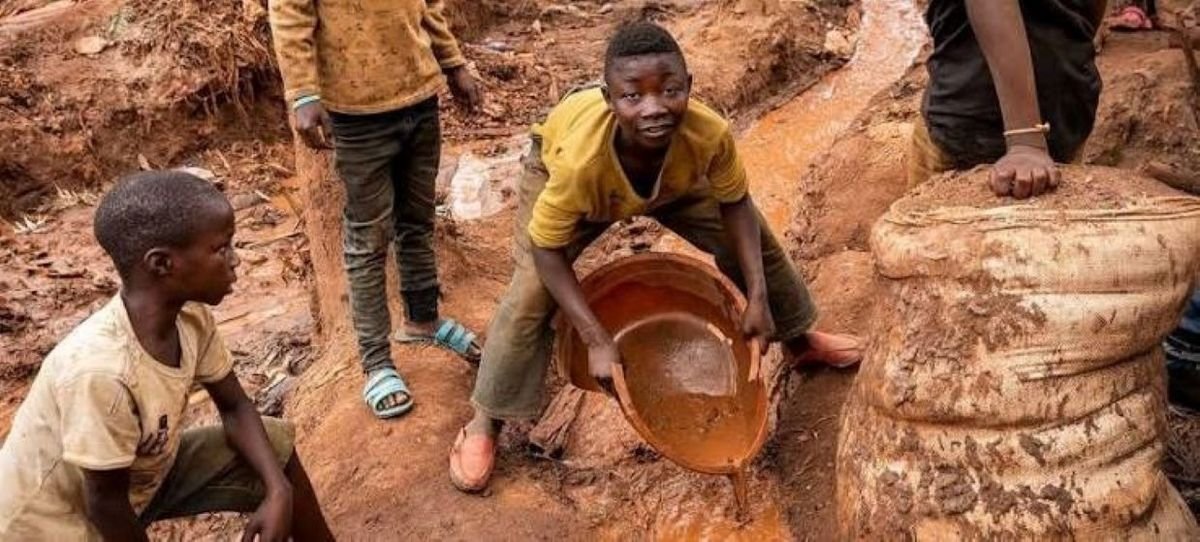
Around 70-80 percent of the human population in Jammu and Kashmir is directly or indirectly linked to the horticulture sector. In effect, this sector forms the backbone of the region’s economy. With autumn in progress, one finds people in the rural areas busy with apple harvesting all around, a very useful activity for strengthening our economy. Granted that doing physical labour to earn a living can be a virtue, but it is hard to swallow the fact that even children in the age bracket of 10-16 would be seen involved in doing the hazardous task, obviously at the cost of their health and education.
Climbing the tricky apple trees and physically carrying the apple boxes through the fields for a kilometre or two to the loading trucks or home has never been a safe activity. These children receive serious injuries at times. A couple of days ago, a child fell off an apple branch and seriously injured his right shoulder; a girl child lost her balance, and the falling apple boxes off her head hit a passing bike. No less serious mishap took place.
Busy with the task of supporting their parents or for some money, these school-going children are being kept out of school. Thus, we are finding very low attendance for classwork. With the annual examination just a few days away, academics are taking a severe beating.
As per the Central Child and Adolescent Labour (Prohibition and Regulation) Act, 1986, employing children under 14 years old remains unlawful in any commercial setup. For adolescents aged 14 to 18, employment is prohibited in hazardous operations.
Several minor children are seen carrying out manual labour in Dhabas, restaurants and railway stations; working as drivers/ conductors and construction workers; pruning apple trees, picking apple fruit, carrying apple boxes and doing other hazardous tasks. Arguably, child labour has become a worldwide challenge, but it cannot be used as a justification for the rising child labour in our society.
As per the United Nations figures, there are an estimated 152 million children in child labour; 72 million among them are in hazardous work. In the least developed countries, more than one in four children (ages 5-17) are engaged in labour seen as detrimental to their health and development. After Africa, Asia and the Pacific rank second highest – 7% of all children and 62 million in total are in child labour.
Together, Asia, Africa and the Pacific regions contribute nine out of ten children in child labour worldwide. The remaining child labour is driven by America (11 million), Europe and Central Asia (6 million) and the Arab states (1 million). In terms of percentage, 5% of children account for child labour in America, 4 % in Europe and Central Asia and 3 % in the Arab states.
According to a report on child labour in J&K, there are more than one lakh child labourers in the UT, most of whom work in the handicraft sector, automobile workshops, brick kilns, in agriculture and as domestic servants in homes; thousands of children here are seen working as vendors, bus conductors and auto drivers.
Arguably, it is the struggling economic scenario which plunges children into the mire of child labour, pushing them away from schooling. However, the safest route to the shores of salvation from an unwelcome socio-economic situation is considered formal education.
Notably, aside from the requirements of good income, parents ascribe the acquisition of skills and uncertainty as to employment avenues to the need for facilities for a better life, as to their preference to let their children earn in place of seeking education. Is it not a moment of concern? Overlooking the education, health and happiness of children for a few rupees does not bode well for any household and society. It is a moral imperative for every parent to look after their children well and protect them from the jaws of illiteracy and ignorance.
Children can undertake safer activities, but forcing or misleading them to shoulder hazardous tasks at the cost of their physical, mental and moral health looks disturbing. It forebodes gloom and doom down the road.
Many child labourers have suffered serious injuries: not long ago, a minor child labourer driving a passenger auto rickshaw met with an accident; he broke his right leg and stayed in bed for about six weeks, losing both education and days of playing (which is essential for his psychological development). Though no child would be happy to work as a labourer, it is the abject financial position and not yet fully grown educational awareness of an area which largely push children towards hard physical labour.
Moreover, the hot and cold nature of the political situation has added to the number of child labourers: thousands of children have lost their parents and guardians over the course of the turmoil and without a breadwinner, these children get trapped in the smithy of child labour aimed at supporting their families.
If the number of child labourers has risen in J&K, the onus is on their parents and the wider society to discourage and combat it in cooperation with the institutions authorised to take care of the disturbing trend.
Stopping minor children from any hazardous work is possible if both society and the state work together. But if they address it separately, we might end up in chaos. The authorities concerned can launch child welfare schemes and rehabilitate child labourers; otherwise, the result can prove devastating. Children in school is a healthy sign for society.
Parents, teachers and preachers can play a key role in stopping child labour and, conversely, put them on the road to sound health and education. Turning a blind eye to child labour is an open invitation to a bleak future. That we can ill afford.
(The author is a teacher by profession and RK columnist and can be reached at: [email protected])
