



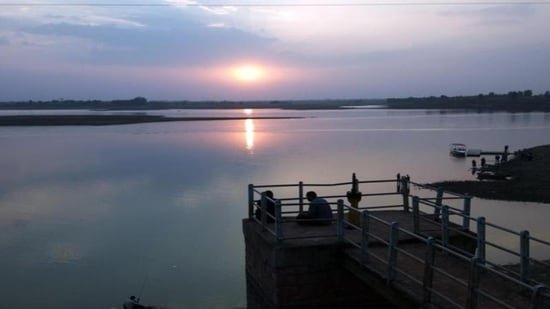
The delayed monsoon and uncertain weather conditions have shifted focus on water storage in the major reservoirs located in various districts of Uttar Pradesh.


Water from the reservoirs is used for irrigation and to meet drinking water demand in various regions of the state particularly in the water-scarce districts located in the Bundelkhand and Vindhyan regions.
With the start of the kharif (paddy sowing) season in June, farmers will require water for irrigation. The delay in the monsoon will automatically increase pressure on the reservoirs to meet irrigation demand.
According to data from the irrigation department, last year in June, the availability of water in the 71 major reservoirs from which the water is used for the irrigation and drinking purpose was 3,037 Million Cubic Meters (MCM)- 27.90%. On June 18 this year, the availability of water in the reservoirs was 4,741 MCM ( 43.50%).
Engineer-in-chief and head of the irrigation department, Sandeep Kumar said, adequate water is available in the reservoirs of the state for irrigation and drinking. In comparison to the previous year there is 15.60%- 1,704 MCM more water in the reservoirs.
Among the 71 reservoirs, water from 43 is used for irrigation and drinking, water from 23 reservoirs is used for irrigation during kharif (paddy sowing) season, water from two reservoirs is reserved for irrigation during the Rabi (wheat sowing) season. Two reservoirs are marked for hydro-power generation and water of one reservoir is exclusively reserved for drinking water supply, he said.
A micro analysis of the data regarding the availability of water in the reservoirs indicates that 22 are filled 20% of the capacity, 15 reservoirs are filled 20% to 40% of the capacity and 34 reservoirs are filled above 40% capacity. The increasing temperature and delayed Monsoon might decrease the water in the reservoirs leading to crisis during the paddy sowing season.


