



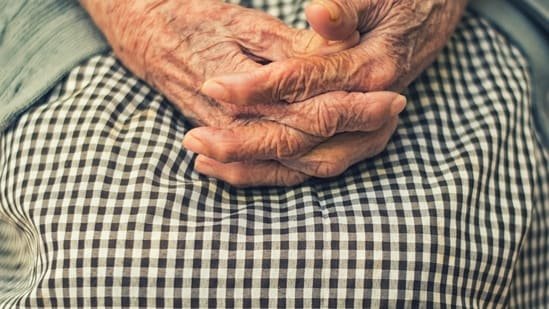
At the age of 72, Shruthi lives alone in Mysuru. Her son works in Bengaluru and her daughter is working in Singapore. She walks to her local temple in the morning, takes part in Carnatic music class twice weekly, makes online payments for her bills and video calls her grandchildren each evening. She says, “I think people tell me that I am lonely, but I am the most independent I’ve ever been.” The tale of Shruthi is not a rare one any more in India.
A subtle, quiet social shift is happening in cities like Bengaluru, Chennai, Kochi, Mangaluru and Hyderabad. Prolonged separation from children is a more common occurrence in older people, not just because families are breaking up, but because migration, longer life expectancy, urbanization and new expectations for ageing have changed family life. Neglect and family breakdown were once assumed if elderly parents were separated from their children, but this is a common characteristic of the past in urban India.
Indian society had only one cultural perspective on old age – parents’ age in the joint family system – for generations. Emotional security, care giving and moral duty were related to co-residence. The communal life in the family was so intertwined in South and North India that togetherness meant stability and respect. However, this is changing with every passing day because of the changing demography.
India is growing older much faster than it is aware. The United Nations Population Fund (UNFPA) India Ageing Report 2023 states that India’s geriatric population is set to swell to nearly 20% of the total population by 2050 and the elderly population of more than 80 years will increase by nearly 279% between 2022 and 2050. The report also highlights that there is already a higher percentage of elderly people in the southern states as compared to the national average.
Kerala and Tamil Nadu today are one of the oldest states in India demographically and Karnataka is experiencing rapid ageing in addition to great migration of young people towards the technology industry in Bengaluru. Youth continue to wander from city to city and country to country for schooling and job opportunities, leaving their families spread around. This leads to the formation of the modified extended families, in the words of sociologists, which is an emotionally connected family unit, but not physically.
But public discourse on ageing in India has been caught between two extremes: either glorifying the joint family or being afraid of getting abandoned by one’s old-age relatives. The language of crisis is the most common way that older adults living alone are presented in the news. The issues of neglect, financial insecurity and elderly abuse are significant but not exhaustive of the multi-faceted nature of growing old in modern India. Today, a lot of seniors are making the decision to be independent.
Former teachers, public-sector workers, bank officers, and professionals in Indian cities have a pension, savings, social networks, and access to digital literacy, which enables them to live independently for much longer than prior generations. Living apart from children offers a routine for some, their autonomy and emotional comfort, not isolation.
The research indicates that changes in the living arrangements of the elderly have an impact on their well-being, albeit in not straightforward a manner. Those older adults who resided alone with a spouse were more likely to rate their life satisfaction as higher than those living in less satisfactory co-residential relationships. Though the traditional joint families were definitely secure, they had its own set of tensions — privacy issues, intra-generational conflicts and emotional neediness.
Technology is also transforming how care is delivered – quietly. Earlier generations were more reliant on co-residential family structures, but this has been eliminated through telemedicine, digital payments, emergency response apps and video calling. Emotional care today can be shared across cities and continents – via screens, regular visits and communication. This trend is also reflected in the growth of senior living communities in Coimbatore, Bengaluru and Chennai. Retirement homes are no longer the image of abandonment; many of the newer communities for seniors are based on an active ageing approach, health-related services, recreation and social participation. In urban India, it’s been reported that seniors are opting for assisted living not only because of medical needs but also to overcome loneliness and isolation, thereby relishing the social aspect of living. This shift also continues to be highly uneven.
Whilst pensions, property, and digital access are important for middle class urban residents, poverty is a significant economic and emotional disadvantage for less affluent elderly people, particularly for widowed women and rural elderly. As per UNFPA report, over 40% of elderly people in India are in the poorest wealth quintile and almost one fifth is without any income. Ageing in India, like aging in other parts of the world, is also increasingly feminisd and economically unequal.
Access to health services is another with it. The LASI results have been consistently showing an increase of both chronic diseases and disability along with undiagnosed diseases in the elderly population of India. Recent studies have shown that there is considerable lack of awareness about diabetes, anemia and ageing-related diseases among elderly people, especially in the southern states. That is why we need to have a wider discussion regarding elder care in India than just family arrangements.
We still think that families, especially the women in families, will carry the responsibility of taking care of families, when planning our cities. Public facilities for old age are still inadequate: geriatric health care services are underdeveloped, public transport is difficult to use, there is a lack of public seating and community support centres. These gaps will become more evident as India becomes a more elderly population.
But countries like Japan and Sweden have realised that the family unit is not enough for handling ageing societies, and it is imperative to have a community-based approach. India doesn’t have to emulate western models but can adopt the lessons that are applicable to its social realities. South India, having relatively better health care figures and growing elderly population might be a testing ground for neighborhood elder care networks, senior activity centres, assisted living policies and digital inclusion programmes.
One is the need for digital inclusion, which is especially compelling. According to a recent survey conducted in the urban population of Delhi, 86% of the elderly citizens were found to have low digital literacy level, which is affecting their access to health care, communication and welfare measures. Technological exclusion could be one of the emerging inequalities in public services for ageing in India as they are increasingly going online. Hence cultural narratives also need to shift to coincide with policy.
Do not presume that parents and children separated will agree to be judged morally. Sometimes, being close means there’s care; sometimes, being close means there’s better relationships and health. Whilst the issue of loneliness in older people is indeed significant, it is not just about how alone someone is, it’s about how lonely they feel. Emotional neglect can happen in a cramped home and significant connection can endure distance. The issue is not so much whether or not older people reside with their children. It’s whether they live in security, companionship, autonomy and respect.
A single sentiment — that of the joint family — will not be enough to sustain India’s ageing future. This will rely on the ability of society to establish mechanisms that bring older people to stay in the community in a connected, valued and safe way, whatever their living situation is. That future has already started unobtrusively in many households in urban India.
(The views expressed are personal)
This article is authored by Anuradha PS, professor, Department of Commerce, Christ University, Karnataka.


