



The fight is being waged on the same field — the state’s 294 assembly seats — but the playing conditions this time are unlike anything seen before. A confluence of three developments — the Special Intensive Revision (SIR) of electoral rolls, a war whose epicentre lies 3,700 km away in Tehran, and an eleventh-hour change at Raj Bhavan — has turned the political contest into one that analysts are struggling to decode.
The All India Trinamool Congress swept to a supermajority in 2021, two election cycles after it ended the 34-year rule of the Left Front. This time, the Bharatiya Janata Party is attempting to replicate the upheaval the Trinamool engineered 15 years ago. But the party may have been caught off guard by a factor few anticipated — a spike in LPG prices, affecting everything from auto-rickshaw fuel to household cooking gas.
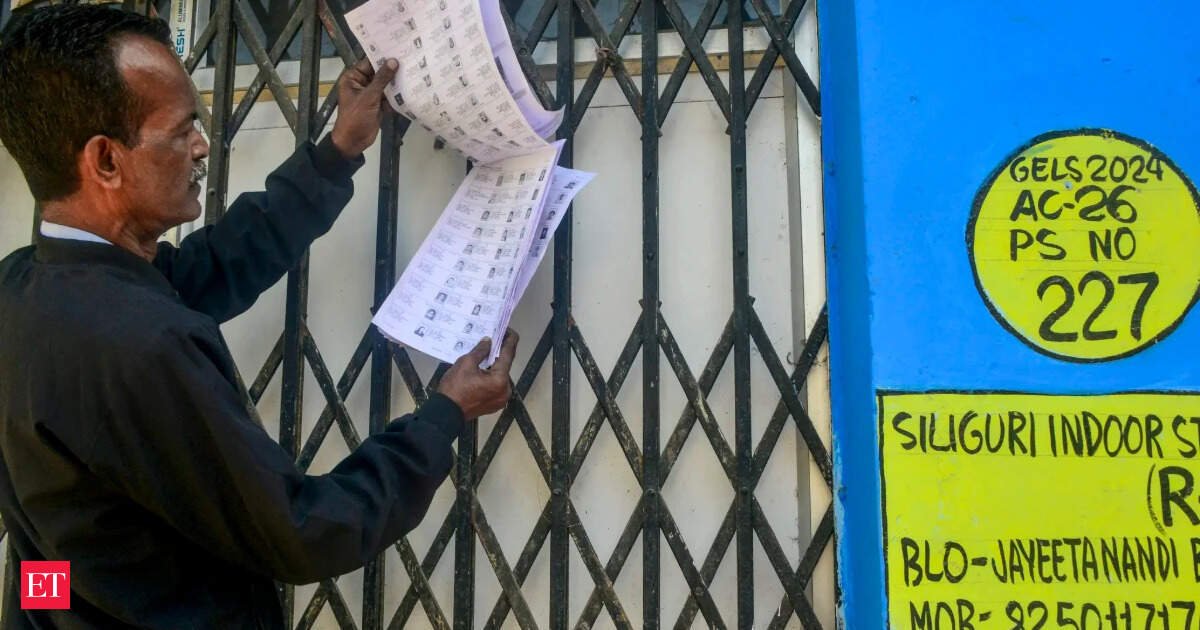
The biggest shift in the electoral “playing conditions”, however, has been brought about by the Special Intensive Revision of the voter rolls.
The exercise could work in favour of the BJP in some constituencies in Kolkata and its surrounding areas, potentially removing sections of the electorate seen as aligned with the Trinamool. At the same time, it could hurt the party in districts along the India-Bangladesh border such as North 24 Parganas and Nadia, where communities like the Matuas and Rajbangshis may be disproportionately affected by deletions.
Trinamool chief Mamata Banerjee sensed the potential risks early and strongly opposed both the timing of the exercise and its two-month deadline, which she described as unrealistic. The process has already overshot its own schedule, and in many neighbourhoods families say they have been caught up in the ever-changing documentation requirements.
Banerjee also made a high-profile appearance in the Supreme Court of India as the “people’s petitioner”, projecting an image of continuing political combativeness even as the battleground shifted from the streets of Kolkata to a courtroom in New Delhi.While the political fight over SIR continues, another unexpected variable has emerged: the global ripple effects of the conflict involving Donald Trump’s United States and Iran.
Across India — including West Bengal — long queues have formed at fuel stations and LPG distribution centres as prices and supply concerns ripple through markets. Unlike most other states, however, Bengal’s voters will head to the polls in just a few weeks.
For Banerjee, whose political instincts are widely regarded as formidable in the state, the frustration visible in these queues may offer a chance to blunt other factors that could otherwise benefit the BJP.
Yet the Trinamool’s own campaign machinery has been unsettled by another late twist: a change of governor shortly before the election announcement. The new appointee, R. N. Ravi, arrives with a reputation forged during his tenure in Tamil Nadu and is seen by some Trinamool strategists as a more formidable presence than his predecessor C. V. Ananda Bose, whom the party believed it had managed to “neutralised” to an extent.
Beyond these headline developments, several domestic factors also shape the electoral landscape.
The Trinamool government has seen a surge of support following the rollout of the Yuva Sathi scheme — a monthly stipend for Class X passouts seeking employment — and an enhanced allocation for the Lakshmir Bhandar scheme for women. More than 8.1 million people, representing over 11% of Bengal’s electorate, have lined up to enrol in the Yuva Sathi programme.
Banerjee also made two politically significant administrative decisions just minutes before the Election Commission of India announced the poll schedule. The state agreed to pay enhanced dearness allowance to government employees in line with a Supreme Court order and approved a 33% increase in monthly honorariums for Hindu priests and Muslim muezzins.
For the BJP, however, the campaign still offers openings.
The party hopes to capitalise on public anger over several governance controversies, most notably the brutal rape and murder of a young medical intern at R. G. Kar Medical College and Hospital. It has also highlighted a series of court rulings related to alleged corruption in recruitment processes in the education and municipal affairs departments.
Prime Minister Narendra Modi and home minister Amit Shah have repeatedly accused the Trinamool government of pursuing “Muslim-appeasement politics”, making it a central plank of the BJP’s campaign.
All these issues will shape voter choices. Yet many observers believe they have been overshadowed by the more recent developments — the voter roll revision and the economic impact of the war.
Together with the last-minute change at Raj Bhavan, these factors have transformed what is typically a five-year political Test match into something closer to a high-tempo T20 contest — unpredictable, fast-moving and potentially deceptive in its final scoreline.


