



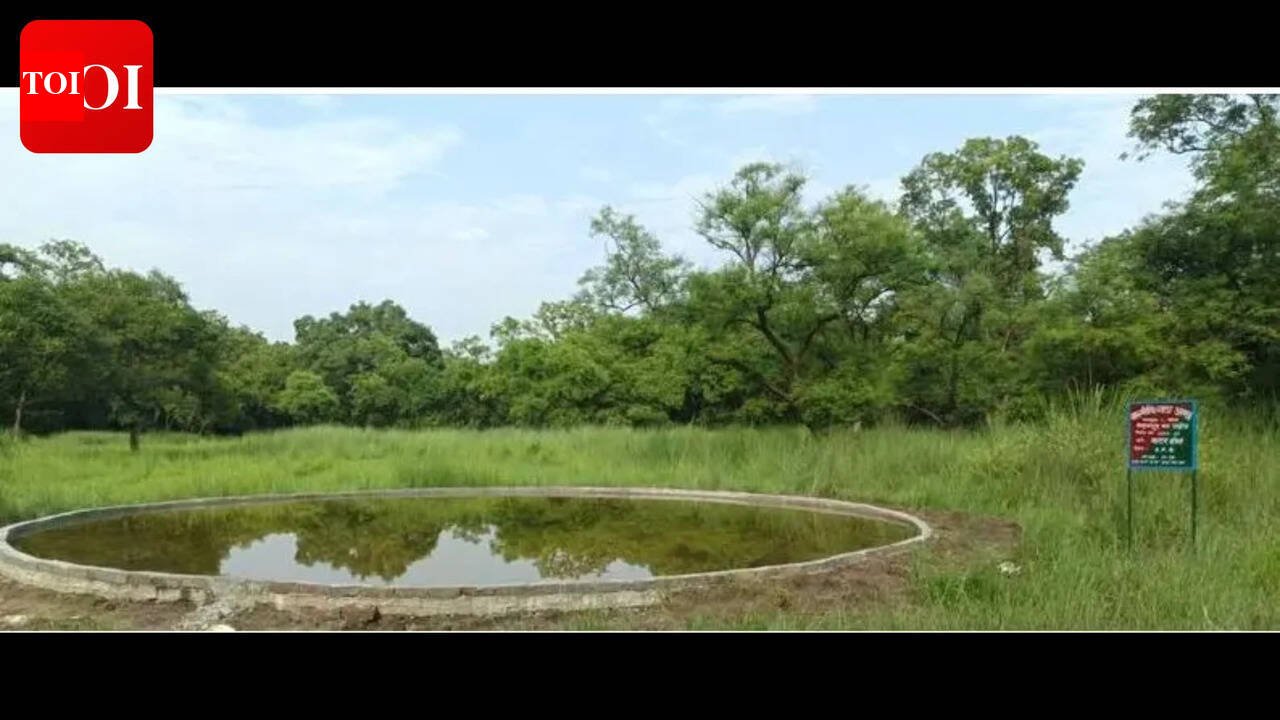
Bettiah: With temperatures soaring, forest officials in the Valmiki Tiger Reserve (VTR) in West Champaran have stepped up summer preparedness measures by ensuring an uninterrupted water supply at 33 artificial waterholes across the reserve to prevent wildlife distress and reduce the risk of human-animal conflict.According to forest officials, nine waterholes have been developed in the Valmikinagar range, 19 in the Gonauli range and five in the Madanpur forest area. These water sources are being replenished regularly to ensure uninterrupted availability during peak summer months, when natural water bodies begin to dry up.Valmikinagar range officer Satyam Kumar said the primary objective of creating artificial waterholes is to ensure that wild animals have sufficient access to water and remain safe during extreme summer heat. “The number of waterholes is being gradually increased so that water is available in every part of the forest. Our teams are also carrying out continuous monitoring to ensure that none of the water sources run dry,” he added.He said that as natural water sources shrink during summer, wild animals are often forced to roam long distances in search of water and food. In many cases, they move towards forest fringes, rivers, streams and other water bodies near human settlements, increasing the risk of human-animal conflict.By ensuring adequate water availability within the forest, the authorities aim to minimise such encounters and keep wildlife within its natural habitat.In addition to water management, the reserve has undertaken large-scale grassland development across nearly 2,400 acres. These grasslands provide a sustainable food base for herbivores such as deer, chital and nilgai, which play a key role in maintaining the forest’s ecological balance.A healthy herbivore population directly supports carnivores like tigers and leopards by ensuring the availability of natural prey. Experts noted that when both water and food are readily available within the forest, animals are far less likely to stray outside, reducing the chances of conflict with local communities.Forest officials said the combined focus on water conservation and habitat development is proving vital for sustaining biodiversity. These proactive measures not only help wildlife cope with harsh climatic conditions but also play a crucial role in protecting surrounding villages from potential encounters with wild animals.


