



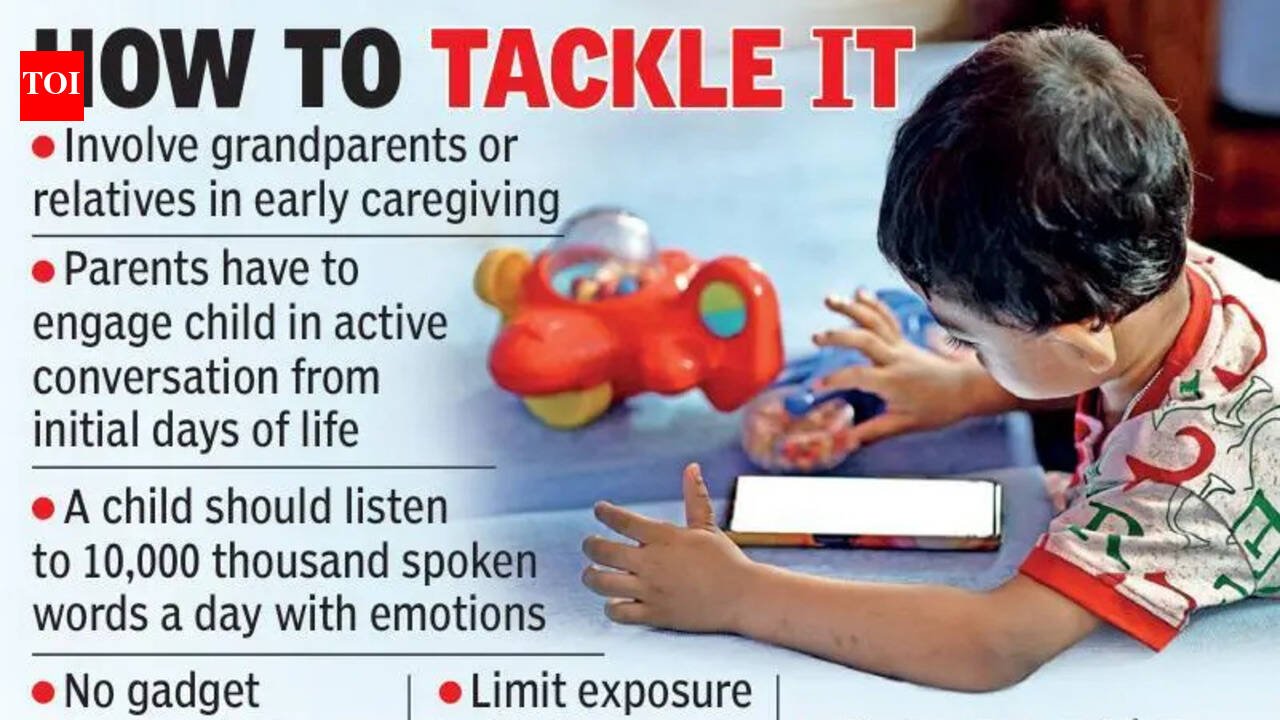
HYDERABAD: Doctors across Hyderabad have raised an alarm over a sharp increase in cases of what they describe as ‘virtual autism’ among children, largely linked to excessive screen exposure and other environmental factors. World Autism Day is observed annually on April 2.Paediatricians and neurologists say hospitals are now witnessing three to four times more such cases, particularly among younger children. These children often show symptoms such as delayed speech, poor eye contact, reduced social interaction, and behavioural changes—mimicking autism spectrum disorder (ASD), but triggered by environmental factors rather than genetics.
“The exact cause of autism is still not fully understood. While genetics play a role, environmental factors such as excessive screen time are increasingly being seen as major contributors,” said Dr Lokesh Lingappa, neurologist, Yashoda Hospital.He cited a recent case of a three-year-old boy from Kacheguda who developed symptoms after prolonged isolation and screen exposure. With both parents working and minimal social interaction, the child reportedly spent long hours on gadgets. “There are cases where children use screens for eight or more hours a day. This affects brain development and neural connections,” he said, adding that such cases have risen significantly after the Covid-19 pandemic.Doctors also pointed to changing family structures as a contributing factor. “With nuclear families and dual-income households, children are increasingly dependent on screens for engagement,” said Dr Dinesh Kumar, neurologist, Gandhi Hospital. “Earlier, joint families offered natural social environments. Now, emotional bonding and interaction are declining.”According to Dr Hemnath S, neurologist at Osmania General Hospital (OGH), constant digital exposure is affecting children’s ability to think independently. “They are being fed complete information without imagination or exploration, which disrupts natural brain development and impacts communication and decision-making skills,” he said.However, experts stress that, unlike ASD, ‘virtual autism’ is potentially reversible with early intervention. Reducing screen time alone is not sufficient; therapy, counselling, and structured social interaction are crucial.Dr Pratima Giri, consultant developmental paediatrician at Rainbow Children’s Hospitals, noted that early interventions such as behavioural therapy, communication training, and sensory integration can improve outcomes. She cautioned against unproven treatments, adding that regulatory bodies have discouraged therapies like stem cell treatment for autism due to a lack of evidence. With rising cases, experts emphasise the need for awareness, timely intervention, and a balanced environment to safeguard children’s developmental health.


