



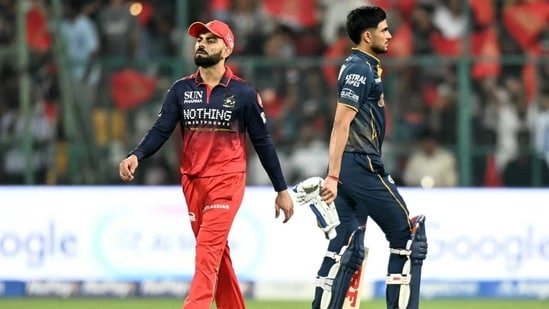
In the end, there remained just two — the top two. In 11 of the IPL‘s previous 19 seasons, the top two teams from the league stage have met in the final. On the previous 10 occasions, the top-placed side emerged victorious six times. So, will it be a second consecutive title for the Royal Challengers Bengaluru?
The margins have been at a bare minimum, yet favouring RCB. They hold a narrow 5-4 edge over Gujarat Titans in head-to-head meetings. And despite sharing a win each in the league stage this season, RCB won the more crucial encounter to go 2-1 up in 2026, beating Gujarat in Qualifier 1. The victory not only booked them a direct spot in the final but also gave them a valuable rest period, unlike Gujarat, who had to travel to Chandigarh and navigate the pressure of Qualifier 2.
Yet, the Titans will fancy their chances in the final, with the contest being played at their home ground, the Narendra Modi Stadium in Ahmedabad. Their only win over the defending champions this season came at the same venue. Gujarat have, in fact, won each of their last four matches in Ahmedabad.
ALSO READ: Battles within a battle: IPL 2026 Orange and Purple Caps to be won on the last day of the season
Where will the RCB vs GT IPL 2026 final be decided?
The Qualifier 1 playbook
Gujarat’s run to the final has been built on the work of Kagiso Rabada and Mohammed Siraj in the powerplay. Their decision to go all-in with the new ball worked wonders in the second half of the season and played a key role in the revival. Together, they have a strike rate of 16 this season — the best among all teams — at an economy of 9.49. Those numbers improve further in Ahmedabad, where they average a wicket every 13.5 deliveries while conceding only 8.72 runs per over.
But Gujarat were smashed for 76 runs in the powerplay in Qualifier 1 in Dharamsala. It was the second-highest score against them in that phase this season after Rajasthan Royals’ 78/3 in Jaipur. Rabada and Siraj conceded 64 runs in five overs between them for just one wicket.
What changed was RCB’s approach. Much of Gujarat’s success with the new ball has come from their discipline with hard, top-of-off lengths. But the RCB top order disrupted those plans by constantly shuffling around the crease. Their aggression eventually forced Shubman Gill to abandon Gujarat’s preferred strategy and bring in Jason Holder in the powerplay.
The Holder factor
Besides Siraj and Rabada, Gujarat have two more fast bowlers who have excelled in the middle overs. Both Prasidh Krishna and Jason Holder have picked up 13 wickets each between overs 7 and 16. But Holder has arguably been more effective, given his economy rate of just 7.63. His success has come through a combination of disciplined lengths and well-directed short balls. The latter alone have fetched him seven wickets this season. While Virat Kohli versus Rabada has been billed as the contest to watch, the RCB icon has fallen to Holder twice this season, both times to short-pitched deliveries. What makes the battle fascinating is that Kohli has also been more aggressive against shorter balls this year, scoring at a strike rate of 156 despite four dismissals.
Can Bhuvneshwar stop Gill?
Ahmedabad has been Gill’s happiest hunting ground across formats and competitions. Of his 6,134 T20 runs, 1,500 have come at this venue at an average of 53.57 and a strike rate of 165.56 — both comfortably above his career numbers. The Gujarat captain also enters the final on the back of a century in Qualifier 2 against Rajasthan, another reminder of his consistency this season. But Bhuvneshwar Kumar could prove to be the stumbling block. The veteran seamer has dismissed Gill six times in 79 balls while conceding only 80 runs. Two of those dismissals came this season, with Gill managing just 15 runs off 14 deliveries. Bhuvneshwar has also dismissed Jos Buttler twice this season, conceding only 17 runs in 15 balls. He has even accounted for Sai Sudharsan once — a notable record considering the left-hander heads into the final with eight fifty-plus scores in his last 10 innings.
Chasing the preferred option in Ahmedabad?
Ahmedabad has largely favoured chasing teams, with sides batting second winning 16 of the last 24 IPL and T20I matches at the venue. Four of the last six finals here have also gone the way of the chasing side. The title clash will be played on the same surface that hosted last year’s final. It has already been used twice this season, with both matches won by the chasing team, including one where RCB ended up on the losing side. The numbers suggest that batting second remains the preferred route in Ahmedabad. Whether that trend continues on the biggest night of the season could ultimately shape the destination of the trophy.


