


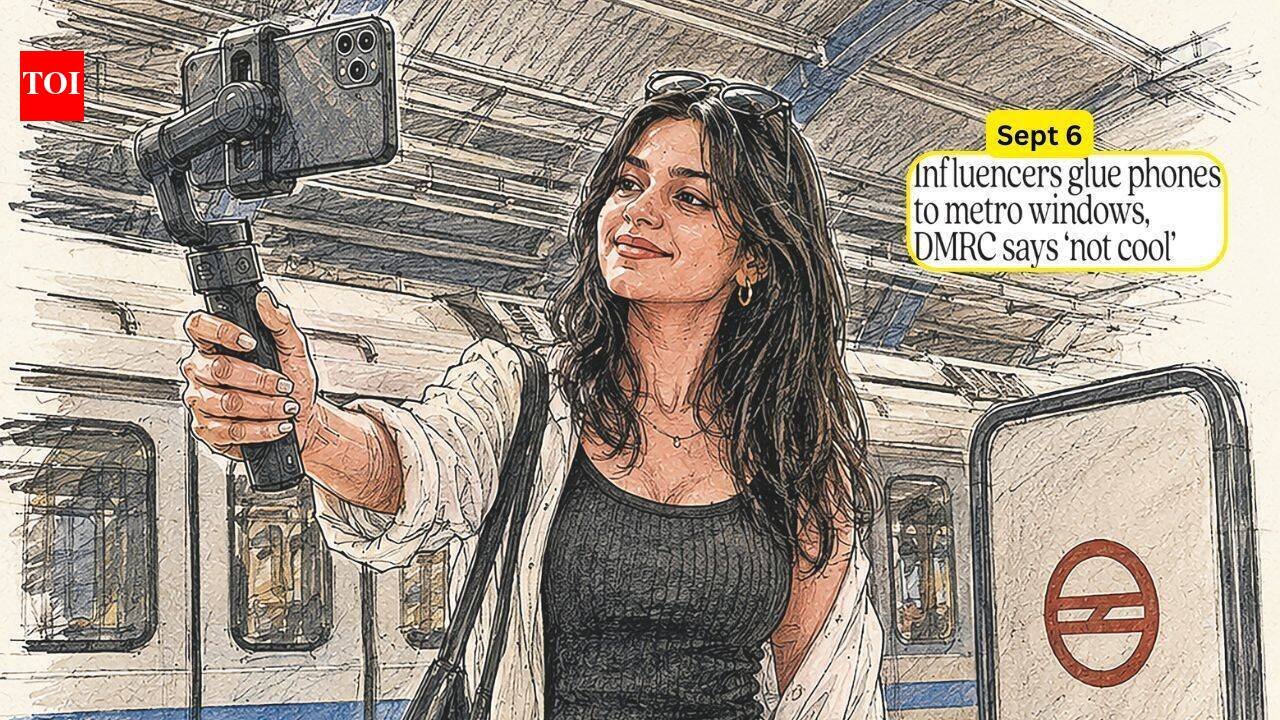
The Delhi Metro has seen its share of dance reels, romantic montages and makeup tutorials. Still, the latest trend has taken the commute to a whole new level: creators are glueing their phones to moving trains and sprinting after them for a dramatic, Bollywood-style shot. After videos of the stunt went viral, the Delhi Metro Rail Corporation (DMRC) warned that it could inconvenience or injure passengers, damage devices, and invite “necessary action”.But phone-glueing is just the latest addition to the metro’s growing reel economy. From ‘day in my life’ clips to carefully choreographed videos, coaches and platforms have become unofficial content studios. While the internet gets its entertainment, fellow commuters often get blocked paths, unwanted cameos and a front-row seat to someone else’s content strategy. So, where does harmless filming end and public nuisance begin? We speak to commuters and content creators about the metro’s reel culture, the ban and the fine line between making content and somehow making everyone else part of it.
In the latest trend, creators are gluing their phones to the metro and sprinting after them (Pics: @theguyinaskirt, @nikhilkochar01)
‘If your content requires everyone around you to adjust, you’re probably doing it wrong’Regular commuter Shivani Jhawar shares, “I believe making reels and videos inside the Delhi Metro has become a genuine public nuisance. The metro is a shared public space meant for safe and peaceful travel, not a content creation studio. I often see people recording videos that obstruct passengers and invade their privacy.” Content creators, however, argue that the problem lies in disruptive behaviour rather than filming itself. Kanishka Mukhija who makes GRWMs and makeup videos in the metro, says, “I plan my shoots carefully and keep them respectful. My videos are mostly focused on me doing makeup, and I avoid creating crowds or inconveniencing people. If your content requires everyone around you to adjust, you’re probably doing it wrong.”Don’t block the commute, says DMRCResponding to the debate, Anuj Dayal, Principal Executive Director, Corporate Communications, DMRC, says, “While personal photography and videography for non-commercial purposes (by mobile phone) may be permissible in designated areas, any activity that obstructs passenger movement, causes inconvenience, compromises safety, creates a nuisance, or is undertaken for commercial or promotional purposes without prior approval is strictly prohibited”
For some creators, Delhi Metro stations and train offer relatable content
‘In the age of reels, consent often feels like an afterthought’Commuters see the debate as one about privacy rather than creativity. Zoha Ather, who regularly commutes via metro, says, “A crackdown on reels inside the metro is a good move, provided people actually follow the rule, and there are penalties for violations. Filming in public transport often compromises the privacy of fellow commuters. As someone who prefers not to have their face shared online, being recorded without consent is deeply uncomfortable. In the age of reels, consent often feels like an afterthought.”For Kanishka, the distinction is simple, “The moment your content starts costing other people their time or comfort, you’ve stopped being creative and started being selfish. Virality isn’t an excuse for bad manners.”Supporting the crackdown, Shraddha Gurung, a Gurgaon-based content creator, says, “When other people are filming videos and are passing comments as they record or do something outrageous, I feel uncomfortable because I’m in the background. It’s uncomfortable.” She adds that DMRC announcements are a welcome move, “Dance videos in a clearly crowded public transport isn’t ideal for anyone. No matter how careful you are, you’re bound to invade someone else’s space. We have other spaces to create content, leaving public transport out of it is a decent move.”
A trend on making ‘get ready with me’ videos has also been making rounds online (Pics: @akcasuallycruel, @kanishka.mukhijaa)
‘Metro gives a lot of opportunity to cover a lot of relatable moments as a creator’Akshita, a Delhi-based content creator who frequently makes reels in the women’s coach, says, “While I understand why the crackdown has come in place, it’s still a widely used public space and a great opportunity to cover a lot of relatable moments as a creator. That’s why, despite the same, metro reels tend to get good reach. It’s because people widely relate to that content. It definitely makes filming tricky.”Likewise, Shruti Sharma, founder of Books on the Delhi Metro, shares her experience running a reading community focusing on the metro, “I majorly take photos of the books without inconveniencing anyone or their privacy. Public transport is, at its core, about people. When I started in 2017, I felt there were many commuting hassles—people elbowing each other, fighting for seats and struggling with the lack of space. I wanted to bring a sense of calm to that chaos, and books became a great way to do that. There weren’t many reels back then, but adding dancing reels and similar content to the mix only adds to the chaos.”
