



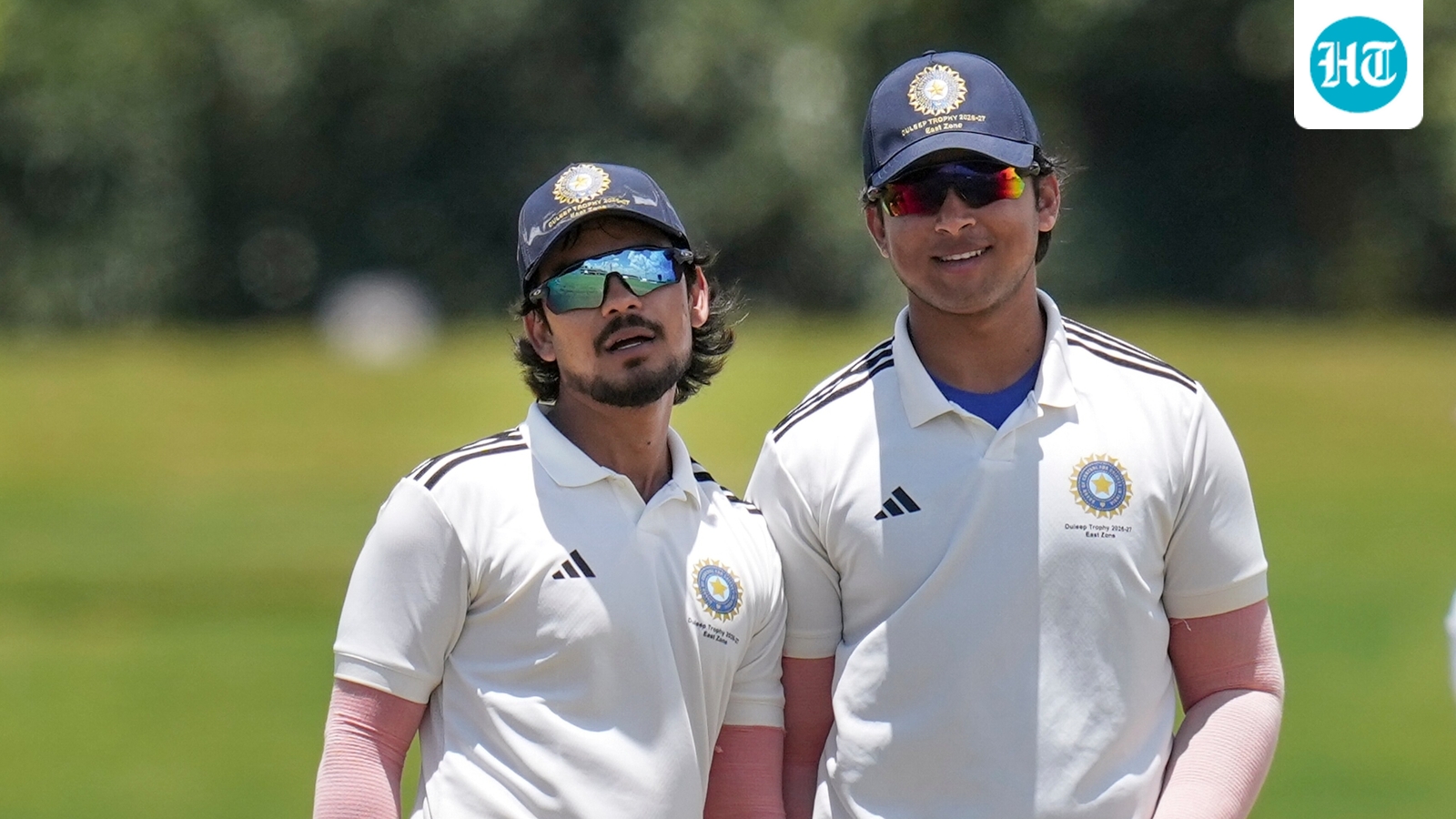
Ishan Kishan’s marathon effort in the Duleep Trophy final did not end with a conventional dismissal. After batting through the Chennai heat and taking his score to a remarkable 250, the East Zone captain eventually walked off retired hurt, bringing an end to an innings that had increasingly become as much a test of his body as his batting.
The applause around the ground told its own story. Kishan had converted the hundred he began the second day with into a double century and then kept going, refusing to allow fatigue to cut short his stay. By the time he left the field, he had provided a striking example of what it takes to turn a start into a truly enormous first-class innings.
And watching it all was another batter whose talent has rarely been questioned, but whose ability to make those starts count remains part of his development — Vaibhav Sooryavanshi.
The teenager had produced another eye-catching knock earlier in the Duleep Trophy final, but Kishan’s innings offered a very different batting lesson. During commentary, Vivek Razdan addressed Sooryavanshi directly while reflecting on what the East Zone captain had just produced.
‘Sooryavanshi sahab, you have to learn from players like Ishan Kishan’
“Sooryavanshi sahab, now you have to learn from players like Ishan Kishan — once you are set, how to play a long innings,” Razdan said on commentary. “Every person who is present here at this time stood up and applauded this innings. Because this is not just technique, this is not just temperament, this is also match fitness. This is match fitness. To stay out there for so long in so much heat and play an innings like this. What an innings by Ishan Kishan.”
The observation was particularly relevant given the contrasting stages of the two batters’ careers. Sooryavanshi has already demonstrated an extraordinary ability to dominate attacks and change the tempo of a match despite his age. The next challenge in the longer format is learning how to stretch that dominance across sessions when conditions, fatigue and concentration begin to test a batter differently.
Kishan’s 250 provided precisely that example. The innings was not merely about reaching another landmark after his century or double hundred. He continued batting after both, spending an extended period at the crease until his body eventually forced him to retire hurt. For a young batter watching from the same dressing room, there could hardly have been a more immediate demonstration of the difference between getting set and making an innings truly count.
