


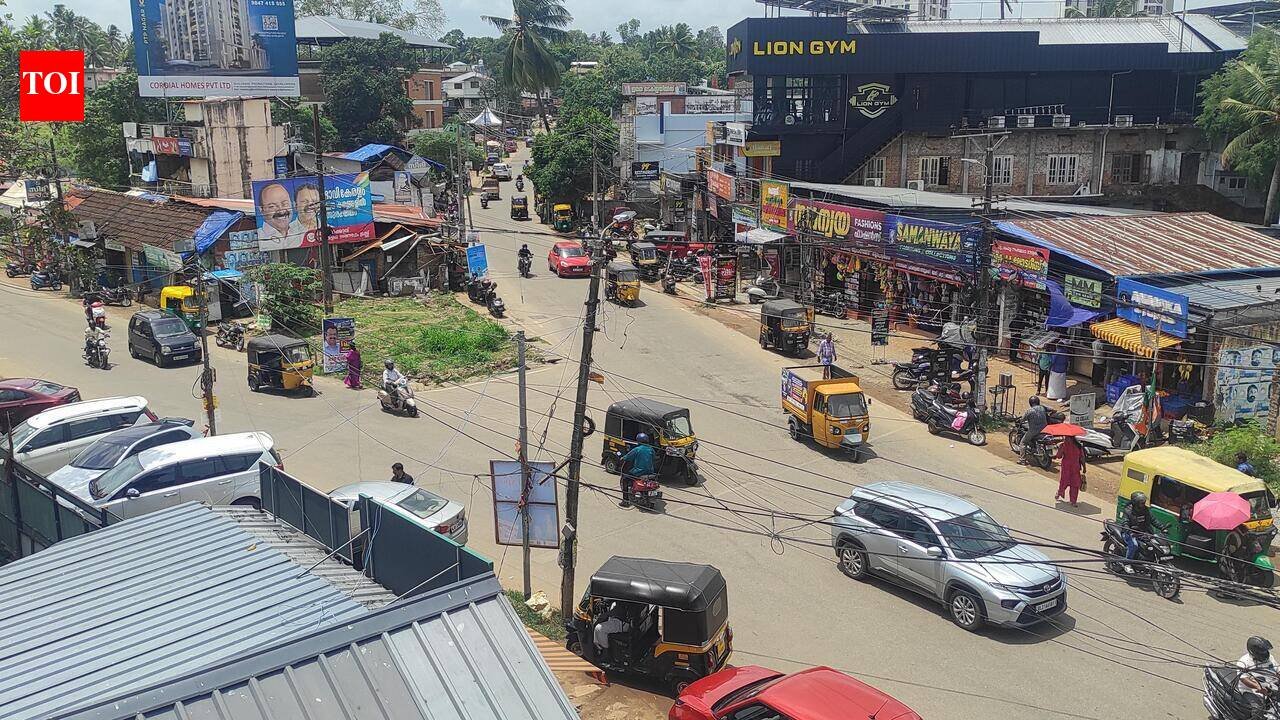
T’puram: Vattiyoorkavu Road and Junction Development project is finally moving towards civil construction, with Kerala Road Fund Board (KRFB) carrying out the central-line and level surveys ahead of the start of the main work. The survey is being undertaken to establish the exact alignment and levels of the upgraded corridor, with construction expected to begin in the first week of Oct.The work is being executed by Uralungal Labour Contract Co-operative Society (ULCCS). Once the ongoing survey and related preparatory works are completed, the contractor will mobilise machinery and manpower at the site, officials said.The project envisages upgrading about 10.75km of roads connecting Sasthamangalam, Vattiyoorkavu, Mannarakonam, Peroorkada and Vazhayila. It is designed as a four-lane corridor with a central median, footpaths, drainage facilities, street lighting and dedicated utility ducts. The road will have a 0.5m median.It is being implemented in three reaches — Sasthamangalam to Mannarakonam via Maruthankuzhy, Mannarakonam to Peroorkada via Mannamoola, and Vattiyoorkavu to Vazhayila via Nettayam. The corridor is expected to improve traffic movement between the city and its eastern suburbs and address bottlenecks at Vattiyoorkavu Junction.The project has taken several years to reach construction. Changes in scope, revised estimates, administrative approvals, land acquisition, demolition and utility shifting repeatedly delayed the work. A nomenclature dispute also held up the tendering process after the original Vattiyoorkavu Junction Development project was expanded to cover the adjoining road corridors.The project received revised administrative sanction of Rs 531.76 crore in 2025. Of this, Rs 458.94 crore was earmarked for land acquisition, while the road construction component included Rs 34.35 crore for the Sasthamangalam-Mannarakkonam stretch, Rs 32.17 crore for Mannarakonam-Peroorkada and Rs 6.3 crore for Mannarakonam-Vazhayila.Nearly 97% of demolition of affected structures had been completed by July, while utility shifting was taken up before civil construction. More than 570 commercial establishments have been affected by the project, with a rehabilitation complex planned for displaced traders.
