



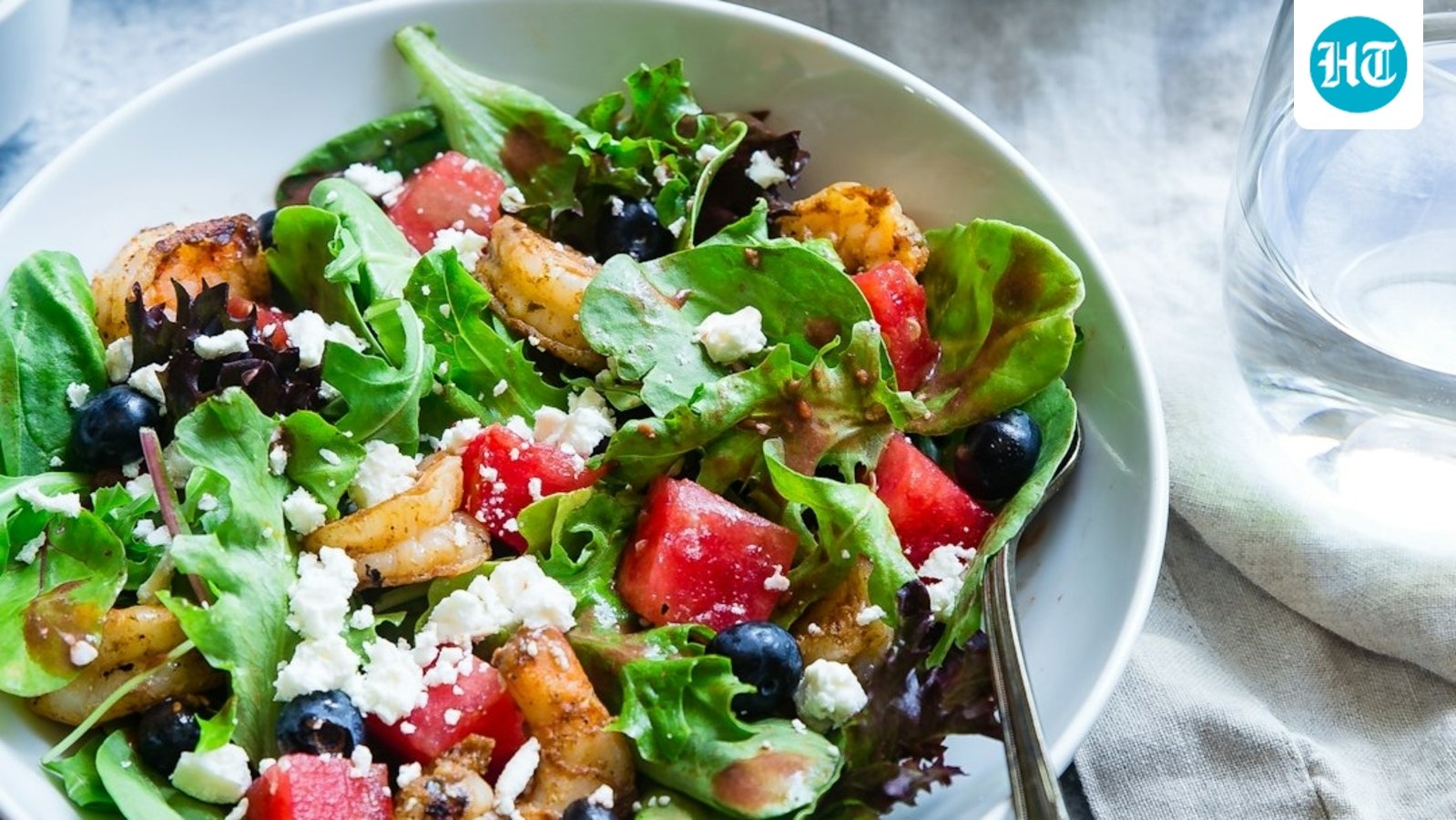
When trying to lose weight or get fitter, many people assume the quickest route to results is to cut out carbs and fat altogether. But healthy eating isn’t about eliminating entire food groups – it’s about building a balanced diet that gives your body everything it needs. In fact, stripping all the fat from your meals can sometimes backfire. Take a salad, for instance. It may seem like the ultimate weight loss food, but one small tweak could make it far more nutritious without derailing your fitness goals.
Dr Kunal Sood, an anaesthesiologist and interventional pain medicine physician, is explaining why even a weight-loss-friendly salad shouldn’t be completely fat-free. In an Instagram video shared on August 1, he says, “I wish more people knew that a completely fat-free salad can make some nutrients harder to absorb,” before breaking down the science behind why adding a small amount of healthy fat can make all the difference.
Carotenoids need fat for absorption
Vegetables such as carrots, tomatoes, bell peppers, spinach and corn are rich in carotenoids – plant pigments that act as powerful antioxidants, strengthen the immune system, and support eye and skin health. However, because carotenoids are fat-soluble, your body needs a source of healthy fat to absorb them effectively. Without it, you could be missing out on many of its nutritional benefits.
Dr Sood explains, “Carotenoids need fat to be absorbed. Beta-carotene, alpha-carotene, lutein, zeaxanthin, and lycopene are fat-soluble plant pigments. During digestion, they must be packaged into tiny fat-containing particles called micelles before they can be absorbed efficiently.”
Less is more
The goal isn’t to drench your salad in dressing, but to add just enough healthy fat to help your body absorb these nutrients more effectively. Dr Sood points to a study showing that even a small amount of fat can significantly boost carotenoid absorption compared with eating the same vegetables with a fat-free dressing.
The physician points out, “In one study, adding just six grams of canola oil to a salad significantly increased carotenoid absorption compared with a fat-free dressing, while 28 grams increased absorption even further. The goal is not to drown a salad in dressing. A modest source of fat, such as olive oil, avocado, nuts, seeds, a whole egg, or another fat-containing food, eaten with the meal may help your body absorb more of what is already in the vegetables.”
Adding an egg helps
If you’re hesitant to add extra fat to your calorie-deficit diet, there’s a smarter alternative. Dr Sood recommends including one whole egg in your salad. Not only does it provide a protein boost to keep you fuller for longer, but the healthy fats in the yolk also help your body absorb the carotenoids from the vegetables more effectively.
Explaining why this makes a significant difference, the physician says, “Adding whole eggs to a carotenoid-rich salad substantially increased the absorption of lutein, zeaxanthin, beta-carotene, alpha-carotene, and lycopene. The fat in the yolk helps transport these nutrients into the bloodstream.”
Dr Sood concludes, “A completely fat-free salad still has nutritional value. But adding a modest source of dietary fat may help your body absorb substantially more of certain fat-soluble carotenoids already present in colourful vegetables.”
Note to readers: This article is for informational purposes only and not a substitute for professional medical advice. It is based on user-generated content from social media. HT.com has not independently verified the claims and does not endorse them.
Dr Kunal Sood, MD, is a double board-certified physician in Anesthesiology and Interventional Pain Medicine. He did his residency and fellowship in anesthesiology at Wayne State University in Detroit, Michigan, followed by a one-year fellowship in interventional pain medicine. He later became the Medical Director of the office in Germantown, Maryland.


