



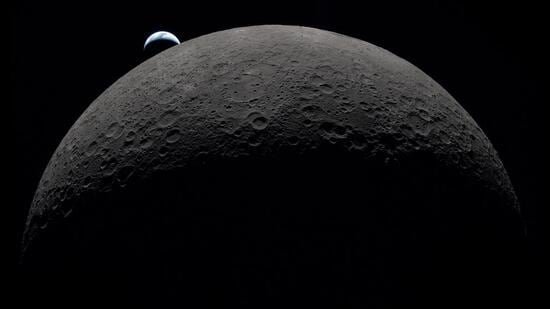
NASA administrator Jared Isaacman’s announcement this week that the agency will begin building a permanent moon base — with near-monthly robotic landings from 2027 and astronauts potentially living on the lunar surface by the early 2030s — marks the most concrete articulation yet of American lunar ambitions. It also makes the shape of the new space race unmistakable.


China is moving on a parallel track. Its crewed lunar landing is targeted before 2030, with a permanent base — partnered with Russia — planned for 2035. In its hardware pipeline are lander trials scheduled for 2027-28 and an uncrewed mission for 2028-29. Beijing’s chief lunar scientist has said the public timeline is deliberately conservative.
An analogy with the Cold War era space race is inevitable. But it only goes so far. Back then, the US-Soviet contest was bilateral and largely sealed. This one is structured around competing alliance frameworks — America’s Artemis Accords, to which India is a signatory, against China’s International Lunar Research Station partnership with Russia — drawing in a far larger constellation of nations and interests. The Moon’s resources, from water ice that could fuel deep-space missions to rare minerals, add a dimension the 1960s race never had.
That the impulse to explore is elemental to the human species — from the first migrations out of Africa to the rovers now on Mars — is not in question. What is in question is proportion. The same civilisational energy and capital now headed for the lunar surface is urgently needed on Earth — the only home our species has known, the one where climate breakdown and ecological collapse are not future scenarios. Our species has always reached beyond its horizon. The Moon can wait.


