



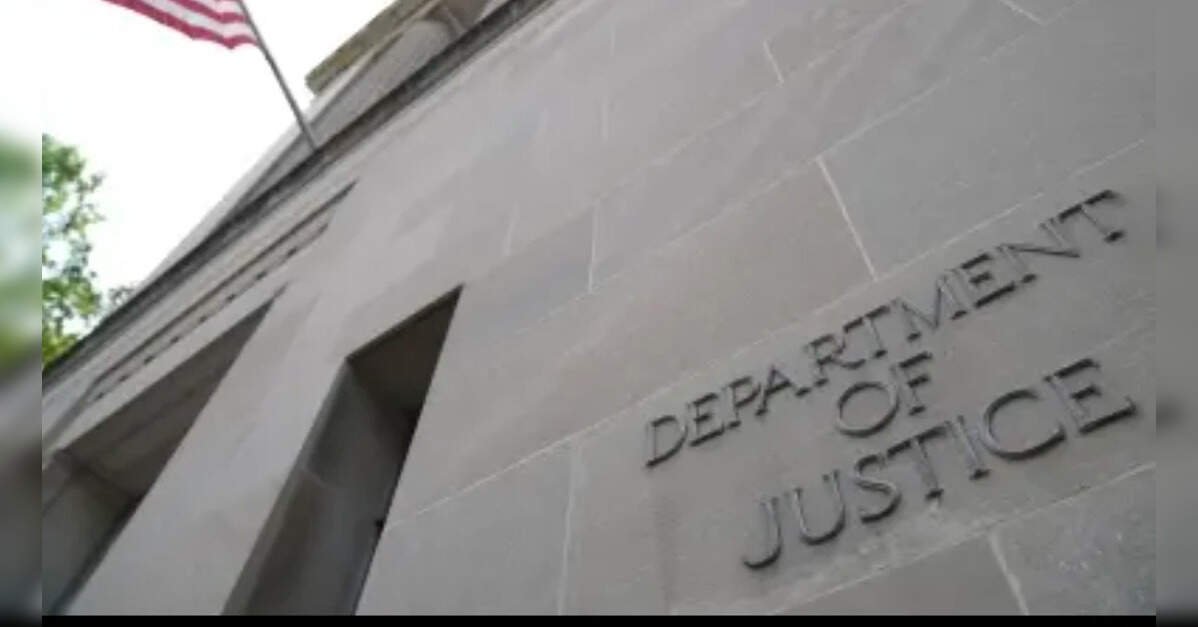
A US federal court has denied, without prejudice, the Department of Justice’s request to dismiss bribery and obstruction charges against five non-appearing defendants in the case involving Adani Group founder Gautam S Adani and others.
Judge Nicholas G Garaufis of the US District Court for the Eastern District of New York on Thursday said the Department had failed to provide sufficient factual information to support its stated reasons for seeking dismissal of Counts One and Five against Ranjit Gupta, Cyril Cabanes, Saurabh Agarwal, Deepak Malhotra and Rupesh Agarwal.
The court said the DOJ’s submissions did not meet the procedural requirements under Rule 48(a) of the Federal Rules of Criminal Procedure, which requires the government to provide both its reasons for seeking dismissal and sufficient factual support for those reasons.
“The government has not provided sufficient factual information to support the stated reasons to dismiss Counts One and Five,” the court said in its September 3 memorandum and order.
The court had, in an August 10 order, reserved its decision on the government’s request to dismiss the charges against the non-appearing defendants and directed the Department to provide sufficient factual support for each reason cited for seeking dismissal by August 31.
According to Thursday’s order, the government subsequently submitted letters on August 11 and August 14 but did not provide additional factual evidence. Instead, Acting Deputy Attorney General R Trent McCotter referred the court to his earlier submissions and stated that the explanations contained in them were accurate to the best of his knowledge.
The court rejected the argument that the decision-maker’s statements alone could constitute the necessary evidentiary basis for dismissal. It said the government had provided opinions and conclusions rather than specific facts that would allow the court to independently evaluate the rationale for ending the prosecution.
The judge also pointed to an apparent disconnect between at least one of the government’s stated reasons and the evidence before the court. The government had argued, among other things, that India had investigated the allegations and found no actionable misconduct. The court said the material before it appeared instead to indicate that India had decided not to investigate, and that no document before the court concluded that nothing inappropriate had occurred.
The court further said the government’s charge-specific rationale for dismissing the Foreign Corrupt Practices Act and obstruction charges was similarly unsupported by sufficient factual material.
“Rule 48(a) requires the government to submit both reasons for the requested dismissal and sufficient factual support for those reasons,” the court said, adding that the government’s “unsubstantiated, conclusory statements” did not constitute sufficient underlying facts.
The court stressed that its ruling was based solely on the procedural requirements of Rule 48(a) and that it was not deciding whether the government had provided a sufficiently substantial reason for dismissal.
The order also cited the importance of judicial scrutiny under Rule 48(a), noting that the requirement for the government to disclose its reasons and factual basis helps ensure that a prosecutor’s decision to dismiss an indictment can be scrutinised by courts and the public.
The court ultimately denied the DOJ’s motion without prejudice, leaving open the possibility of a renewed request supported by sufficient factual material.
“The court continues to encourage the Department to submit sufficient factual support for its proffered reasons for dismissal,” Judge Garaufis said.


