


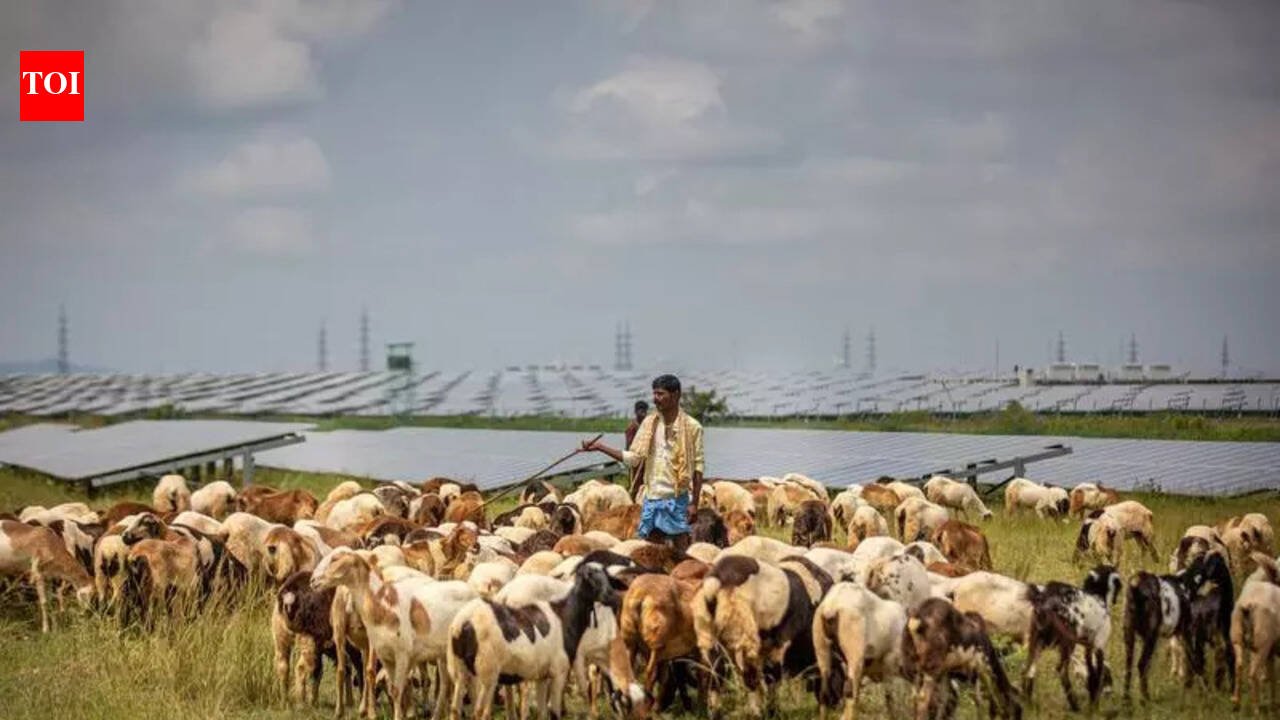
Bengaluru: The rise of urban farming and campaigns to conserve farmland are triggering concerns over land availability for industrialisation, with officials warning of a growing crunch for large infrastructure and renewable energy projects. Between April 2023 and March 2024, the govt acquired over 24,000 acres of land in and around Bengaluru, but officials said it has since struggled to make more acquisitions. Educated urban buyers acquiring agricultural land and activists seeking to protect farmland are contributing to what some officials describe as a “developing land bank crisis”. While some stakeholders argue the trend is limited to small land parcels, others say it is beginning to affect projects that require large contiguous tracts of irrigated or barren land. A senior industry department official said maintaining land banks is becoming increasingly difficult due to higher compensation demands, especially for cultivable land under floriculture and horticulture, and because of fragmented land parcels that need to be excluded. Some officials, though, said acquisition challenges are being addressed at the planning stage. “Even before we notify, certain aspects are considered including fully grown trees, land activity and other environmental issues,” said S Selvakumar, additional chief secretary (industries). “While there are concerns over some bits and pieces, KIADB and industries department has been able to keep track what parcels are being acquired.” Karnataka Renewable Energy Development Ltd (KREDL) staff say the situation is especially worrying for solar projects. “Some owners are abroad and are holding on to agricultural land for posterity,” a KREDL official said. “In Pavagada, we have owners who are in the UK and US, and they have no intention of parting with their land. At least 40% of existing solar parks also has ownership vested with NRIs and urban rich.” Officials added that despite the state’s high potential for solar and wind power, projects are facing constraints due to land availability. “As a result, KREDL is looking at smaller parks and more compact renewable energy generation units,” an official said. Officials also pointed to resistance from sections that supported farmer protests as another challenge for large-scale projects. They cited protests in the proposed ITIR region in Devanahalli last year. “These romanticised versions of protecting fields will only hurt farmers,” a minister said. “In fact, when the govt declared it a special agriculture zone, sections of the same farmers were ready to part with their land for the ITIR. We decided not to proceed with it and asked them to keep their land.” After the Karnataka Land Reforms Act was amended in 2020, non-agriculturists were allowed to legally purchase agricultural land. The amendment repealed restrictions that limited buyers to farming backgrounds. Now, individuals, regardless of non-agricultural income, can buy farmland, though conversion for residential or commercial use requires separate, mandatory approvals.


