



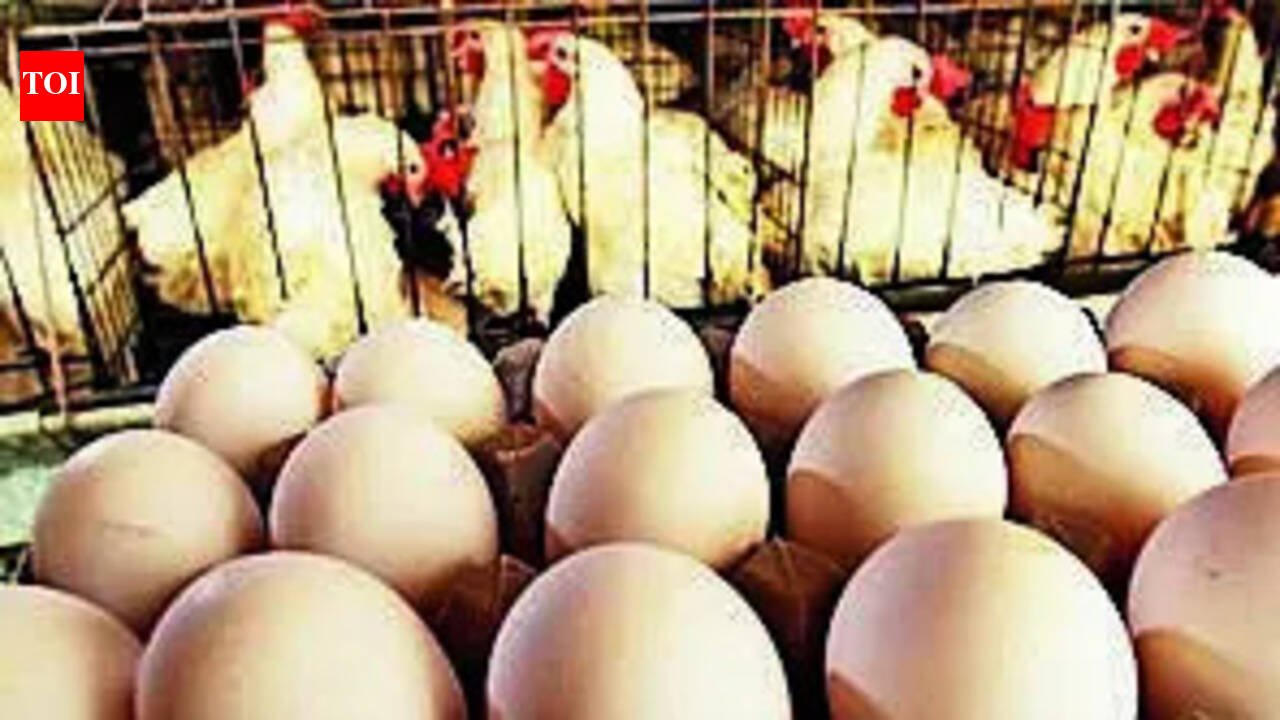
From April 1, a new mandate comes into effect in UP to mark every egg that is sold with a production (laying) date and an expiry date. Non-compliant stock is liable to be destroyed or declared unfit. Unlike medicines, an expiry date on an egg has to be read as an indicator of peak freshness rather than a strict safety cutoff. “Eggs can still be safe beyond this if stored well, but their taste, texture and nutritional value gradually decline,” says Abhishek Negi, co-founder and CEO of Eggoz.Egg retail companies print packaging dates, and some also print ‘use-by’ dates, to guide customers on egg health but those are mentioned on the trays, not stamped on the shell itself. “An expiry or use-by date primarily indicates reduced freshness, not that the egg becomes instantly unsafe. However, from a consumer standpoint, it’s best to avoid consumption beyond this date, as safety depends heavily on storage conditions, especially in warmer climates,” explains Negi.Understanding egg healthThe porous nature of eggshells makes them vulnerable to microbial invasion. “Spoilage begins when air enters through these pores, allowing bacteria to grow and produce sulphur compounds that cause a foul odour. Some eggs also develop hairline cracks, invisible to the naked eye. If stored in open or ambient conditions, the risk of contamination rises sharply,” says Tasleem Ahmed of Keggs, a Gurgaon-based egg supplier.“At the farm level, such defective eggs are usually removed during grading. But with higher consumption in Delhi-NCR than other cities, strict storage and handling become critical to ensure safety and quality,” he adds.Eggs are considered ideal to consume within 7-10 days of laying, provided guidelines on storage are maintained through the supply chain. A majority of eggs that come to homes are from the open market, and customers have no idea how old they are or in what temperatures they have been stored. Fitness of eggs, in fact, have never been scrutinised as closely as bread, cake or other FMCGs.But they should be, because they are so vastly consumed. UP govt’s step to stamp eggs is a step in the right direction because it brings accountability to the supply chain and allows a customer to refuse an egg past its ‘sell-by’ date, in turn making the market more conscious about taking storage and supply seriously.How the state enforces it will determine how beneficial the move is to consumers. Details are yet to emerge on how this labelling will work, how tamper-proof it is, and what measures are in place to act against counterfeit stamping, should that happen.A senior food safety official in Noida said, “In Indian weather conditions, especially summer, eggs kept outside deteriorate much faster, making stable, cool storage essential.”
Eggs come from a mix of organised farms and small rural producers, with no single tracking point
Why times & temp matterIn traditional supply chains, eggs move from farms to retailers after basic sorting with limited traceability because it’s an aggregation of many forms that pours into a common basket. “Eggs come from a mix of organised farms and small rural producers, with no single tracking point,” says SP Pandey, animal husbandry officer, Ghaziabad. Date-stamping, he admits, will require coordination across production, storage and retail, which is handled by different departments, making implementation complicated.The branded egg supply chain is more structured, with quality checks, grading, sanitisation and controlled packaging before distribution. Faster delivery also matters. Egg quality depends largely on storage. According to a guidance note by Food Safety and Standards Authority of India advisor Dr Bhaskar N, at room temperature (around 28°C), eggs stay fresh for about 10-12 days, but refrigeration can extend this to four to five weeks. Clean, crack-free eggs stored in consistent conditions last longer, while damaged shells increase the risk of contamination.How to tell if egg is freshA fresh egg has a firm shell, thick white and a rounded yolk that stands upright. As it ages, the yolk flattens and the white turns runny. Stored in high temperatures, the layers begin to break down and mix, signalling loss of freshness. Experts suggest simple checks: fresh eggs sink in water while older ones float; a foul sulphur smell indicates spoilage.Also in the retail market are organic eggs that are supposed to come from hens raised cage-free or free-range, fed on non-genetically modified, chemical-free feed, and bred in farms in line with animal welfare guidelines. In India, they are certified under the National Programme for Organic Production (NPOP), regulated by Agriculture and Processed Foods Export Development Authority (APEDA), with farms undergoing third-party audits to ensure standards on feed, practices and traceability are met.How India consumes eggsIndia produced 138.4 billion eggs in 2022–23, with 85% from commercial poultry, according to a 2024 report from Confederation of Indian Industry (CII). Six states, including Andhra Pradesh, Tamil Nadu, Telangana, West Bengal, Karnataka and Haryana account for 71% of the output. The rest are contributed by ‘backyard poultry’.Despite being the world’s second-largest producer, per capita consumption remains modest, rising from 1.7 kg in 2000 to 3.8 kg in 2023. In NCR cities, like Delhi, Gurgaon and Noida, egg consumption is higher than the national average, driven by fitness trends and protein-rich diets. Urban consumers typically eat 4-5 eggs a week, compared to India’s per capita average of about 100-106 eggs a year.
Eggs sold in the open market are hardest to track
What changes for retailersLocal sellers say they act as distributors and have no control over labelling. Shamsher, a wholesaler in Noida, says he gets around 2,000 crates of eggs daily from Panipat, which he then sells to retailers at wholesale rates. “Most of the stock is cleared within three days. Eggs found to be damaged or unfit are either sent back to the farms or destroyed, with proper records maintained. Labelling, however, is done at the farm level. We only handle the distribution,” he says.Retail vendors highlight practical challenges in implementing expiry labelling. “I sell what I get from the mandi. If there’s no date or source, how can I label it?” asks a Sector 62 seller, adding that strict rules could push customers towards costlier packaged eggs and hurt small businesses through losses and rising costs.He is also worried about the pressure on stick clearance when the new rules kick in. “I usually procure 50-70 crates of eggs every three days. At wholesale rate, per crate costs around Rs 112-120, which are sold at Rs 160-180 to consumers. Even if five crates are destroyed, it will amount to a loss of over Rs 500,” he says.The directive to stamp eggs follows earlier attempts to regulate egg storage and transport, including a 2024 order against storing eggs with vegetables in cold storage, and a 2023 mandate for refrigerated transport with GPS tracking. However, enforcement has remained weak. Officials cite poor coordination across departments handling production, storage and distribution, along with a highly decentralised supply chain. Eggs move through multiple channels and lose cold-chain conditions either in transport or in retail. When labelling comes into effect, this has to be fixed as well.


