





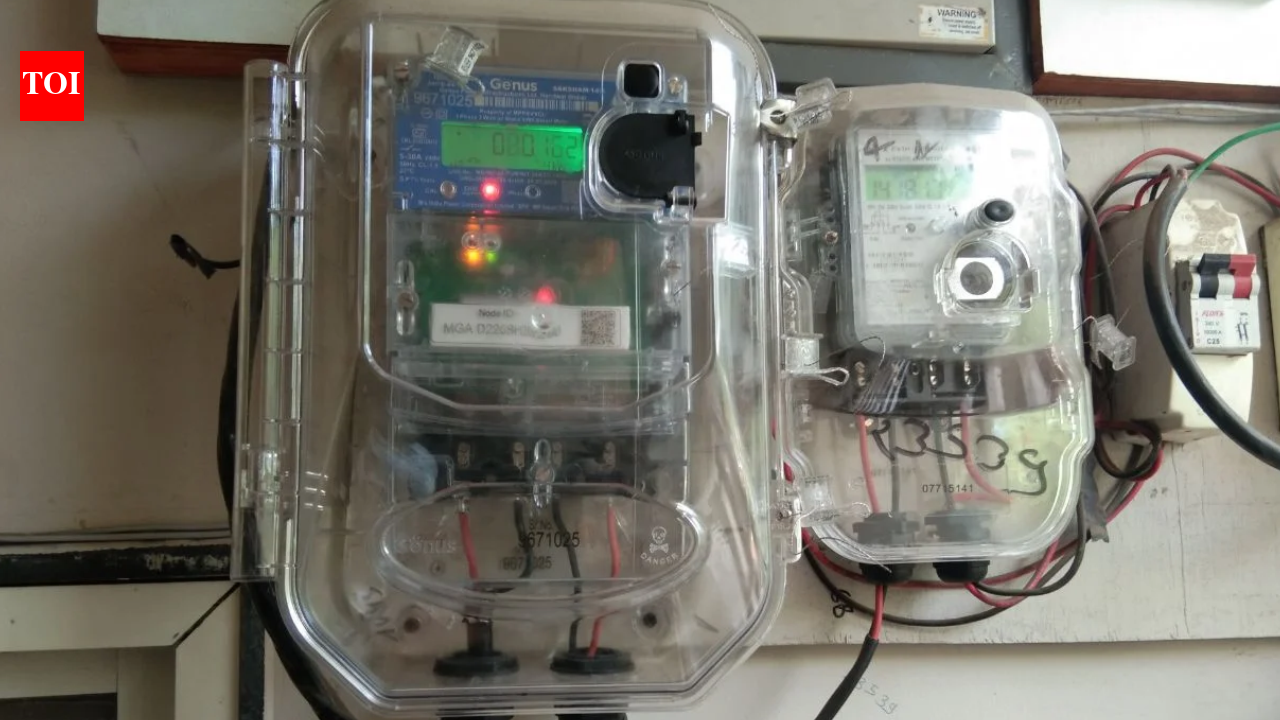
LUCKNOW: A four-member technical committee constituted by the Uttar Pradesh Power Corporation Limited (UPPCL) has found that the smart meters tested in the state were accurate and complied with the permissible limits prescribed under Indian Standard IS 16444. However, the committee’s assessment of the meters’ connectivity and software was still in progress when the report was prepared.The report was made public on Saturday night on the UPPCL website. The committee was constituted on April 12.The committee was formed under the provisions of the Revamped Distribution Sector Scheme and Central Electricity Authority guidelines to examine the quality and connectivity of smart meters being installed at consumers’ premises across Uttar Pradesh.Its members were Professor Ankur Sharma of IIT Kanpur, Professor Prabodh Vajpayee of IIT Kanpur, Tejas Mishra, head of the Electrical Research and Development Association (ERDA), Vadodara, and G D Dwivedi, director (distribution), UPPCL, who also served as the committee’s coordinator.As the first stage of testing, the committee selected 24 smart meters supplied by four advanced metering infrastructure service providers (AMISPs). The meters were tested at the Hi-Tech Test Laboratory of Madhyanchal Vidyut Vitran Nigam Limited in Gomti Nagar, Lucknow.The testing covered single-phase, three-phase, LTCT and HTCT meters. Each batch contained six meters and took around six hours to test. The tests examined whether the meters correctly recorded electricity imported from and exported to the grid under varying load conditions. The committee also checked error limits, repeatability, voltage variations and frequency variations.The report said all 24 meters met the permissible accuracy limits and complied with the requirements of IS 16444.The committee also examined post-delivery testing. Of the samples selected by the discoms, reports for 218 smart meters were available. All these meters were found to be within the permissible accuracy limits and compliant with the applicable Indian standard, according to the report.In another exercise, check meters were installed alongside smart meters at five per cent of consumer premises, covering around 5.22 lakh consumers. The committee examined data relating to 2,958 consumers and studied sample reports from all four AMISPs. It found that the difference in electricity consumption recorded by smart meters and the previously installed meters remained within the permissible limit of plus or minus three per cent.The committee also reviewed three new smart meters tested independently at the Gomti Nagar laboratory following a consumer complaint. All three were found to be accurate, according to the report.Meanwhile, UP Rajya Vidyut Upbhokta Parishad chairman Avadhesh Kumar Verma has urged the Central Electricity Authority (CEA) to order an independent technical and regulatory investigation into the testing of smart meters in Uttar Pradesh.In his letter, Verma pointed out that UPPCL had constituted a high-level committee that tested 24 smart meters at the Hi-Tech Test Laboratory of MVVNL in Gomti Nagar, Lucknow, and declared them compliant with IS 16444.Verma cited a communication issued by the National Accreditation Board for Testing and Calibration Laboratories (NABL) on June 10, 2026. According to him, NABL clarified that the MVVNL laboratory’s accredited scope did not cover testing under IS 16444 Parts 1 and 2. NABL also stated that it had not verified the laboratory’s competence to conduct such tests.Verma questioned the technical and regulatory basis for declaring the meters compliant when the laboratory’s accreditation scope allegedly did not include the relevant standard. He sought verification of NABL certificate number TC-14611 and the scope applicable on the testing dates.He also requested an independent review of reports concerning the 24 committee-tested meters, 218 post-delivery samples and three meters tested following consumer complaints.


