



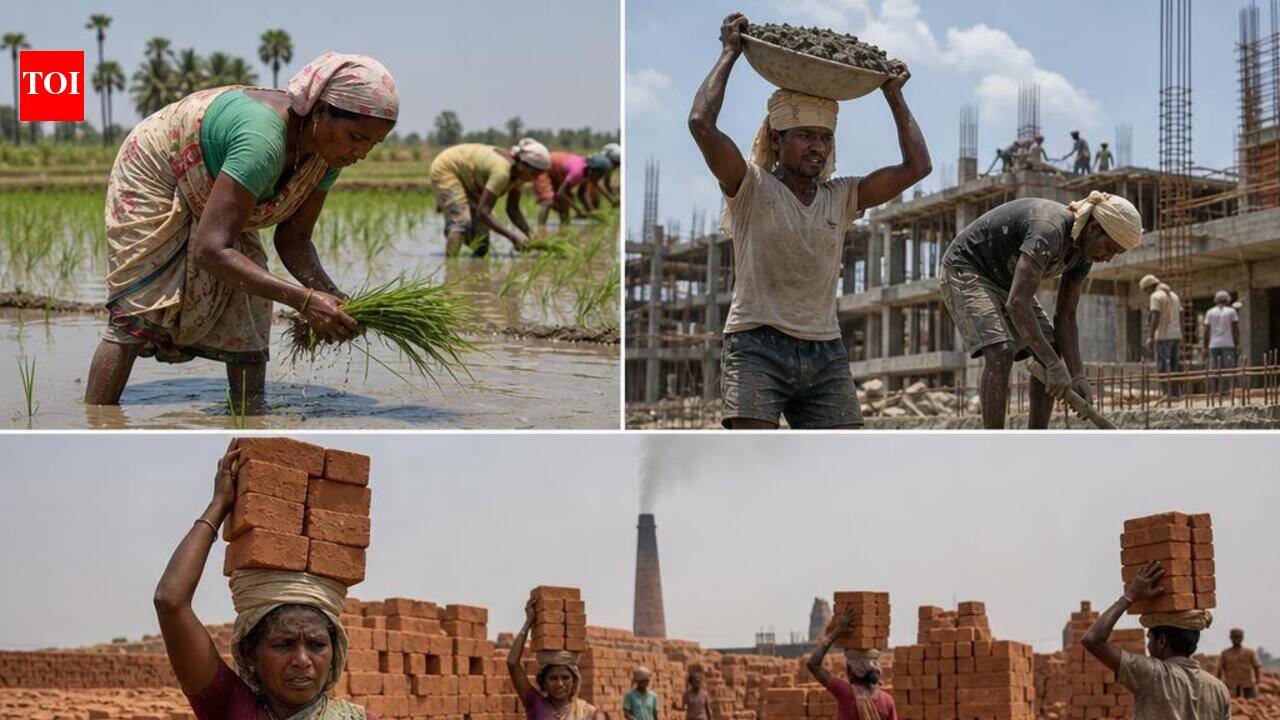
Chennai: Nearly 88% of outdoor informal workers surveyed across 11 Tamil Nadu districts were exposed to unsafe heat levels during summer, while 42.5% faced such conditions even in winter, according to a new study. The exposure resulted in heat-related illnesses, lost work hours, reduced earnings and significant declines in productivity.Researchers recorded an average Wet Bulb Globe Temperature (WBGT) of 29.9°C in summer—well above the occupational safety limit of 27.5°C for heavy work—and 27.4°C in winter. WBGT is a measure of heat stress that factors in air temperature, humidity, wind speed and solar radiation. Overall, 61% of workers reported productivity losses during summer, and 39% during winter.“The results demonstrate severe productivity and economic losses associated with high WBGT levels, affecting livelihoods and the regional economy,” said Vidhya Venugopal, the study’s corresponding author. “This underscores the pressing need for mitigatory climate measures and specific interventions to safeguard vulnerable informal workers in the tropics.”Published in Scientific Reports, the study was led by researchers from Sri Ramachandra Institute of Higher Education and Research. It monitored 1,560 outdoor informal workers in Tamil Nadu between 2021 and 2023. The researchers measured heat levels at workplaces and surveyed workers in agriculture, construction, brick kilns, salt pans and stone quarries to assess the impact on their health, productivity and earnings.Workers exposed to unsafe heat were 1.45 times more likely to report productivity loss than those working under safer conditions. Those engaged in heavy manual labour were 2.4 times more likely to report such losses. Nearly three in four affected workers said they took longer than usual to meet their daily targets, while almost one-third reported losing wages because heat disrupted their work.The health toll was equally stark. More than 93% of heat-exposed workers reported symptoms such as excessive sweating, thirst, fatigue, cramps, headaches, nausea and fainting. Workers experiencing heat-related illnesses had 3.2 times higher odds of reporting productivity losses.The impact varied across occupations. Agricultural workers reported greater absenteeism due to heat-related illnesses, while salt-pan workers faced higher wage losses and hospitalisation rates.The study covered Ariyalur, Chengalpattu, Chennai, Cuddalore, Kanchipuram, Nagapattinam, Salem, Tiruchirappalli, Tiruvannamalai, Tiruvallur and Viluppuram. Ariyalur, Chennai and Salem recorded the highest summer heat stress. Districts with higher WBGT levels also reported greater productivity losses.“The findings demonstrate that even small increases in global temperature, as predicted by climate change, will have significant effects on worker productivity in India and other countries where workers are already exposed to high heat levels,” said co-author P K Latha.The researchers said the findings have wider economic implications because about 92% of Tamil Nadu’s workforce is employed in the unorganised sector, where many jobs involve manual labour and workers have little protection from rising temperatures.They called for heat action plans to be incorporated into occupational safety policies. Recommended measures include shaded rest areas, cool drinking water, scheduled breaks during peak heat hours, lightweight and breathable clothing, heat-awareness training and stronger occupational heat standards.“Our findings highlight the need for adaptation strategies, such as providing access to shaded rest areas, cool drinking water, and scheduled breaks during peak heat hours that can significantly reduce heat stress among workers,” said co-author Rekha Shanmugam.


