On the outbreak of war in September 1939, and at the age of 64, Corbett once again offered his services to the Army. Jim had remained a Major on the Indian Army Reserve of Officers and, with a keen sense of duty, perhaps believed his appointment would enable a younger officer to be released for the front. His offer was declined.
.
Not one to be easily put off, in 1940 Jim joined the District Soldiers Board, Meerut Command, of which he was soon Vice-President, taking on the role with enthusiasm, travelling around the district liaising with Army pensioners and soldiers’ families, helping those whose menfolk were now away.
In mid-1942, and as he admitted, by lying about his age, he was appointed Commandant of the 1st Battn. U.P. Civil Pioneer Corps. This was a recruiting role, based once again at Bhim Tal, on the Jind Estate. Having carried out similar work in WWI, within the year Jim was able to raise 1,400 men from the Kumaon hills, some men the descendants of those he had previously taken to France.
Jim carried on in this role until December 1942 when he fell dangerously ill with a virulent form of tick typhus, caught at Bhim Tal. His age, and the extensive travelling, had put him under considerable strain, and he was at first hospitalised at Agra, before being moved to the Ramsey Hospital at Naini Tal for a further three months recovery.
His weight dropped from twelve and a half down to eight stone and Jim was, as he put it, ‘invalided out of the Army with the prospect of spending the rest of my days in an armchair, but as this prospect did not appeal to me I concentrated all the energy that had been left to me in an effort to get well, ably assisted by my sister Maggie. Six months later I appeared before a very sympathetic Medical Board, and next day was back in the Army. On this occasion I was appointed Lecturer on Jungle Lore and attached to the Central Command, whose HQ was in Agra.’
In fact Corbett had been discussing the idea of a jungle training camp for some months with both General Frank Moore, who commanded the 39th Indian Division, and members of the Viceroy’s staff. A couple of notes from the Viceroy and his Military Secretary seem to have soon overcome any reluctance to proceed with the plans and Jim’s appointment went ahead…
The 14th and 39th were training divisions, taking in new recruits to supply reinforcements, as well as men to be trained up from other units. The divisions, with a combined strength of between 50-70,000 men, were inconveniently based three hundred miles apart…
Prior to training commencing, Jim was flown to Burma, where he spent a month close to the front, enabling him to see as much as possible of the Burmese jungles, and to familiarise himself with any differences from those jungles with which he was familiar.
Back in India, jungle camps were set up… and parties of 25 men were sent by their Battalions for a fortnight’s training, focusing on observation, how not to get lost, and how to live in the jungle. The men then returned to their units to impart these new skills to the remainder of the men.
The classes in Jungle Lore lasted for two years, until finally, with the war close to an end, Jim contracted a severe strain of malaria, and in September of 1945, was once more invalided…
With the war now over, Jim’s connection with the Training Divisions was severed in that September, and he once more sought to recover his health. That his efforts to impart his skills and knowledge to so many young soldiers made a difference is beyond doubt. He received the thanks of Auckinleck, then-Commander in Chief, and letters from the officers commanding both Divisions were full of praise for his work.
Jim was particularly proud of a dedicated shield presented by the 14th Division… In 1946 he was invested as a Companion of the Indian Empire (C.I.E.) by a grateful Government.
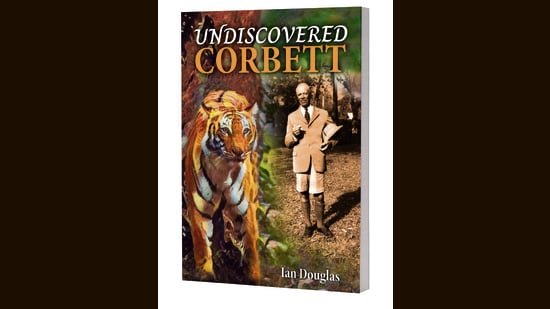
(Excerpted with permission from Undiscovered Corbett by Ian Douglas, published by Merlin Unwin Books; 2026)