






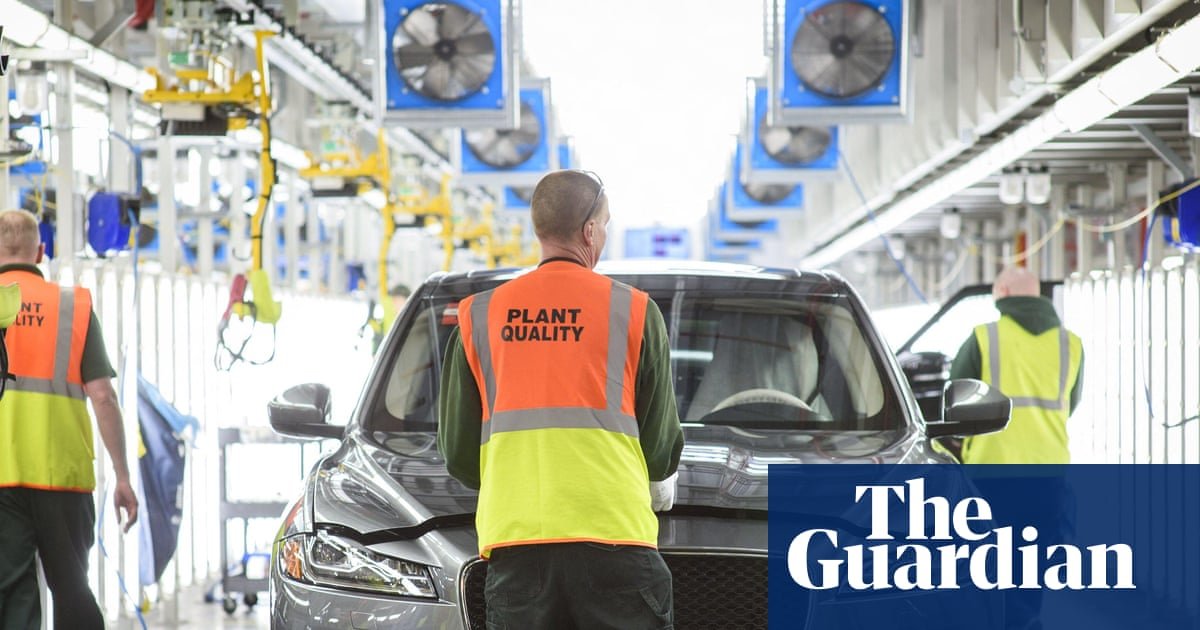
The UK is losing out on annual exports to the EU that could be worth as much as £6.5bn without a deal with Brussels that allows manufacturers to jettison duplicate product testing.
In the latest attempt to calculate the loss of trade with the EU after Brexit, the IPPR thinktank said many companies have given up selling goods to the EU or set up subsidiaries inside the trade bloc after successive governments failed to secure a mutual recognition agreement that would avoid the extra administration costs.
The thinktank estimated that the absence of such a deal may have cost UK exporters between £3.7bn and £6.5bn each year in lost revenue since the UK’s post-Brexit trading arrangements came into force in 2021.
It urged the government to reopen talks with the EU, saying that the loss of trade amounted to about 0.18% of annual national income, or about three times what the UK government expects to gain from its trade deal with Japan, Canada, Australia and Singapore, known as the CPTPP deal.
At this week’s Liberal Democrat conference, the party’s leader, Ed Davey, said that should the party take control at Westminster, he would begin talks to rejoin the EU single market and customs union.
He said the move would bring the UK into alignment with its largest trading partner, boost exports and kickstart growth.
Earlier this year, the Starmer administration pitched the creation of a single market for goods between the UK and EU to Brussels, but the proposal was rejected by EU officials.
EU officials said they wanted deeper cooperation with the UK, but this had to be in line with fundamental principles, including no cherrypicking of EU policies.
The IPPR said a mutual recognition agreement (MRA) based on “dynamic alignment” – where the UK keeps relevant product rules in step with the EU – would allow UK and EU authorities to recognise each others’ product assessments, reducing costs and uncertainty for exporters.
The estimated losses are concentrated in three industries:
-
Motor vehicle and part exports would have been between £2.48bn and £3.42bn higher each year.
-
Electronic exports could have been between £1.17bn and £1.67bn higher.
-
Pharmaceutical exports would have had an estimated annual uplift of between £740m and £820m.
after newsletter promotion
“The findings highlight the scale of trade missed out on as a result of post-Brexit regulatory barriers, providing one of the clearest opportunities to reduce friction in UK-EU relations,” the report said.
Joseph Sassoon, an economist at the IPPR and co-author of the report, said the report was the first attempt to find the cause of the loss of trade after Brexit by isolating its impact from other factors that could also have caused exports to decline.
He said researchers tested whether Covid-related disruption, changes in global supply chains, sanctions on Russia, energy market shocks or shifts in re-export patterns could be to blame for the decline.
“The estimated impact of not having an MRA remained large and statistically significant throughout,” he said.


