



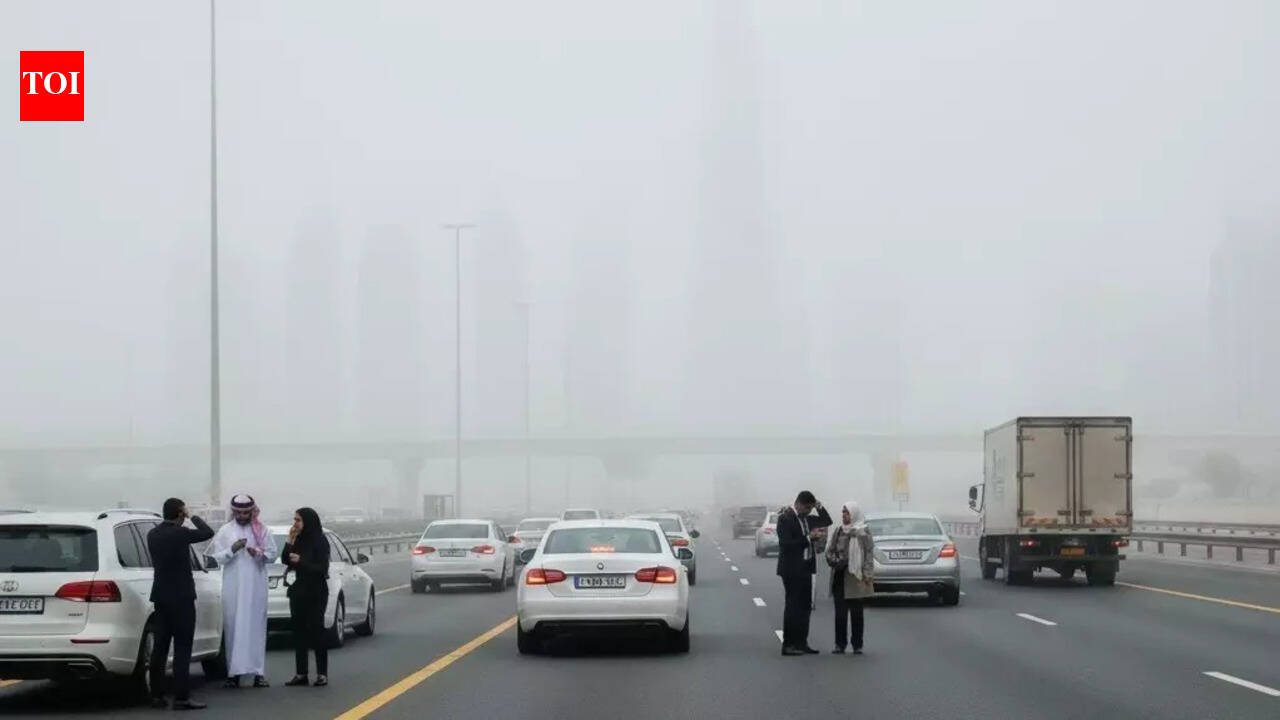
If your morning commute felt like driving through a cloud this week, you weren’t alone. The UAE has been gripped by a series of “Red Alert” fog events, with visibility dropping to near-zero across major highways and residential districts. Far from being a random event, this thick blanket is a seasonal signature, marking a dramatic atmospheric tug-of-war as the country prepares to trade winter chills for spring warmth.
Record foggy mornings across UAE
This week, residents in Dubai, Abu Dhabi and other Emirates woke up to unusually thick fog that made it almost impossible to see the road ahead during the early morning commute. Drivers described conditions where buildings and cars seemed swallowed by a blanket of fog, with visibility dropping to just a few metres in some areas.The situation was serious enough that authorities issued official weather warnings for low horizontal visibility. On several mornings, alerts remained in place until mid-morning, urging caution as the mist made major highways like E11, E311 and E611 particularly treacherous for commuters.
Why is the UAE so foggy right now?
The current foggy spell isn’t random, it results from specific seasonal weather patterns typical of late winter in the Arabian Gulf region. According to the National Centre of Meteorology (NCM), a strong high-pressure system over the country has trapped moisture close to the ground. As night falls and temperatures dip, that moisture condenses into dense, low-lying fog in the early morning hours.Calm winds and high humidity, often exceeding 90 per cent overnight, further help fog form and linger. These conditions are well known in the UAE’s late winter and early spring transition period, when mornings can be cool and humid before days warm up. The phenomenon is especially common between January and the end of February.Forecasters point out that inland desert areas cool quickly at night while coastal regions remain moist, creating the perfect environment for fog. The convergence of warm coastal air and cooler desert air at night makes winter mornings particularly prone to dense mist.
What are residents facing?
The heavy fog hasn’t just created eerie cityscapes; it’s caused major travel disruptions. Reduced visibility has led to slow, cautious driving, long delays on highways and multiple warnings from road authorities. In some cases, motorists spent significantly more time on routes that would normally take minutes.Air travel has also felt the effects. Major hubs like Dubai International Airport saw temporary delays as pilots waited for safe landing conditions during peak fog hours. Airlines and airport authorities have encouraged passengers to check flight statuses before heading to the airport.Road safety officials have repeatedly urged drivers to slow down, maintain extra distance between vehicles and use appropriate headlights during foggy conditions. Electronic road signs across major routes dynamically update with lower speed limits in affected zones to improve safety.
When will clear skies return?
The foggy conditions aren’t expected to disappear immediately. Weather models show the risk of morning fog or mist continuing through February 28, with each new day’s humidity overnight creating another chance for patchy fog before sunrise.Beyond that, as temperatures gradually rise heading into early March, the atmospheric setup that sustains dense fog will begin to break down. Humidity levels overnight will drop and winds will pick up, making fog far less likely. By the first week of March, residents can expect more crisp, clear mornings and steadily warming days, a sign that winter’s lingering influence is finally giving way to spring.


