



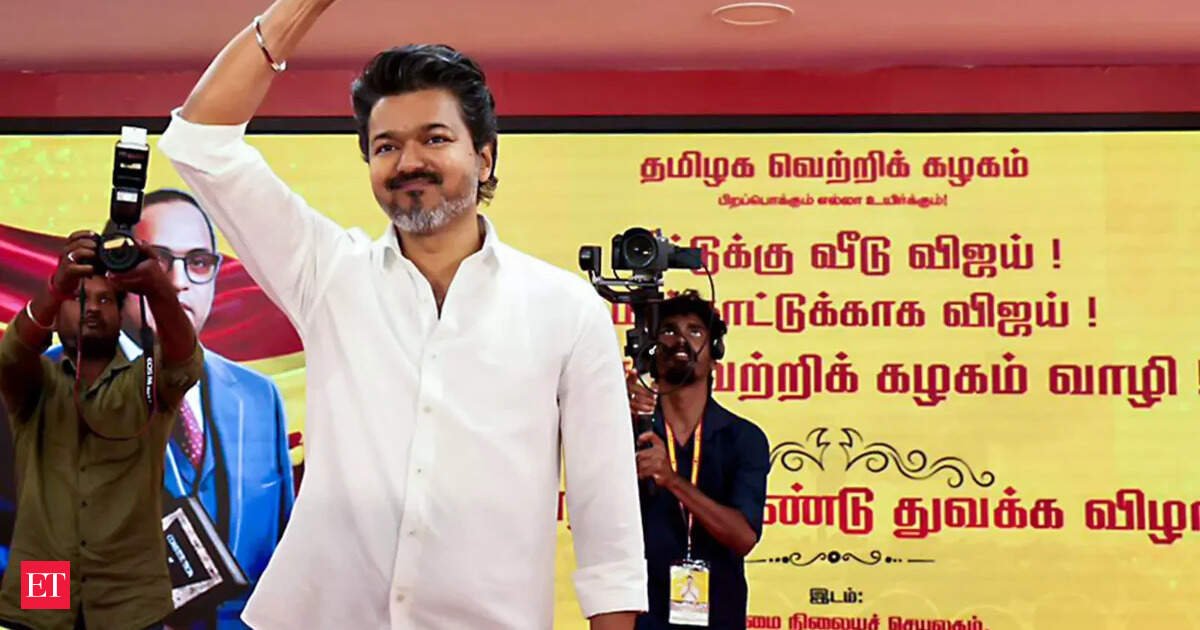
Coming amidst fierce criticism from political parties that the fiscal trajectory will cause severe strain on the economy, the government has also reiterated its commitment for fiscal prudence. It has formed a panel under veteran economist Montek Singh Ahluwalia to shore up an additional Rs 15,000 crore this year, amid concerns of an increasing debt burden.
Much of the 17 mega-announcements across departments made under Rule 110 in the Assembly during the 28-day budget session, which concluded on September 8, includes a transformative vision to modernise state infrastructure, secure energy independence, and deliver comprehensive agrarian relief.
The announcements are– power sector/power transmission infrastructure scheme of Rs 33,066 crore, Thoothukudi Supercritical Thermal Power Plant at Rs 20,800 crore, Infrastructure & roads / urban infrastructure push of Rs 11,000 crore, Urban road repairs and junction modernisation of Rs 1,850 crore, new Assembly-cum-Secretariat Complex for Rs 1,200 crore, welfare and agriculture / annual schemes including free electricity to people at Rs 10,000 crore, cooperative crop loan relief expansion of Rs 953.06 crore, among others. The cumulative amount is Rs 79,219.06 crore.
It features a landmark integrated Assembly-Secretariat complex at Pattinapakkam in Mylapore here and an ambitious Rs 55,628-crore power sector overhaul including a project in Chennai, over Rs 8,500 crore in continuous yearly welfare expenditures – including milk procurement price subsidies, LPG relief, and expanded MLA allowances – with the opposition party leaders warning that the unprecedented outlay risks deepening the state’s revenue deficit and pushing its existing Rs 10.98 lakh crore debt burden past critical threshold limits.
The cumulative amount may amount to a far higher sum which the state government has not officially outlined so far.
The mega sports infrastructure – the launch of a world-class Olympic City and a dedicated MotorSports City capable of hosting international racing events like Formula 1, are also embedded within the Rule 110 announcement package.According to a senior official in the government, the announcements are split into structural capital investments and continuous operational spending– capital and infrastructure investments (one-time outlay of Rs 57,703 crore), power and energy expansion: Rs 55,628 crore overhaul including Rs 20,800 crore for Thoothukudi Supercritical Thermal Power Station (on PPP model), Rs 33,066 crore statewide transmission modernisation, and Rs 1,762 crore urban power grid upgrades for Chennai.
The implementation of the Annapoorani Super Six free LPG scheme will entail the exchequer Rs 4,000 crore annually, alongside the 200-unit free electricity subsidy (Rs 1,730 crore annually). The government has presently announced providing three LPG cylinders.
A Rs 2,044 crore cooperative crop loan debt relief wave, paired with a Rs 720 crore annual subsidy (Rs 60 crore monthly) to absorb the Rs 3 per litre procurement price hike for Aavin milk producers without raising retail costs for consumers and the revised monthly allowance package (Rs 75,000 vehicle plus Rs 25,000 assistant allowance) per legislator across all 234 constituencies, adds Rs 28.08 crore annually to the exchequer, it was pointed out.
The government’s White Paper highlighted total outstanding debt nearing Rs 10.98 lakh crore, alongside a projected fiscal deficit of Rs 1.21 lakh crore.
With roughly one-third of state revenues already dedicated to interest servicing, adding Rs 8,500 plus crore in recurring operational expenses runs the risk of expanding the revenue deficit (currently at Rs 55,775 crore).
However, the official noted that the Rs 57,703 crore infrastructure outlay will be phased over 3-5 years, preventing an immediate cash drain with short-term (0-12 months): Rs 1,500 – Rs 2,000 crore allocated for DPRs, land clearances, initial work on the Assembly complex, and early tech park developments.
The medium-term (1-3 years): Rs 15,000 – Rs 20,000 crore disbursed as project milestones are aimed for Chennai power upgrades and regional transmission lines while the long-term (3 – 5 plus years) of Rs 35,000 plus crore drawn gradually for mega-energy assets, heavily insulated by Public-Private Partnership equity structures.
Beyond infrastructure funding, the government signaled major policy shifts for the rural economy. In addition to absorbing milk procurement costs and easing cooperative debt, Vijay announced the official withdrawal of legal cases against protesting farmers and teachers.
The government also confirmed it is dropping plans for the controversial Parandur greenfield airport, refocusing agrarian strategy toward direct financial support and cooperative credit restructuring.
While the opposition criticised the recurring welfare costs and MLA packages as unnecessary strain on a debt-laden state, the ruling Tamilaga Vettri Kazhagam maintains that balanced capital spending and rural relief will stimulate wider economic activity and long-term tax revenues across Tamil Nadu.
AIADMK launched a sharp attack on Vijay for prioritising personal convenience in selecting the location for new Secretariat-Assembly Complex solely because of its proximity to his residence, rather than evaluating the broader administrative needs of the state.
AIADMK general secretary Edappadi K Palaniswami argued that the state treasury is already under massive financial strain and spending Rs 1,200 crore for the administrative hub at Pattinapakkam prioritised vanity and “publicity over public welfare”.
Palaniswami criticised the loan waivers initially capped at Rs 50,000 for marginal farmers and later expanded up to Rs 75,000 as “scientific deception” and betrayal of trust.
Highlighting the TVK government’s own White Paper on State Finances, which notes that Tamil Nadu’s overall liabilities have reached an astronomical Rs 13.18 lakh crore, the former Chief Minister sharply criticised the administration for allegedly borrowing over Rs 28,000 crore within its first 100 days of taking office without attempting any fiscal consolidation.
Former Finance Minister and DMK legislator Thangam Thennarasu pointed out major flaws in the TVK’s budget data noting that while annual borrowing hovered around Rs 1 lakh crore during the DMK tenure, the TVK government skyrocketed annual state borrowing to Rs 1.22 lakh crore.
The budget actually reduced capital infrastructure expenditure by Rs 3,000 crore while allowing the state’s revenue deficit to widen by Rs 7,000 crore, he claimed, seeking to disprove TVK’s pre-election claims regarding fiscal prudence.
He has said that despite massive pre-election hype, the budget remained completely silent on delivering core TVK campaign promises, specifically large welfare payouts targeted at women, youth, and unconditional farm loan waivers.
A source said that the state’s debt-to-GSDP ratio stands at 27.01 percent significantly exceeding the economically stable benchmark of 23 percent. To keep the government operational, Finance Minister N Marie Wilson announced that the state will borrow a massive Rs 1,73,445 crore during this financial year alone.
The revenue deficit stands at Rs 55,775 crore, while the overall fiscal deficit has breached Rs 1,21,819 crore. Furthermore, Rs 78,683 crore is consumed strictly by interest payments on previous borrowings, leaving very tight margins for fresh developmental work.
The TVK government intentionally omitted massive pre-election freebies such as the Rs 2,500 monthly women’s allowance and six free cylinders to prevent immediate financial collapse, an official pointed out.
However, active announcements still carry major costs – free electricity scheme of providing 200 units to domestic consumers costs the exchequer Rs 1,730 crore annually, new Assembly-Secretariat Complex binds the state to a Rs 1,200 crore capital expenditure payout, he added.
The targeted welfare schemes – allocations for the ‘Annan Seer’ wedding scheme of providing 8-gram gold coin and silk saree to brides along with government-funded gold rings for newborns add substantial pressure to the social welfare budget.
To counter the deflating cash reserves, the TVK government has set up an economic advisory council headed by economist Ahluwalia to aggressively raise an additional Rs 15,000 crore this year. This framework centers on plugging massive administrative leakages within Commercial Taxes, State Excise, and Stamps/Registration departments to reclaim lost revenue.
Tamil Nadu Finance Secretary M A Siddique highlighted that while the state’s finances remain in a “difficult position” they have begun showing signs of recovery due to recent corrective measures. Tamil Nadu’s existing overall debt cannot be reduced immediately and will continue to rise each year, he said and noted that borrowing remains unavoidable.
However, Siddique emphasised that the critical metric is making sure the rate of income growth outpaces the rate at which debt rises.
“The state’s finances were in poor shape a few months ago, but thanks to aggressive policy changes, stability is returning,” he said and cautioned that the underlying structural problems cannot be fixed overnight and will take at least two years to fully improve the state’s financial health.
It has been proposed to generate an additional Rs 15,000 crore of fiscal space for FY27 through improved revenue mobilisation and approximately Rs 2,000 crore of this target has already been successfully secured, he added.
The retail price of Aavin milk for consumers remains unchanged. Instead, the state government will fully absorb the cost, compensating Aavin for an additional expenditure of Rs 60 crore monthly.
The Rs 79,219.06 crore announcement will place a substantial burden on Tamil Nadu’s already strained state finances, particularly given the findings of the recent government White Paper. The state’s revised budget estimates project a fiscal deficit of Rs 1.21 lakh crore (about 3 percent of the GSDP).
Despite all these, the TVK government which was formed in May this year, has laid out an ambitious target of achieving a 1.5 trillion dollar economy by 2036.
