






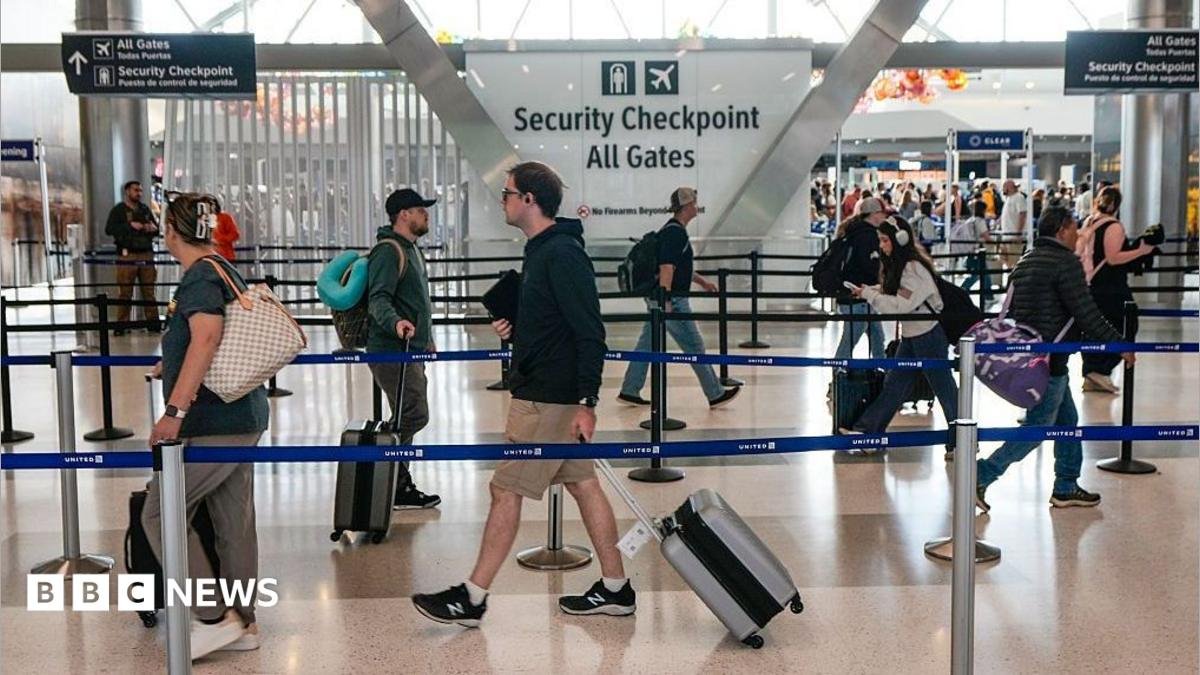
American airports dramatically changed in the wake of 9/11, but new policy changes are restoring some previously banned travel practices after 25 years.
The Transportation Security Administration (TSA) announced that it will soon allow individuals without tickets to pass through security and go to airport gates with loved ones.
TSA is also considering allowing some US passengers to take full water bottles through security, reversing a policy that was implemented after a foiled 2006 terror plot.
The changes represent some of the biggest shifts in aviation security in decades and likely stem from improved technology rather than a decline in standards, an aviation expert told the BBC.
Americans who participate in TSA PreCheck or have a known traveller number will be the first to take advantage of the new policies. Those travellers already go through a pre-approval process with the US government in order to receive speedier security screening at US airports.
Individuals who have TSA PreCheck and want to go to an airport gate without a ticket can apply online one to three days before their planned visits.
TSA announced this week that the Gateside TSA PreCheck programme will be offered at 13 airports across the US.
“This new program makes it easier to return to the gate for welcomes and send-offs, meet friends during a layover, and enjoy dining and shopping along the way, bringing back the moments that once defined air travel,” TSA wrote on its website.
Jeff Price, an aviation security expert and professor at Metro State University Denver, told the BBC that the post-9/11 policy change was about reducing the number of people security officers had to screen.
“It keeps the lines moving and allows us to focus more on the traveling passenger,” he said.
But now improvements in technology mean these policies can change, he said.
In addition to reinstating gate visitors, the Trump administration is also looking at allowing passengers with TSA PreCheck to take water with them through airport security, according to US media reports.
That would reverse a ban put in place following attempted terrorist attacks in the UK in 2006, in which individuals planned to smuggle liquid chemical mixtures inside soft drink and sports drink bottles.
The BBC requested confirmation of this reported change; TSA did not respond.
Price said newer security machines that TSA is installing to replace traditional X-ray machines have computed tomography capabilities, which “can do a much better job of detecting liquid-based explosives”.
These updates to security protocols follow a move from TSA last year to end the requirement that passengers remove their shoes during security screenings, an unpopular policy in place for two decades.
Reaction to the announcements on social media was mixed. Some older users who remember a time before these policies praised a return to normalcy, while younger users questioned whether the changes signaled any decline in safety.
“People have a nostalgia for a pre 9/11, it’s a calling back to a normal world, and I can see that part of it,” Price said. “I can see people wanting to get back to something that they feel more comfortable with, which was a pre 9/11 world.”
But Price said these changes will not impact the safety of passengers as long as core security measures remain in place and standards continue to be high.
“I don’t want to compromise [valid security measures] simply for a nostalgic feeling before 9/11,” he said. “I don’t think we should make those types of decisions so that we feel better. We can make those types of decisions as long as the security measures are not compromised, and that’s always what I look for in these situations.”


