








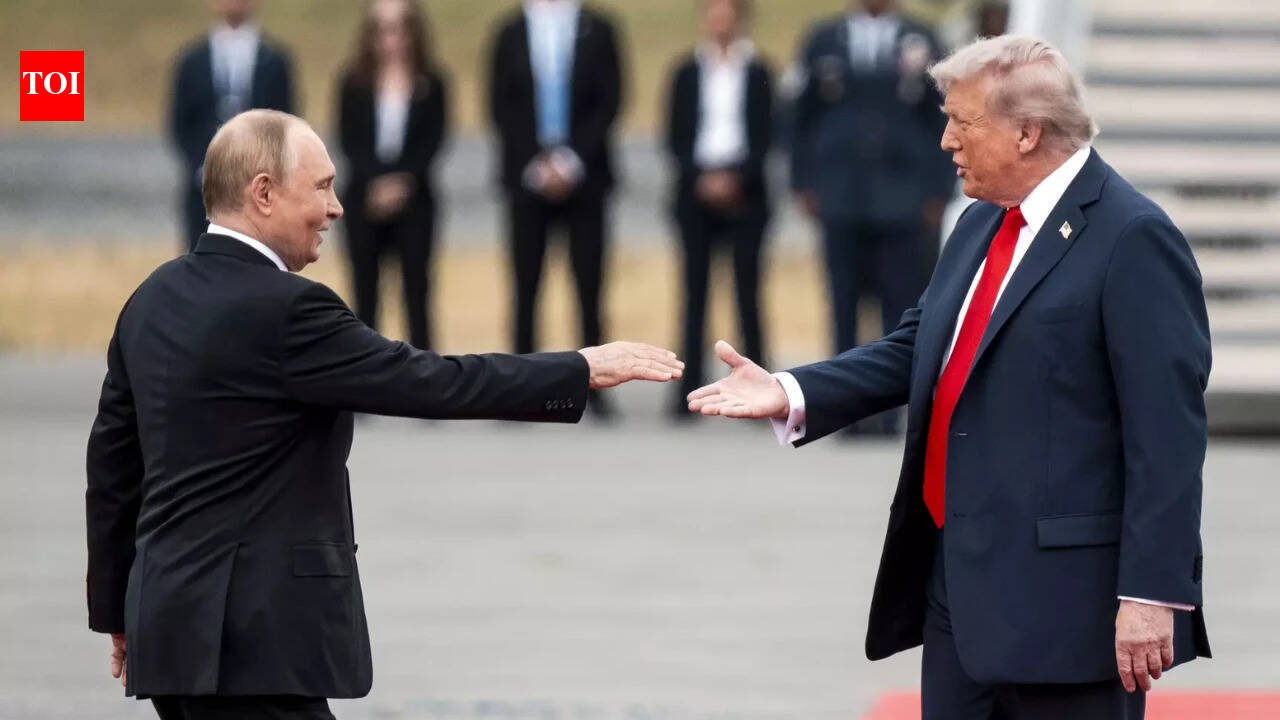
With US fuel prices soaring weeks before the midterm elections, US President Donald Trump turned to a most unlikely supplier for relief. Russia. Moscow, which Washington has sanctioned for years over its war in Ukraine, is now being allowed to supply diesel to the US and global markets under a temporary licence issued by the Treasury Department.The decision came after a telephone conversation between Trump and his Russian counterpart Vladimir Putin. The White House said the move will help bring down fuel costs for American farmers, truckers and families. But critics, including several Republicans, argue that the deal risks putting money into Moscow’s hands while doing little to ease prices for American consumers.The timing is politically sensitive as Americans are preparing to elect a new Congress on November 3, and the cost of living remains a major concern.For Trump, the political calculation appears straightforward. If Russian supplies arrive quickly and in sufficient quantities, they could help ease fuel prices and give his party a political boost. If deliveries fall short or prices remain high, the administration could end up granting Moscow significant economic relief without delivering much for American consumers.
Trump has waved many sactions days before they were due to take effect under Graham Act.
How much difference can Russian diesel make?
Diesel prices averaged $6.28 a gallon on October 11, up 71% from a year earlier. The American Automobile Association (AAA), which tracks fuel prices, put the average at $6.33 on October 16.The impact extends well beyond motorists because diesel also powers the lorries that transport goods, tractors used by farmers and cargo vessels that move products around the world. When diesel becomes more expensive, the cost of transporting food and other essentials rises, eventually feeding into household bills.Farm-state Republicans had pressed the White House to act, with Senator Chuck Grassley of Iowa and others calling for a ban on fuel exports to protect domestic supplies. Trump initially backed the idea, but the White House later ruled it out. The administration subsequently turned to Russian diesel.In announcing the deal, Trump said bringing down prices for American farmers, ranchers and truckers was his highest priority.According to Trump’s announcement, Russia would supply approximately 2.24 million barrels immediately, followed by 3.73 million barrels the next month, with subsequent supplies expected to roughly double.
Russian oil imports by different nations.
Russia said on October 21 that it would send its first diesel shipment to the US the following day, carrying 40,000 metric tonnes of fuel. More shipments are planned, although questions remain over whether Moscow can deliver enough diesel to make a significant difference to prices.The figures, however, offer a sense of the deal’s limitations. The second shipment, spread over a month, would amount to around 124,000 barrels a day. Kpler, a market intelligence firm, estimates the global diesel shortfall at about one million barrels a day. The planned shipment would therefore cover only around one-eighth of that gap.And there is also no guarantee that Russia can deliver the promised volumes. The International Energy Agency has said Russian diesel production has fallen by about 30 per cent, with Ukrainian attacks on Russian refineries contributing to the squeeze.Rachel Ziemba, an analyst specialising in economics and geopolitics, said the measure was unlikely to make a significant difference to the global diesel market in the near term. Kpler’s Michelle Brouhard has also warned that Russia’s ability to supply additional barrels remains uncertain.Even if Russian diesel reaches the market, lower wholesale prices may not immediately translate into cheaper fuel for Americans. Refining capacity, transportation costs and the time required for deliveries could affect how quickly consumers see any relief.
A lifeline for Moscow
While the benefit to American consumers is still unclear, the decision could offer Russia a more immediate advantage by opening a route to sell fuel that sanctions had restricted.The Treasury licence remains valid until April 7, 2027, making it significantly longer than the usual 30-day sanctions waivers. It is the first diesel waiver since the start of the Ukraine war to extend beyond that standard period.Putin had said days before the announcement that Russia had ample diesel supplies but was struggling to sell them abroad because of sanctions. News agency Reuters reported that his envoy, Kirill Dmitriev, had visited Washington the previous month seeking licences covering major Russian oil companies.Dmitriev welcomed the Treasury notice, saying Russian-American cooperation on diesel and energy would benefit the world. He later described the broader sanctions waiver as a historic moment.The move was followed by a broader sanctions waiver. On October 16, Trump signed an executive order waiving sanctions and tariffs provided for under the newly enacted Graham Act, certifying that the decision was in the national interest.The waiver suspended new sanctions and potential tariffs under the law, including penalties targeting countries that purchase Russian energy. India and China were among the countries that could have faced additional trade restrictions. The White House argued that enforcing the measures would obstruct efforts to negotiate an end to the war.Together, the decisions marked a sharp shift from Trump’s earlier approach. Last year, his administration imposed an additional 25% tariff on India over its purchases of Russian oil. On October 2, Trump and other G7 leaders had also pledged to maintain pressure on Moscow.A bipartisan group of US senators has since warned that easing restrictions would not serve American interests and would help finance Russia’s war against Ukraine.Ukraine’s President Volodymyr Zelenskyy, who learnt about the diesel deal after it had been finalised, called it unfair and dishonest, describing it as a sign of weakness. Trump responded by suggesting that Ukraine needed a new president and later said Putin appeared more interested in reaching a deal than Zelenskyy.Trump has also placed the burden on Ukraine to end the nearly four-year war with Russia, arguing that Moscow’s military strength and territorial gains leave Kyiv at a disadvantage.“Ukraine has to want to settle this war,” Trump told reporters in the Oval Office, signalling that he expects Kyiv to move towards a negotiated settlement even as the fighting continues.Trump pointed to Russia’s ability to sustain its military campaign and capture territory, portraying Moscow as having the upper hand in the conflict.“Russia is a big machine – they just keep grinding forward, and that’s what they’ve done. They’ve taken a very large piece of land,” he said.Trump also questioned the value of American assistance to Kyiv, complaining that Washington had spent heavily on supporting Ukraine without receiving anything in return.“We’ve given a lot to Ukraine. We’ve gotten absolutely nothing back except grief, death, tremendous monetary loss,” he said.The US administration has defended its decision by pointing to Ukrainian attacks on Russian refineries, which it says have contributed to higher fuel prices. A US official told Axios that Trump acted after Zelenskyy ignored repeated requests to stop the strikes.However, Russia has continued attacking Ukrainian energy infrastructure despite an energy ceasefire announced by Trump, with no comparable punitive action from Washington.
Republicans divided as election pressure mounts
The backlash has exposed divisions within Trump’s own party. Republican senators Susan Collins, Lisa Murkowski, Mitch McConnell, John Cornyn and Thom Tillis joined Democrats in criticising the deal, calling it a betrayal of Ukraine and a gift to an adversary.Congressman Brian Fitzpatrick has vowed to force a House vote to block the purchases, predicting overwhelming support for the measure. Senator Richard Blumenthal, a co-sponsor of the sanctions legislation, has also condemned the administration’s decision.Other Republicans, including Anna Paulina Luna and Senate Majority Whip John Barrasso, have defended it. White House spokesperson Anna Kelly said the deal would help farmers, truckers and families while Trump continued pressing both sides to stop attacks on refineries.The decision has also raised legal questions. Seven senators argue that allowing Russian petroleum products into the US violates a 2022 law barring such imports. Tillis has separately questioned whether the administration complied with requirements to notify Congress before lifting sanctions. The Treasury Department maintains that its actions comply with applicable laws.For European governments, the easing of pressure on Moscow is particularly uncomfortable as Nato allies contend with Russian sabotage, cyberattacks and drone incursions. Zelenskyy has warned that Russia could repay the concession with further attacks and deception.Domestic politics help explain why Trump is keen to show results quickly. A Pew Research Center poll found that 44% of registered voters viewed their congressional vote as a way to oppose Trump, compared with 19% who saw it as a way to support him.Trump has urged Republicans to campaign as though he were on the ballot, even as he insists that his own electoral victories are already settled.The Russian diesel deal is therefore more than an energy decision. It is an attempt to address a pressing economic problem while navigating an election, a costly war and competing demands from allies.With the November 3 election approaching, the central question is whether the promised fuel will reach the market in sufficient quantities to make a noticeable difference. For now, Washington has opened the door to Russian diesel, but whether the decision brings relief to American consumers remains uncertain.


