



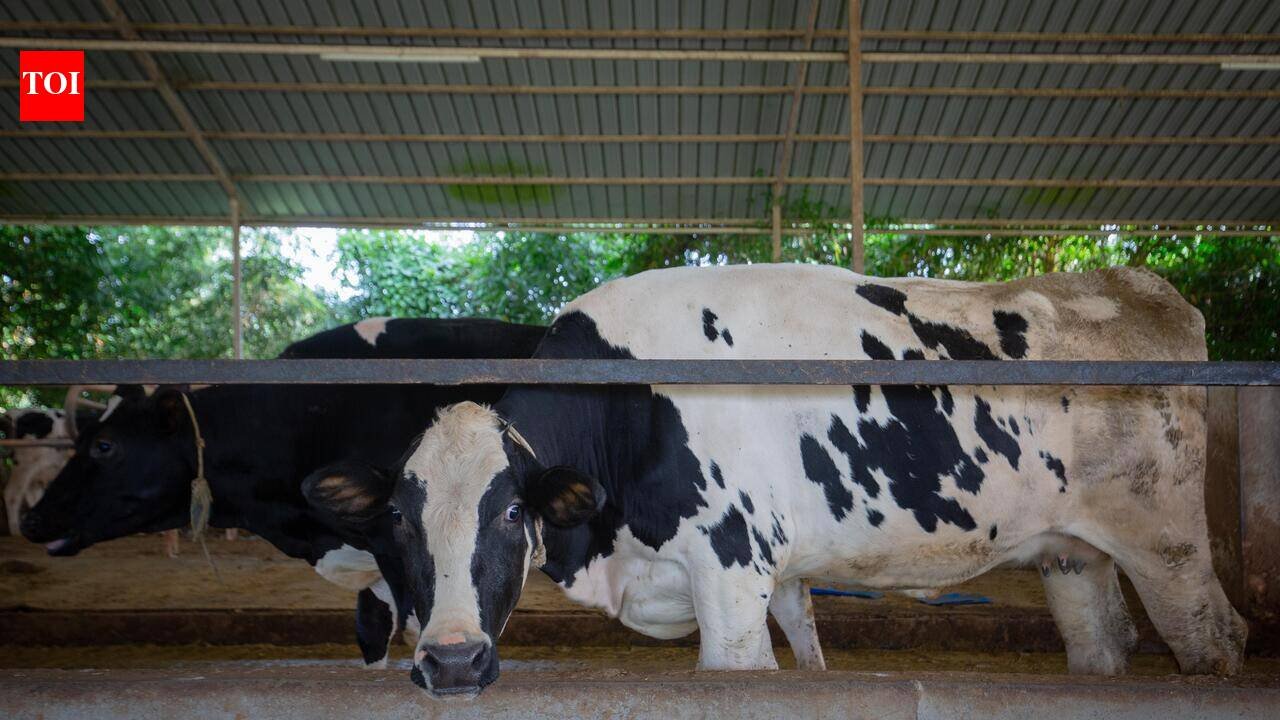
Agartala: Tripura has become the second-largest producer of milk in the Northeast, showcasing the effects of ongoing investments in dairy development, veterinary care and livestock services, Animal Resource Development and Fisheries Minister Sudhangshu Das said.Das indicated that the ARD Department utilised 97.3% of its budget for the financial year 2025-26 and has received a 23.33% budget increase for 2026-27 to enhance the sector. The department is focused on boosting production of milk, eggs and meat while improving veterinary facilities and promoting livestock farming as a viable means of rural income.Tripura has also improved its dairy facilities by launching a 40,000-litre-per-day milk processing plant in Bamutia, near Agartala. A liquid nitrogen production facility is now operational in RK Nagar, with additional similar plants being set up in Udaipur and Kumarghat to support artificial insemination efforts and lessen reliance on outside resources.Das mentioned that the department has entered into a tripartite agreement with the National Dairy Development Board and Gomati Milk Union as part of the White Revolution 2.0 initiative to bolster dairy cooperatives and enhance farmers’ earnings.Moreover, the govt has increased fodder production, assisted backyard poultry and duck farming, safeguarded more than 16,000 livestock through insurance, and offered financial aid and compensation to livestock owners. To improve animal healthcare services throughout the state, new veterinary hospitals, dispensaries, sub-centres and pharmacies have also been set up.In 2025-26, veterinary services throughout the state treated and provided preventive care for nearly 63.97 lakh livestock and poultry. More than 11.84 lakh animals were vaccinated against Foot-and-Mouth Disease, and more than 80 lakh poultry birds received vaccinations for various illnesses, Das said.To enhance veterinary care accessibility, 13 Mobile Veterinary Units are operational, and there are plans to add 50 Mini Mobile Veterinary Units. Emergency veterinary assistance is also available for farmers through the Bharat Sanjeevani toll-free helpline, the minister informed.He noted that in the last financial year, more than 1.23 lakh artificial insemination procedures were performed. The application of sex-sorted semen resulted in more than 37,300 calves being born, the majority being female, which is likely to significantly boost milk production in the future.


