



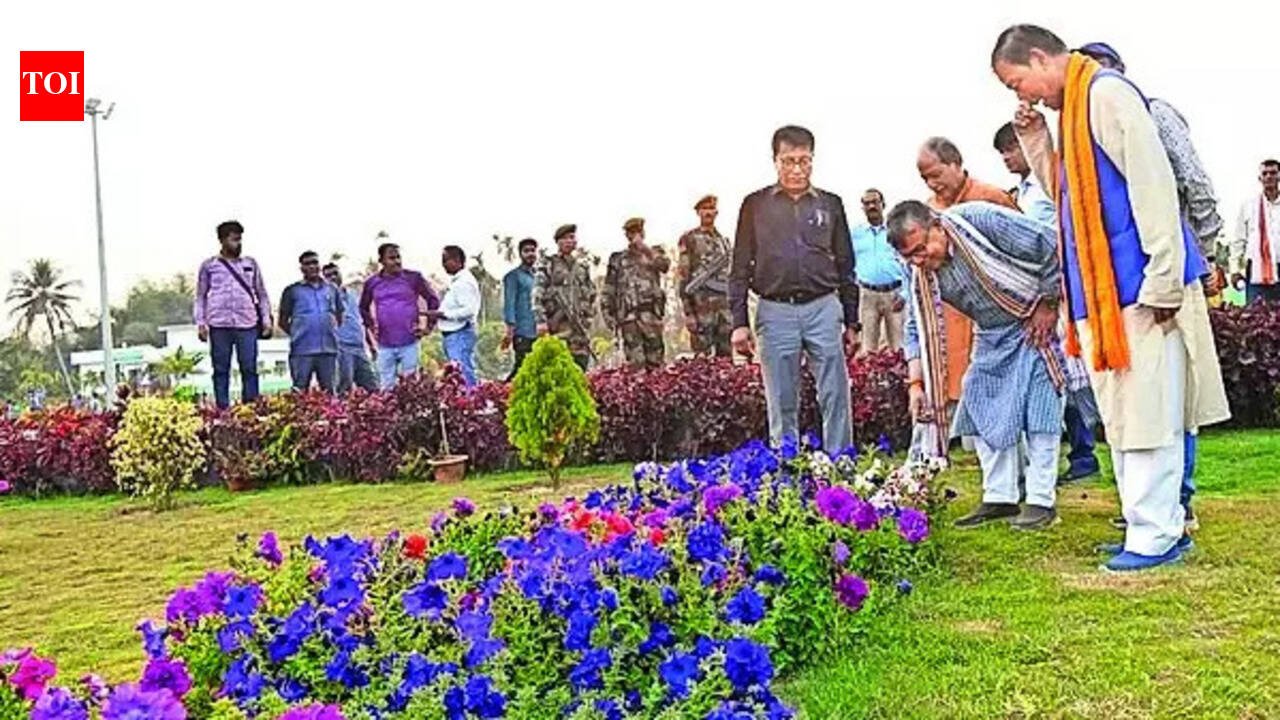
Agartala: The Tripura govt has implemented several specialised measures to boost the growth of flower production, responding to the notable rise in flower demand that has been observed since 2018-19, agriculture and farmer’s welfare minister Ratan Lal Nath said.Over the past seven years, farmers have begun earning favourable prices for their flowers in local markets, encouraging greater participation in floriculture. Highlighting India’s strides in floriculture, Nath said India ranks second globally in flower cultivation, while it has taken the top spot in paddy farming, surpassing China.He emphasised the economic viability of flower cultivation, stating that while it cannot be practised everywhere, it offers substantial earnings. Many farmers in areas like Bishalgarh, previously focused on vegetable farming, have now shifted to floriculture, seeing it as a lucrative venture.The state’s initiative aims to promote self-reliance and generate widespread employment opportunities. In addition to serving as a source of income, flowers can also be utilised for producing various goods such as Holi colours, medicines and perfumes, given their high market demand.The minister said Tripura’s natural advantages for floriculture, including fertile soil, sufficient rainfall and a subtropical climate, make the state highly promising for growing diverse varieties of flowers. Traditional blooms such as marigold, gladiolus and rose dominate conventional floriculture markets in Tripura.Further advancements have enabled the state to join the ranks of high-tech floriculture regions. Flowers such as anthurium, orchid and gerbera are now being grown on conserved farmland through advanced methods.Since 2018-19, the cultivation area for local flowers has expanded by 60% for marigold, gladiolus and rose. Overall, traditional flower farming has seen a remarkable 332% growth over seven years, while high-tech floriculture has increased by 124%.Designed as an attraction for flower enthusiasts, the facility will provide high-quality and cost-effective saplings to meet demand while also offering training opportunities for aspiring floriculturists. In the years ahead, the centre is expected to advance Tripura’s position in flower production across India.


