







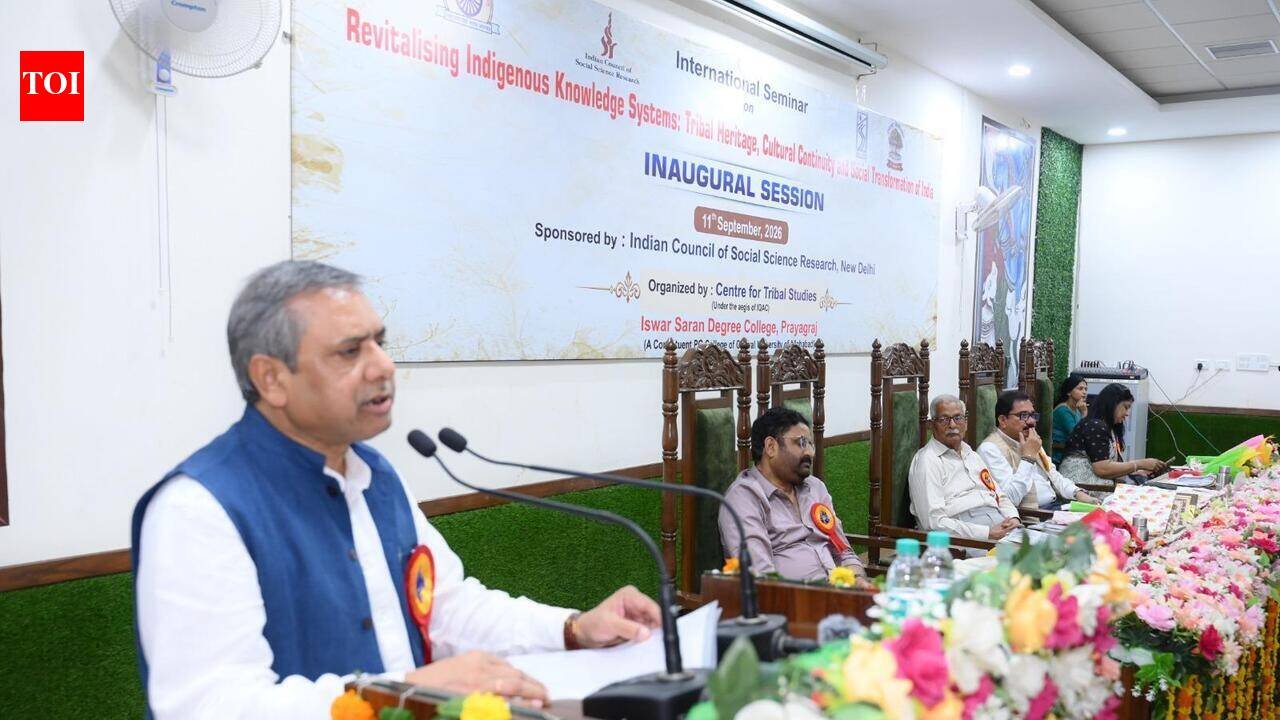
Prayagraj: Indigenous knowledge traditions, which have faced systematic erosion and marginalisation, need fresh research and scholarship to address contemporary social and global challenges, said Prof Himanshu Chaturvedi, director of Indian Institute of Advanced Study, Shimla, at an international seminar held at Iswar Saran PG College (ISPGC) on Friday.Speaking at the inaugural session of the two-day seminar on “Revitalising Indigenous Knowledge Systems: Tribal Heritage, Cultural Continuity and Social Transformation in India”, Chaturvedi said indigenous epistemological traditions could provide direction to society and the education system.He stressed that culture is dynamic and can be preserved only by remaining rooted in its foundations.Prof D R Sahu, president of Indian Sociological Society, said tribal heritage and cultural richness were not opposed to modernity and could contribute to its advancement. He called for greater interaction among diverse indigenous knowledge traditions rather than viewing them through binaries.Delivering the keynote address, Prof Daniel Rycroft of University of East Anglia, England, said India’s efforts to explore indigenous knowledge were challenging the dominance of Western knowledge traditions.He said tribal and Indigenous communities were important holders of ecological and social knowledge that could contribute to national development and called for pluralistic teaching and collaborative research.College principal Prof Anand Shanker Singh said the seminar would open new dimensions in the study of indigenous traditions. Convener Shaista Irshad highlighted the role of indigenous knowledge in social justice, cultural resilience and environmental sustainability.The seminar souvenir and the book “Tribal Structure, Culture and Development”, authored by Vikash Kumar, were released. An MoU was also signed with Jan Kalyan Kendra, Hazaribag.On Saturday, 650 research papers are scheduled to be presented across six plenary and 16 technical sessions in offline and online modes.


