






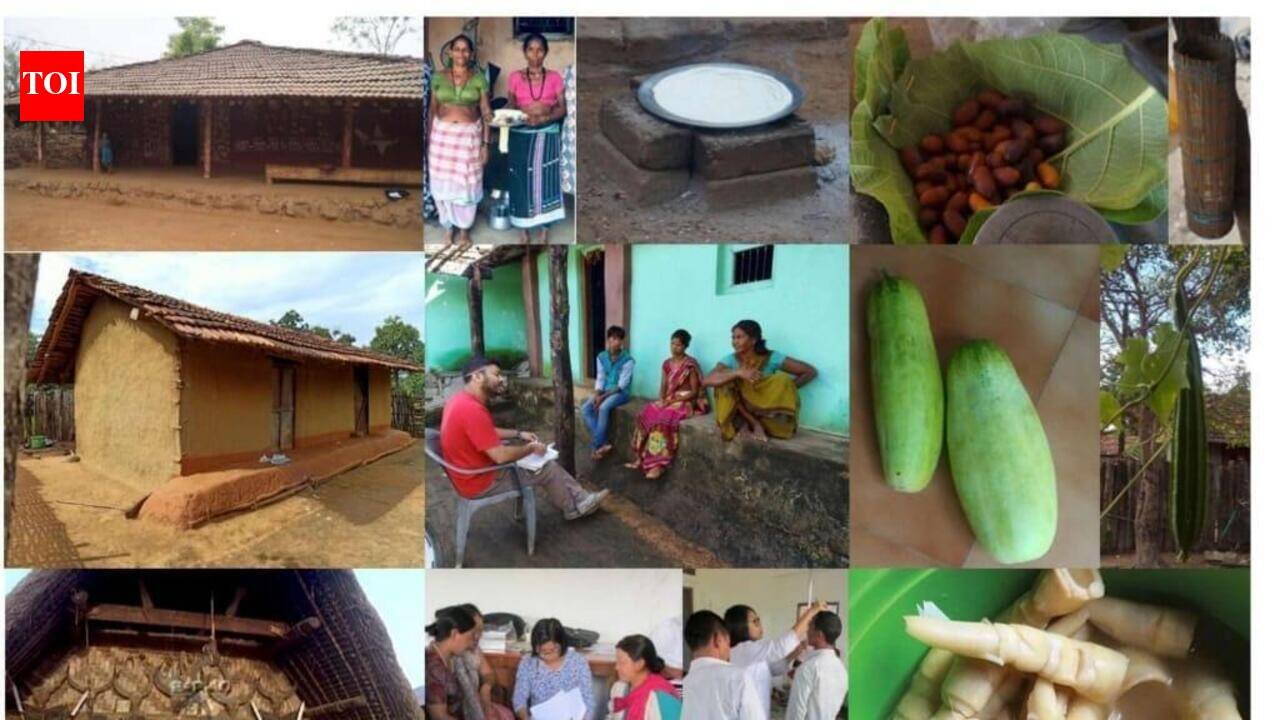
Pune: Researchers have found that traditional diets, particularly those rich in dairy and grains in trans-Himalayan populations, were associated with distinct gut bacteria and locally adapted microbial strains. The study stressed the need for India-specific microbiome research and probiotics.The study was led by researchers from BRIC-National Centre for Cell Science (NCCS), Pune, and Stanford University, USA. It concentrated on eight Indian tribal communities and showed that what people eat over generations may leave a lasting imprint not just on their health, but on the trillions of microbes living inside their gut.The study analysed 76 healthy adults from the Warli, Gond, Madia, Kabui, Boto, Balti, Brokpa and Purigpa communities across four geographically diverse regions of India. Researchers examined stool samples alongside dietary habits of participants using advanced DNA sequencing.The four trans-Himalayan groups regularly consumed milk, homemade butter, wheat and barley as also rice, turmeric and chilli. The research showed that the communities had more diverse gut microbiomes and significantly higher levels of Bifidobacterium compared to people who didn’t widely consume the aforementioned food. Bifidobacterium is a group of bacteria known to break down carbohydrates and commonly used in probiotic products.Researchers also found that gut microbes in the trans-Himalayan participants carried distinct and diverse genes involved in digesting lactose, galactose and grain-derived carbohydrates, suggesting that the microbial communities had adapted to foods these populations consumed traditionally.Co-author Erica Sonnenburg, microbiome researcher at Stanford University, said, “The gut microbiome is a record of our daily environment. It carries the imprint of what we eat, how we live and the microorganisms to which we are exposed.”Researchers stressed that the findings showed an association and not a cause-and-effect relationship. It noted that other than food, geography, altitude and lifestyle may also influence gut microbes.Moreover, one of the study’s most striking findings was that strains of Bifidobacterium adolescentis isolated from these participants were genetically distinct from many strains commonly found in industrialised countries. Although belonging to the same bacterial species, the Indian bacterial strains carried unique combinations of carbohydrate-processing genes — indicating adaptation to local diets.An important question raised by the findings was whether probiotics developed in western countries were equally effective for Indian populations. Researchers cautioned against assuming that all probiotic strains behaved similarly simply because they belonged to the same bacterial species.Professor at Stanford University and co-corresponding author Justin Sonnenburg said, “A bacterial species name tells only part of the story. The strain-level genes often determine how the organism behaves and what it can contribute to the gut ecosystem.”“Consumers should not assume that all members of a probiotic species are interchangeable. The appropriate strain, dose, health objective and supporting clinical evidence are all important,” said principal investigator and scientist Dr Dhiraj Dhotre of NCCS.Rather than rejecting imported probiotics, the study highlighted the need to evaluate them in Indian populations and develop indigenous probiotic strains based on healthy Indian microbiomes. Dr Abhijit Kulkarni, first co-author of the study, said such strains would still require extensive genomic, safety and clinical testing before being commercialised.Dhotre highlighted the under-representation of Indian populations in global microbiome research. Although Indians make up a significant share of the world’s population, less than 1% of samples used in human microbiome studies until 2022 came from India. “When most reference data come from a limited number of countries, a microbiome that is normal for Indians can be incorrectly interpreted as unusual. Population-specific reference data are essential before microbiome science can be translated responsibly into healthcare,” said co-author Dr Yogesh Shouche.Even with only 76 participants, the researchers identified 14 putatively novel bacterial species and around 200 local microbial strains, suggesting that much of India’s microbial diversity remained unexplored. The study was carried out as a proof of concept for the larger project called Indian Human Microbiome Initiative. Stanford University was involved in data analysis. BRIC-IBSD, Imphal, Savitribai Phule Pune University, Kashmir University, Symbiosis International (Deemed University), Pune, and University of Turku, Finland, were also involved in the study.India’s ongoing Indian Human Microbiome Initiative, funded by the Indian govt’s department of biotechnology with NCCS Pune as the nodal institute, has now profiled 4,080 healthy individuals from 17 endogamous and tribal community populations. Dhotre said the project, whose findings are expected soon, could help build an Indian reference microbiome to guide future nutrition research, diagnostics and the development of indigenous probiotics tailored to Indian populations.


