



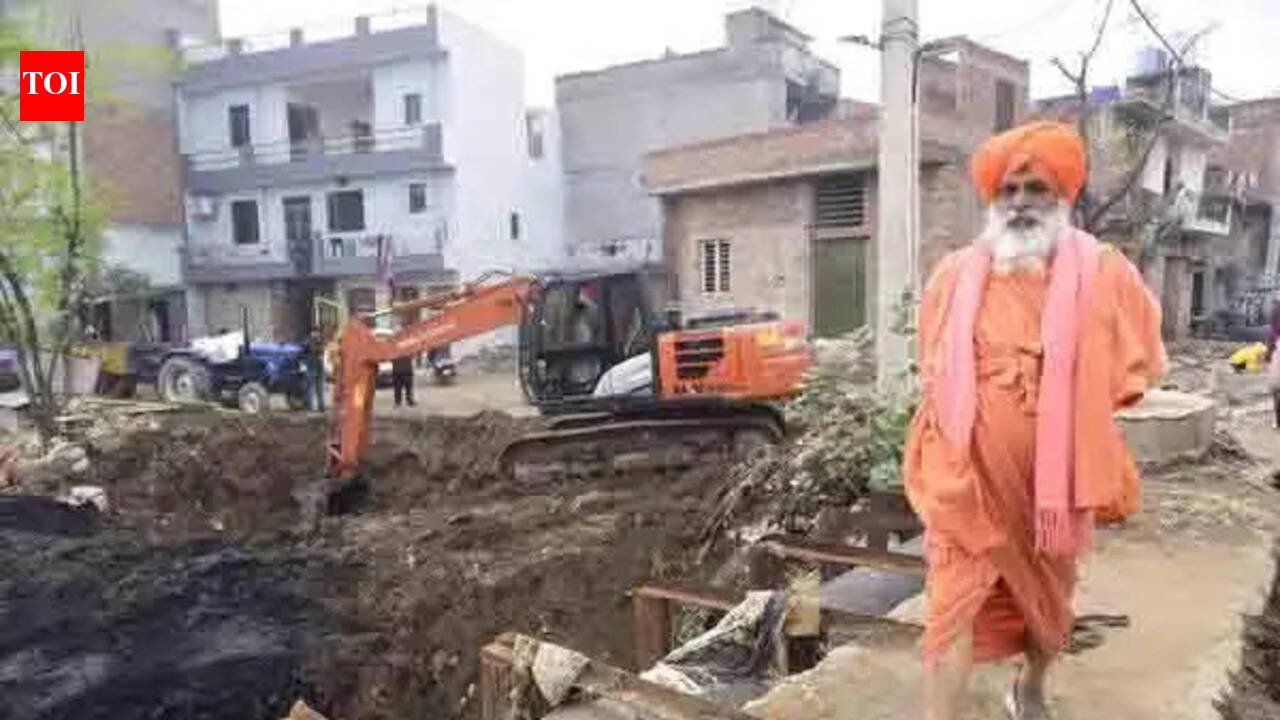
Ludhiana: Despite a massive expansion in wastewater treatment capacity, negligence and dairy waste continue to choke the Buddha Dariya, according to a high-level review of the waterway’s restoration efforts.Rajya Sabha member and prominent environmentalist Balbir Singh Seechewal recently presented a revitalised framework for restoring the river, which remains heavily polluted by industrial runoff and livestock waste. The strategy highlights a disconnect between the city’s available infrastructure and its actual environmental impact.The Dairy DilemmaA primary hurdle in the restoration remains the dairy complexes of Tajpur and Haibowal. While the disposal of waste from 79 dairies was halted in 2025, cow dung and wastewater from remaining operations continue to flow into the drain. Key infrastructure delays have exacerbated the issue. Proposed compressed biogas (CBG) plants at the Tajpur and Haibowal complexes have yet to begin operations. Authorities are currently discussing a crackdown on unlicensed dairy farms operating within and around the city limits.Capacity vs NegligenceLudhiana’s wastewater statistics reveal a significant gap between potential and performance. The city generates approximately 650 million litres a day (MLD) of wastewater, while the state govt has developed a treatment capacity of 800 MLD.Despite an 150 MLD surplus in theoretical capacity, untreated water still reaches the Buddha Dariya. Seechewal attributed this failure to administrative negligence, though he noted some progress: a 225 MLD treatment plant that previously received only 100 MLD is now processing up to 220 MLD after several feeder drains were successfully connected.Flood Protection and InfraBeyond river cleaning, Seechewal has urged the state govt to move forward with a ₹117 crore project to pave an 89-km road along the Satluj river’s Dhussi embankment, stretching from Giddarpindi to Phillaur.The project, which seeks funding assistance from NABARD, was first proposed in 2023. Advocates argue the paved embankment would serve a dual purpose: providing a vital transit route for the region and reinforcing flood defenses for vulnerable riverside communities. Authorities have reaffirmed their commitment to a pollution-free river and are expected to address the technical failures of the current treatment system.


