



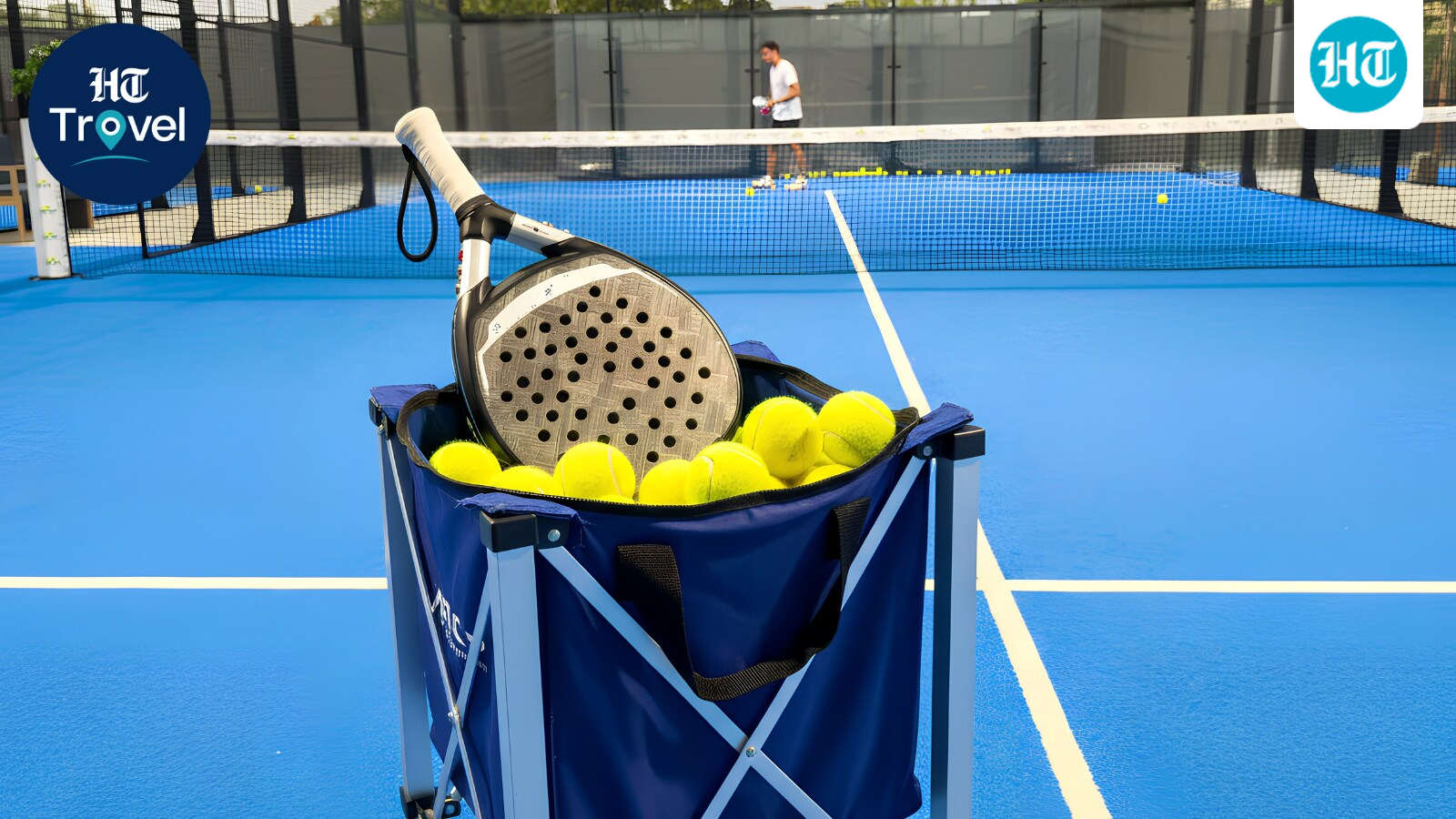
A holiday used to mean leaving the routine behind. Now, for a growing number of travellers, the routine is coming along in the suitcase, complete with workout clothes, running shoes and, increasingly, a racket. Fitness and wellness are becoming part of how people think about travel, with sports such as padel and pickleball adding a more social side to active holidays. For some travellers, finding a court is now almost as useful as finding a good restaurant or a comfortable hotel. The numbers suggest this is more than a passing travel preference. According to the Global Wellness Institute’s 2025 Global Wellness Economy Monitor, wellness travellers took 1.24 billion international and domestic trips in 2024. These trips accounted for 8.3% of all tourism trips and 17.6% of tourism spending. Asia Pacific was the largest region by number of wellness trips, with India and China together accounting for nearly three-quarters of the region’s wellness travel.
So, what happens when wellness travel moves beyond spas and yoga sessions and onto a sports court? Nikhil Sachdev, Co-founder of PadelPark India, believes the change is already visible in the way people think about their free time.
“Staying active is no longer something people simply try to fit into their daily schedules. Increasingly, it is becoming part of how they choose to spend their holidays.”
The holiday is no longer about switching off completely
There was a time when a holiday meant doing the exact opposite of what you did at home. Work stopped, alarms were ignored, and exercise could quite happily wait until Monday.
That idea is changing. Anu Bansal, Nilesh Bansal, Ishita Mohatta and Gaurav Mohatta, co-founders of Padel360, say travellers are increasingly trying to maintain the lifestyle they enjoy at home even when they are away.
“Travel is no longer only about switching off from routine. Increasingly, people are looking at travel as a way to maintain the lifestyle they follow at home, or even build healthier habits while they are away.”
That does not necessarily mean spending the entire holiday at a fitness retreat. It can be much simpler. A morning game of padel, an evening pickleball session or a long walk after dinner can become part of the holiday without taking over the trip. For travellers who already play these sports, the appeal is obvious. They get to stay active while also doing something they genuinely enjoy.
Court first, hotel second?
For a small but growing group of travellers, the availability of a court can influence where they stay. Hotels have noticed this too. Amanpuri in Thailand, for example, has two dedicated padel courts alongside four tennis courts. Amanyara in Turks and Caicos offers guests access to tennis, pickleball and padel courts as part of its wider recreational facilities.
Dubai is another useful example. Le Royal Méridien Beach Resort & Spa offers both padel and pickleball, with courts available for guests and visitors to book, while Visit Dubai now has a dedicated guide to padel venues across the city. This changes the role of sport in a hotel. It is no longer simply something tucked away in the recreation section of the property website. For some travellers, it can become part of the reason they choose the property in the first place.
And that is particularly relevant for destinations where sport already has a strong social culture.
Padel makes meeting people easier
One of the interesting things about padel is that the game is social almost by design.
You can arrive in a city knowing nobody, book a session and end up playing with three people you have never met. Digital booking platforms and online communities make this easier by helping players find courts, sessions and other players. Sachdev sees this as one of the biggest advantages for travellers.
“A beginner can take a local lesson and learn the fundamentals, while an experienced player can train with coaches in different cities and experience new playing styles.”
That gives the traveller a way to interact with a destination beyond the usual tourist experience.
Instead of simply looking at a city, you are participating in something there.
The rise of the active holiday
The Padel360 team sees the shift as part of a larger change in how people define leisure.
“A holiday does not necessarily mean stepping away from your routine completely. For many, it means finding a better balance between relaxation, movement, good food, outdoor experiences and mental well-being.”
This is where the new active holiday gets interesting. You could spend the morning playing padel, have a leisurely lunch, visit a local market in the afternoon and finish the day with dinner. The sport is not replacing the holiday. It is becoming one part of it. For younger travellers in particular, that combination of activity and social interaction can be more appealing than a tightly planned sightseeing schedule. There is also a sense of participation that comes with sport. You are not simply visiting a destination and ticking off attractions. You are doing something that people who live there may also be doing.
India has an opportunity here
India already has the ingredients for this kind of travel. Food, hospitality, outdoor experiences and increasingly active urban communities are all part of the country’s tourism mix.
Padel and pickleball could add another layer. As more courts and sporting communities develop, travellers may begin looking at destinations through a slightly different lens. A resort with good sports facilities could appeal to families who want children to stay active. A city with several courts could attract players looking for a weekend break. A tournament could give visitors a reason to travel in the first place.
The wellness market is already substantial in India. The Global Wellness Institute’s 2026 country rankings put India’s wellness economy at $180 billion in 2024, with an annual growth rate of 11.3% between 2019 and 2024. That creates an interesting space for travel brands and hotels to explore, particularly as travellers look for wellness experiences that feel less formal and more social.
Could your next holiday involve a racket?
Perhaps the more interesting question is not why fitness is entering travel, but why it ever had to stay separate from it. People do not suddenly stop enjoying the things they like because they have boarded a flight. A runner still wants to run. A golfer still wants to play. A padel enthusiast will probably look for a court. The difference now is that hotels and destinations are beginning to respond to those interests. Sachdev says travellers may start with the sport, but the experience can become much bigger than the game itself.
“You may travel because you love the game, but it is often the people you meet and the experiences you share that become the most memorable part.”
That could be the real appeal of sports-led travel. You get your game, your workout and your holiday, without having to treat any of them as separate parts of the trip.
Three places already catering to racket sport travellers
Dubai: The city has a growing network of padel venues, with hotels such as Le Royal Méridien Beach Resort & Spa offering both padel and pickleball.
Phuket: Amanpuri has two dedicated padel courts along with four tennis courts, making racket sports part of its resort offering.
Turks and Caicos: Amanyara includes tennis, pickleball and padel courts among its guest facilities, alongside wellness classes and water sports.
The bigger shift is simple. Wellness travel is no longer limited to spa menus and meditation sessions. For some travellers, feeling good on holiday can mean getting outside, playing a game, meeting people and then sitting down to a very good meal. And frankly, that sounds a lot more like a holiday than spending two hours on a treadmill in a hotel basement.
Similar articles for you
Tried and Tested: Every suitcase I have reviewed so far, simplified into one buying guide
I compared hard shell VS soft shell luggage; here’s what I’d buy again
Handpicked monsoon destinations in India backed by hospitality experts; what to pack, how to plan
