



In his Independence Day address this year, Prime Minister (PM) Narendra Modi unveiled Shakti ki Saptadhara (seven streams of strength), to lift India to developed-country status by 2047. The seven streams are: manufacturing, agriculture, technology, connectivity, the green and blue economy, defence, and soft power. The question now is whether the framework and financing for this ambition are in place. The answer is: more than one might expect. India has recently signed free trade agreements (FTAs) with Australia, Japan, New Zealand, the UK, Oman, the EU, and European Free Trade Association (Iceland, Liechtenstein, Norway, and Switzerland), most carrying a substantial investment commitment. While none of these deals were negotiated with the saptadhara specifically in mind, their architectures are congruent enough to suggest more than coincidence.

Australia’s fertilisers and minerals directly touch at least five of the seven streams — the most vital being those around technology, the green economy and agriculture. At the Melbourne CEOs Forum in July, PM Modi urged business leaders to leverage the two countries’ complementary strengths and build joint solutions in rare earths, lithium, batteries, electronics, EVs, semiconductors, AI, and defence supply chains, while calling for an early conclusion of the Comprehensive Economic Cooperation Agreement to take business ties to the next level.
The two countries launched a dedicated critical minerals corridor, which has identified target projects in lithium and cobalt. Further, Indian Space Research Organisation and the Australian Space Agency will augment the existing cooperation on crew module recovery, and commission a temporary tracking terminal on the Cocos (Keeling) Islands to support ISRO’s Gaganyaan programme. It was providential, then, that companies such as Mahindra & Mahindra and Galaxeye were fellow delegates at the bilateral CEO Forum in Melbourne.
Also Read | Eye on China, India and US conclude critical minerals and rare earths framework
Japan possibly offers the clearest model of a sustained partnership translating into capital. At July’s annual summit, the two governments reaffirmed the target of 10 trillion yen (roughly $68 billion) — in Japanese investment into India over a decade, and added a further $10-billon package this year spanning AI, semiconductors, clean energy and next-generation mobility. Several Japanese companies have been involved in the seven streams, and are well poised to expand further along these lines. NEC, for instance, is already embedded in India’s digital infrastructure, from running the Logistics Data Bank, which tracks nearly all of India’s container trade, to the biometric engine behind Aadhaar, and the Chennai-Andaman undersea cable. Tata Electronics’ semiconductor fabrication unit at Dholera, depends heavily on Japanese equipment from makers like Tokyo Electron, which is setting up an office on-site to support the plant, including a training centre to upskill Indian engineers. Shimizu Corporation has been scouting the Dholera special investment region for Japanese SMEs to supply the facility. Japan’s cumulative commitments exceed $48 billion, with some 1,400 Japanese firms operating in India — this base, a survey reveals, could expand significantly.
New Zealand’s trade with India at around $2.4 billion is relatively modest, but the ambition of the FTA stands out. The FTA arrives with an outsized $20 billion investment pledge from Wellington, directed at manufacturing, education and green energy. Both governments are working actively to support New Zealand’s companies investing in tangible projects in India. Among early bird projects could be Mauri enterprises, which indicated strong intent and alignment of values, when I met them in Auckland in July. The Trade and Economic Partnership Agreement with New Zealand was the first Indian FTA to carry a legally binding investment target of $100 billion over 15 years.
Also Read | India said to be in talks with four countries for critical minerals deals
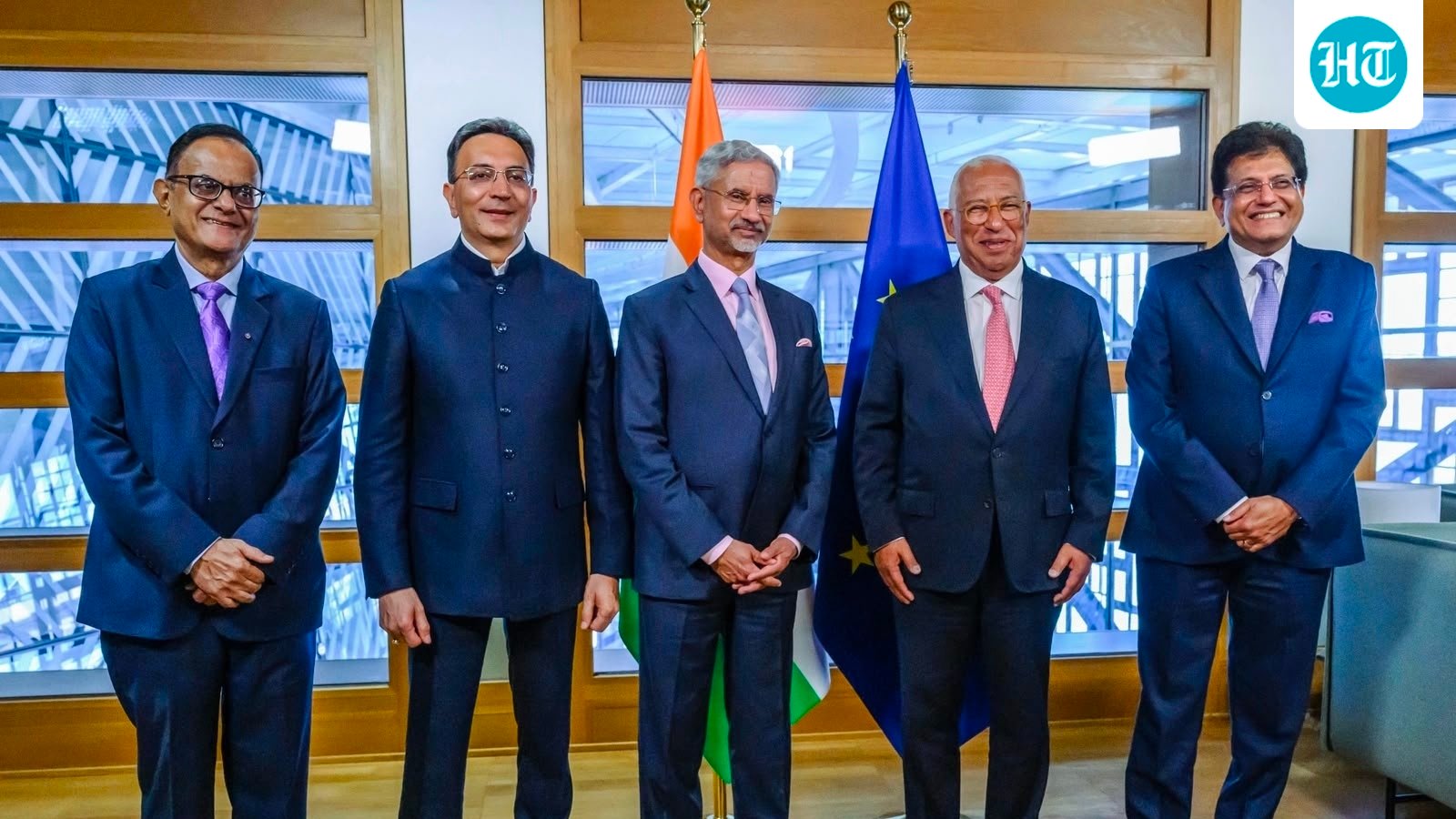
The EU-India agreement, concluded in January after talks spanning nearly two decades, dwarfs the other in scale, with tariff reductions across most goods lines, providing access to a joint market of almost two billion consumers. Around 6,000 European companies already operate in India, with the Netherlands, Germany, France, Spain and Belgium among the largest investors.
Each bilateral is progressing through careful inter-governmental effort: New Zealand’s FTA awaits ratification, the EU’s investment framework is being finalised, and the Australian CECA is moving toward a close. The PM’s own framing was that India must accomplish in five to seven years what took much longer during the earlier decades. While capital is already moving towards that ambition, the task now is to keep the diplomatic and legislative machinery humming at the same pace as the commitments themselves.
Bharat Joshi is executive director, Trac1 and J Curve Ventures. The views expressed are personal


