


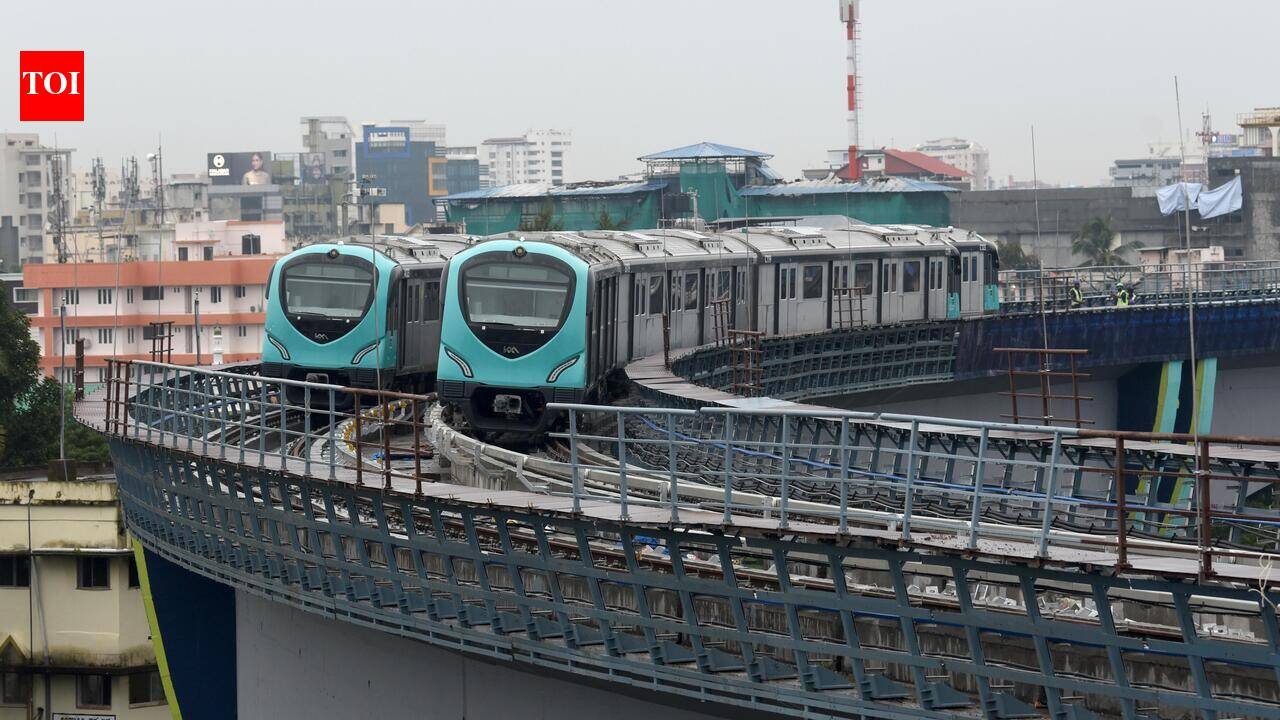
T’puram: The Detailed Project Report (DPR) for the Thiruvananthapuram Metro, submitted by Kochi Metro Rail Ltd (KMRL) to the state govt, envisages a major shift towards integrated urban mobility, with large intermodal facilities proposed at Pappanamcode and Anayara and a dedicated metro rail yard at Kazhakkoottam.The 31-km Phase I corridor from Pappanamcode to Enchakkal, with 27 stations, is estimated to cost around Rs 8,000 crore. The alignment had received the state govt’s in-principle approval in Nov last year. The DPR, prepared with technical inputs from Delhi Metro Rail Corporation (DMRC), will now require the state govt’s approval before being forwarded to the Centre for final clearance.One of the key proposals in the DPR is to develop Pappanamcode, the starting point of the corridor, as an intermodal hub. The facility is planned with substantial parking capacity, allowing commuters from southern parts of the district and neighbouring areas such as Neyyattinkara, Balaramapuram and Parassala to leave their vehicles there and switch to the Metro for onward travel.The concept is aimed at making the southern end of the Metro corridor a major park-and-ride facility and reducing the number of private vehicles entering the city. The DPR’s emphasis on parking at Metro stations is part of a broader effort to improve the overall commuter experience.Anayara to emerge as a major multimodal hubThe most significant mobility integration proposal in the DPR is the multimodal hub at Anayara. The facility is envisaged as a large transport interchange connecting Metro, road, rail, air and potentially water transport.Anayara’s strategic location, close to NH 66, Kochuveli railway station, Thiruvananthapuram International Airport and the Parvathy Puthanar waterway, makes it suitable for such an integrated facility. Earlier reports had identified the proposed hub as a major component of the revised DPR, with the facility planned on govt-owned land earmarked under the city’s master plan.The DPR also keeps open the possibility of future water-based connectivity through the Parvathy Puthanar. This could eventually allow water-metro-type services to be integrated with other modes at Anayara.The city corporation has been asked to facilitate the handover of land for the proposed facility. Since the corporation faces financial constraints, the proposal is for KMRL to develop the hub using its own funds, according to the DPR.20-acre Metro yard at KazhakkoottamAnother major component is the proposed Metro rail yard and maintenance facility at Kazhakkoottam, spread over around 20 acres. The land proposed for the facility is associated with University of Kerala.The yard will serve as the operational and maintenance base for the Metro system and is strategically located close to the Technopark corridor.The 31-km corridor will connect Pappanamcode with key residential, commercial, administrative, educational and employment centres, including Karamana, Thampanoor, Secretariat, Palayam, Medical College, Ulloor, Sreekaryam, Kazhakkoottam, Technopark, Akkulam, Kochuveli, the airport and Enchakkal.Focus on passenger experienceThe DPR also seeks to incorporate lessons from the operation of the Kochi Metro while introducing features aimed at improving passenger convenience.KMRL‘s former managing director Loknath Behera, who had earlier overseen the DPR process, told TOI that the Thiruvananthapuram Metro is being conceived as a significantly improved passenger experience.“Thiruvananthapuram Metro will be a new experience for the people travelling in it,” Behera said.The project is being designed with modern technology and standards, incorporating inputs from DMRC and lessons learnt from the Kochi Metro’s experience.Unlike the existing arrangement at some Kochi Metro stations, the DPR proposes elevators for passengers on both the entry and exit sides of stations, along with escalators and lifts. Adequate parking space is also proposed at Metro stations to facilitate seamless last-mile connectivity.The design also proposes aesthetic treatment for the Metro pillars and other elevated structures, while the alignment has been planned with measures to minimise traffic disruption.The DPR presently envisages a fully elevated corridor, with no underground section included in the current proposal. This remains significant as there have been demands, including from Thiruvananthapuram MP Shashi Tharoor, for underground construction in densely built-up stretches.The DPR has also been aligned with the PM Gati Shakti National Master Plan to ensure better integration with existing and future transport infrastructure.
