



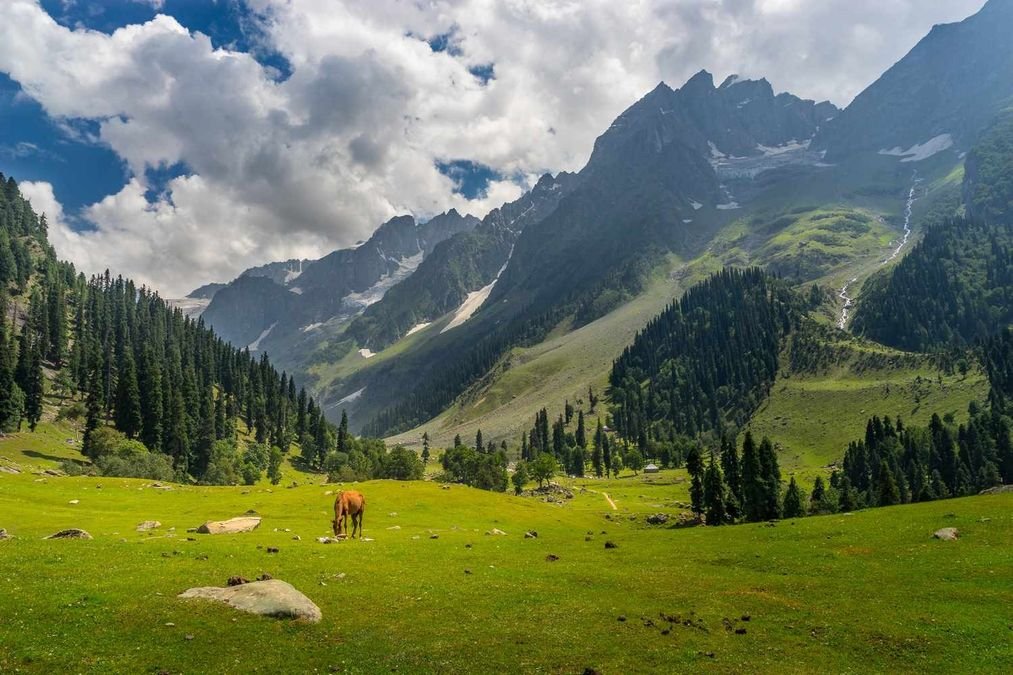
Kashmir, often described as “Paradise on Earth,” is one of the most breathtaking tourist destinations globally. Tourism should have some main qualities, which Kashmir fulfils: beauty and hospitality. Kashmir holds a unique position on the world tourism map due to its unparalleled natural beauty, cultural richness, and hospitality.
World-renowned tourist destinations like Dal Lake, Gulmarg, Pahalgam, and Sonmarg, along with other offbeat tourist destinations such as Teetwal, Karen, Gurez, and Bungus, as well as traditional handicrafts and vibrant festivals, add cultural depth to the visitor experience. This combination of natural allure and cultural heritage has earned Kashmir a reputation as a top-tier tourist destination worldwide.
Every part of Kashmir is a tourist destination due to its uniqueness, but mainly there are some recognised and unrecognised tourist destinations that can be a milestone for youth engagement and can prove to be a source of economy for the state. Yet, many of these places are not well developed and do not follow the due protocols of environmental preservation. There is no doubt that tourism has contributed to the local economy.
Over the last decade, tourism in Kashmir has been in full swing due to the participation of local youth and government initiatives to open up new places. The youth have taken the opportunity to fully promote tourist destinations on social media and have even promoted border tourism more than the mainland tourist destinations. Therefore, youth need to be given full opportunities to be engaged.
Kashmir offers a rich array of tourism types, catering to diverse interests throughout the year. Pilgrimage and religious tourism play a significant role, as Kashmir is home to several sacred sites for Hindus, Muslims, Sikhs, and Buddhists.
The Amarnath Cave pilgrimage, Hazratbal Shrine, Shankaracharya Temple, and various Sikh gurudwaras attract devotees from across the country and abroad. Adventure tourism is also popular, with Kashmir’s snow-capped mountains and verdant valleys providing ideal conditions for trekking, skiing, paragliding, and river rafting.
Additionally, ecotourism thrives in Kashmir due to its pristine environment and biodiversity hotspots, offering opportunities for eco-friendly tourism that promotes conservation and awareness. Cultural tourism is deeply rooted in traditional Kashmiri arts, crafts, music, dance, and cuisine, enriching the visitor experience. The valley’s natural springs and tranquil atmosphere also present great potential for wellness tourism, focusing on yoga and Ayurveda retreats.
Youth engagement in the tourism sector is vital for sustaining and advancing the industry in Kashmir. The youth play a crucial role not only in boosting the economy but also in preserving the cultural and natural heritage of the region. Their innovation, energy, and adaptability bring fresh perspectives to this evolving sector, helping to meet the changing demands of tourists and enhancing the overall experience.
Opportunities for youth engagement in tourism are various. They can be hoteliers and hospitality workers, managing hotels, guesthouses, and homestays—offering tourists an authentic Kashmiri living experience. Youth also serve as knowledgeable and enthusiastic tourist guides, sharing historical, cultural, and ecological insights.
Transport services such as operating taxis, buses, and bike rentals are popular, especially for reaching offbeat and remote destinations. Additionally, young adventure and trekking guides lead expeditions and activities, ensuring safety and satisfaction. Other opportunities include providing camping and tenting services for outdoor enthusiasts and promoting environmental tourism by organising eco-tours and raising awareness about sustainable practices.
To meet the growing demands of the tourism industry, fresh recruitment drives focus on attracting young talent as tourist guides, hospitality staff, and eco-tourism promoters. Training programs and certification courses are increasingly available to enhance skills in languages, hospitality management, first aid, and environmental stewardship.
Enthusiastic youth with a passion for tourism and the environment are encouraged to join these initiatives to create a professional and responsible tourism workforce. Additionally, the Department of Tourism needs to revive and update current employment schemes to better align with the evolving needs of the industry and the aspirations of young people.
Beyond the traditional roles, there are numerous additional opportunities for young entrepreneurs to explore. These include promoting and selling traditional Kashmiri handicrafts such as Pashmina shawls, carpets, and papier-mâché items, which can boost local craftsmanship and the economy.
Digital tourism marketing is another promising avenue, where youth can utilise social media and online platforms to promote Kashmir tourism and develop innovative travel services. Culinary tourism, through cafes or food tours showcasing authentic Kashmiri cuisine, as well as organising cultural performances and festivals, can further enrich the tourism experience while providing employment and creative outlets for youth.
Tourism in Kashmir is a dynamic and growing industry offering vast employment opportunities for the youth. With its rich natural beauty, cultural heritage, and diverse tourism sectors, Kashmir has the potential to become a sustainable tourism hub. Engaging youth as hoteliers, guides, transporters, environmentalists, and entrepreneurs not only empowers them economically but also preserves the region’s unique identity.
To fully realise this potential, the Department of Tourism must actively create and expand opportunities that engage youth across these diverse roles, driving socio-economic growth and fostering a resilient and sustainable tourism ecosystem.
(The author is a columnist and can be reached at: [email protected])
Box: Tourism in Kashmir is a dynamic and growing industry offering vast employment opportunities for the youth. With its rich natural beauty, cultural heritage, and diverse tourism sectors, Kashmir has the potential to become a sustainable tourism hub


