






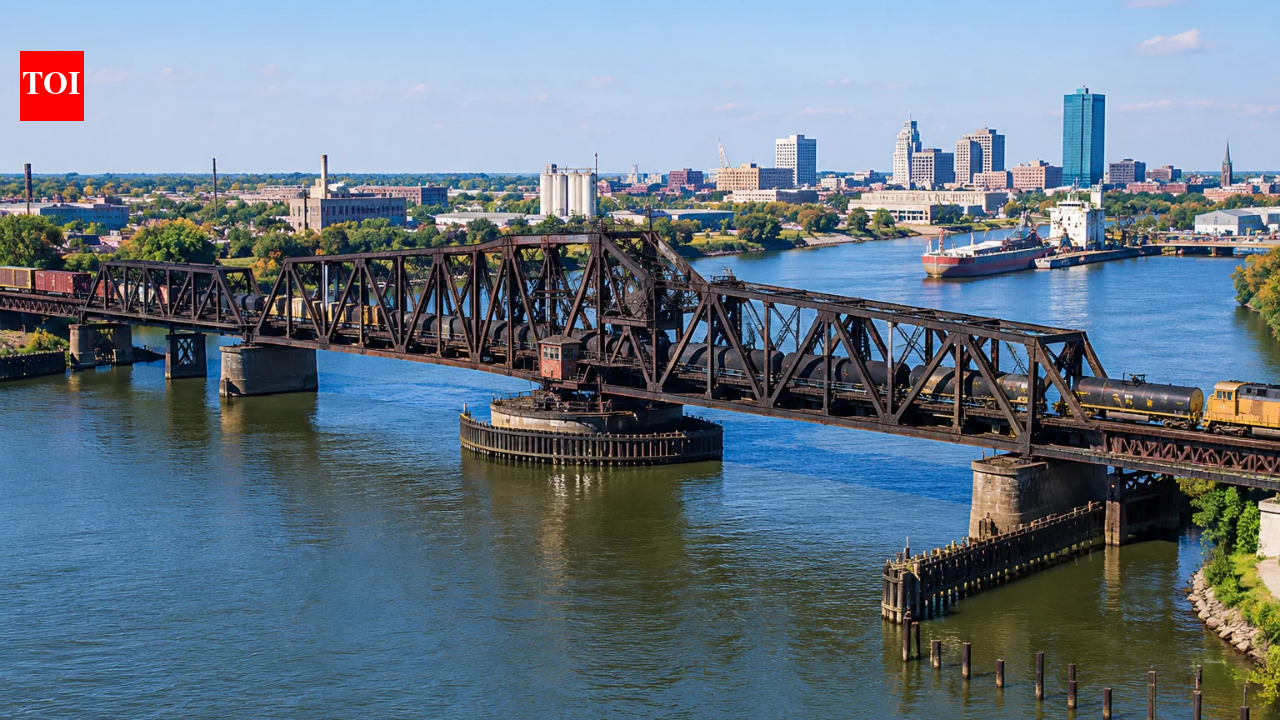
An ageing railroad swing bridge over Ohio’s Maumee River is set for a $65 million overhaul that could expand freight capacity through Toledo, nearly 130 years after the structure was built. The Toledo Swing Bridge, historically known as the Toledo Belt Bridge, was acquired by Wheeling & Lake Erie Railway from Norfolk Southern for just $1 in 2004. According to the US Department of Transportation, the bridge has been awarded approximately $43.55 million in federal funding for modernisation, with the project intended to enable it to accommodate railcars weighing up to 286,000 pounds. The remaining project costs will be covered by the railway and state support, with construction expected to begin in 2029.
A century-old bridge with a strategic role
Built in 1897, the Toledo Swing Bridge crosses the Maumee River near the Toledo-Lucas County Port Authority’s Ironville Dock. Its location makes it an important link between railway operations and the region’s industrial and port facilities. The bridge is owned by Wheeling & Lake Erie Railway, a regional freight operator that uses the structure to transport commodities including lumber, steel, scrap metal, petroleum products and industrial sand. According to The Blade, the railway currently runs approximately six trains a week across the bridge, carrying around 8,000 freight carloads annually.Despite its continued use, the bridge’s existing structural capacity restricts the types of railcars that can cross it. This creates a bottleneck for freight movements, limiting the railway’s ability to accommodate certain modern railcars and potential additional shipments. The planned rehabilitation is intended to address these limitations while preserving the bridge’s role in Toledo’s transport network.
Why the bridge was sold for $1
The bridge’s unusual ownership history dates back to the restructuring of American rail operations following the breakup of Conrail. Norfolk Southern acquired much of Conrail’s railway network in the Toledo area in 1999, including the bridge. However, Wheeling & Lake Erie had already been using the structure as its main route for certain connections. Norfolk Southern eventually proposed transferring ownership to Wheeling, which had become the bridge’s only regular user.A September 2004 report republished by the Brotherhood of Locomotive Engineers and Trainmen said Norfolk Southern proposed selling the century-old structure for $1. The nominal price reflected the circumstances of the transfer, rather than the bridge’s importance as transport infrastructure. The Toledo-Lucas County Port Authority supported the transaction because it wanted the bridge to remain operational. Abandonment could have threatened its future and created complications for navigation on the river. Wheeling’s acquisition ensured that the structure remained available for freight operations. More than two decades later, the proposed overhaul represents a major investment in its long-term use.
What the $65 million overhaul will change
The rehabilitation will focus on the bridge’s fixed spans and its movable section, which swings to allow vessels to pass along the Maumee River. According to The Blade, the project will replace nine fixed spans and reinforce the movable section. The railway plans to strengthen the swing span and replace deteriorated steel components so that the bridge can support railcars weighing up to 286,000 pounds, equivalent to 143 US short tons.The federal government’s project summary also includes the replacement of the bridge’s timber fender systems. The Ohio Rail Development Commission’s May 2026 project documents describe the replacement of ageing truss and timber spans, including a new span and an abutment outside the waterway, as well as strengthening the movable swing span. The project is expected to begin in 2029 and finish in 2030, subject to environmental approvals, final engineering and design.The project is estimated to cost approximately $65 million. Federal funding of approximately $43.55 million will cover about two-thirds of the total, while an Ohio Rail Development Commission grant of $1.5 million will contribute towards the cost. Wheeling & Lake Erie Railway will fund the remaining costs, estimated at approximately $20 million.
How the upgrade could increase freight movement
The principal benefit of the project will be the bridge’s ability to accommodate heavier railcars, including configurations that are currently restricted. This could give Wheeling & Lake Erie greater flexibility in serving industrial customers and moving freight through Toledo. The railway has indicated that additional cargo opportunities could become viable once the bridge’s limitations are addressed. However, the project does not guarantee a specific increase in freight traffic, and future volumes will depend on demand and the railway’s commercial decisions.The investment is also part of a wider federal effort to improve rail infrastructure. On October 19, 2026, the US Department of Transportation announced more than $2.3 billion in funding for 105 rail projects across 45 states and the District of Columbia through its Consolidated Rail Infrastructure and Safety Improvements programme.For Toledo, the bridge project combines the preservation of historic infrastructure with a practical freight upgrade. A structure acquired for $1 in 2004 is now set to receive tens of millions of dollars in improvements, potentially strengthening the city’s connections between railways, industrial facilities and river transport.


