



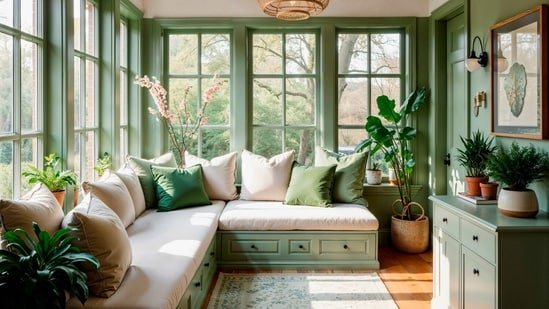
If your home is looking a bit shabby or stark, it may be time to jazz it up with a few easy tweaks. Embracing a greener style in your home can instantly make your interiors feel brighter and more spacious, while also bringing in an invigorating hint of nature that lifts both the look and mood of the space.
ALSO READ: Distracted in your study room? 5 decor tips to boost focus and improve productivity
In a conversation with HT Lifestyle, Kirti Madan, creative design director at Mahima Group, shared with us how to make a green home.
“As 2026 progresses, home design is breaking free from the shackles of its traditional minimalist style in favour of spaces that are more expressive, sustainable, and sensory-friendly,” she remarked. Her observation implies that interior decor styles are changing and becoming more holistic in nature, personality-oriented.
Upon asking what the objective of this style is, she said, “The objective is to build ‘sanctuaries’ that shine brighter, stay greener, and remain more in sync with the natural world.”
What does this mean? It tells us that green interiors are not only about adding plants or switching colours. The focus is now on designing spaces that feel alive, breathable, and emotionally calming and comforting.
A green home, which is inherently calming and bright, also helps tackle common interior styling problems such as shabbiness and clutter. By bringing in natural elements, better light, and intentional decor, your home feels more organised and effortlessly put together.
Here are the top five changes that will ensure homes become brighter, greener, and more spring-friendly
1. Apply immersive biophilia
- Natural materials like wood, stone, clay, and linen are used in their rawest form, with all their imperfections intact, to celebrate their natural essence.
- Include the use of vertical gardens, moss walls, and indoor trees that can pull the outdoors in and provide better air quality and mood-lifting effects.
2. ‘Daylight harvesting’ and sculptural lighting
- Lighting in 2026 is moving away from harsh, direct fixtures toward indirect, layered illumination that mimics natural light.
- Replacing heavy curtains with sheer options, cleaning windows, and installing skylights or ‘sun tunnels’ to flood spaces with light.
- Functional art-like chandeliers and lamps with bold forms that add a warm, inviting glow.
- Mirrors, too, can be positioned in a way that helps to reflect light to dim corners.
3. The ‘sun faded’ colour palette
- Sun-weathered colours look naturally softened, as if gently bleached by sunlight over time.
- They are muted, warm, and slightly dusty, not bright or saturated, helping the room brighten.
- The palette includes creamy whites, soft sands, and clay beiges, earthy colours, including terracotta, olive, yellow, and blue.
- Applying a single, soft hue across walls, ceilings, and trim creates a cohesive, immersive environment.
4. ‘Sustainable by default’ and conscious curation
- Select antique furnishings, reclaimed wood, and recycled metal.
- It reduces the amount of waste in the environment and gives the space a personality, showing an evolution from ‘fast furniture’ to long-lasting furnishings.
5. Gentle clutter and softer geometry
- Spaces feel warmer and homier with rounded shapes and personal items that reflect individual personality.
- Sofas, chairs, tables, etc., with curved shapes replace sharp edges to create smooth transitions in the space.
- Replace winter weights like woollens with linens, cottons, and rugs that add texture without overwhelming the space.
- Instead of over-accessorising with knick-knacks, personal treasures collected over time adorn the space.
In the end, it can be interpreted that a greener home that combats problems like shabbiness is less about following trends and more about creating a space that is yours and yours to feel good in every day. When you make some simple changes, such as swapping a piece of furniture or adding a plant, you transform your home into a space that is more in tune with nature, which in turn calms you.


