






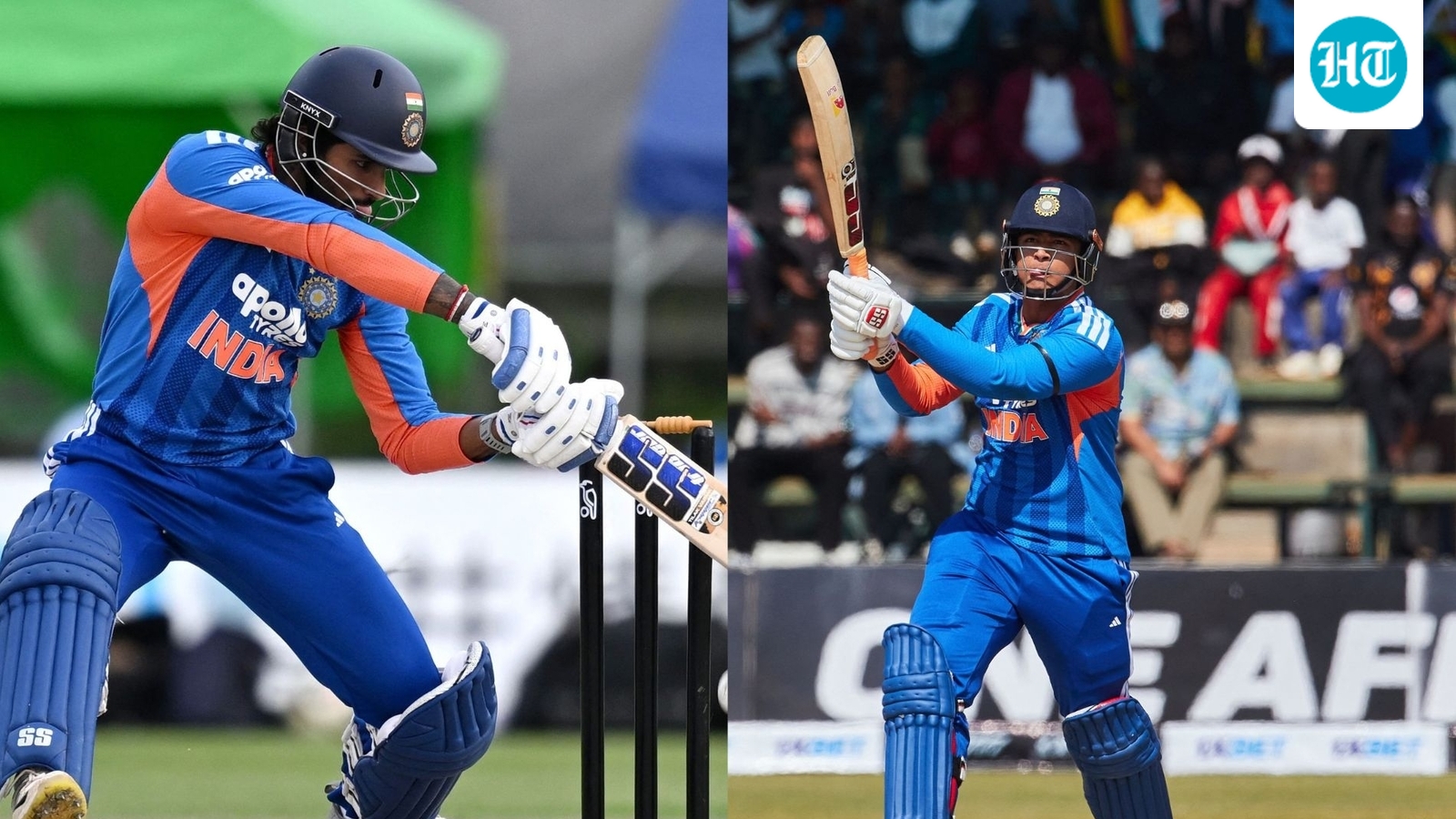
Mohammad Kaif has put a timeline on what he believes is fast becoming an unavoidable selection dilemma for India. In his view, Vaibhav Sooryavanshi will force his way into the first-choice T20I side within six months, and the consequence could be severe for either Tilak Varma or Shivam Dube.
“I understand that Tilak is the vice-captain. But vice-captains have also been dropped before. I do not want to go there. Shivam Dube is not scoring in every game and still has to prove himself. Fielding is also his weakness, and he is not a proper bowling all-rounder. He is only playing as a batter. After six months, either Tilak or Dube will be out. You will have to remove one, and Sooryavanshi will play. I am saying this right now, Kaif said on his YouTube channel.
“Sooryavanshi scored in the Duleep Trophy as well. He has improved his game. He was even bowling there. So he has understood that if he can bowl a few overs, he will have an advantage,” he added. The prediction is deliberately provocative, but beneath its theatrical certainly lies a serious analytical point: Sooryavanshi is beginning to make omission harder to justify.
Sooryavanshi has changed the selection equation
Across his first six T20Is in 2026, Sooryavanshi scored 193 runs at an average of 32.17 and a strike rate of 189.22. More tellingly, he struck a boundary every 3.4 deliveries and cleared the ropes once every 7.2 balls, figures that illustrate not merely aggression but sustained scoring violence. His IPL season made the argument considerably stronger. Sooryavanshi amassed 776 runs at an average of 48.50 while striking at 237.51, including 72 sixes, numbers so extreme that he can no longer be discussed merely as prodigious talent being prepared for the future.
Tilak’s position, however, is far more secure than Kaif’s warning might suggest. He has scored 395 runs in 2026 at 35.91 and a strike rate of 154.90, which is not the statistical profile of a player in obvious decline or one being carried by reputation. The potential tension is philosophical rather than purely numerical. Sooryavanshi represents an extreme-tempo batting model, whereas Tilak Varma offers greater control, adaptability and innings construction, so any future on him would arise from India’s evolving batting philosophy rather than a collapse in production.
Kaif’s criticism of Dube is even harder to reconcile with the evidence. Dube has scored 415 T20I runs this year at an average of 31.92 and at a strike rate of 170.78, while his 235 runs at the T20 World Cup came at 169.06, those are substantial returns for a designated power hitter. There is, however, greater merit to Kaif’s assessment of Dube’s secondary skill. He has bowled only 26 overs across 23 T20Is in 2026, taking 12 wickets but conceding at 12.44 runs an over, which underlines that India use him principally as a batter who can provide occasional overs rather than a genuine bowling all-rounder.
Sooryavanshi’s developing left-arm spin adds another intriguing dimension, particularly after his 2/11 in three overs in the Duleep Trophy. Yet that sample remains far too slight to materially enhance his international case, and for now it should be treated as developmental upside rather than a selection weapon.
Kaif, then, may have identified the problem more accurately than that solution. Sooryavanshi’s numbers are becoming impossible to ignore, but the evidence does not yet justify the certainly that Tilak or Dube must be sacrificed; what India face instead is a broader and far more compelling problem of role, tempo and balance. Sooryavanshi has not simply entered the conversation around India’s best T20 side. He has began to disturb the mathematics on which the conversation was built.


