



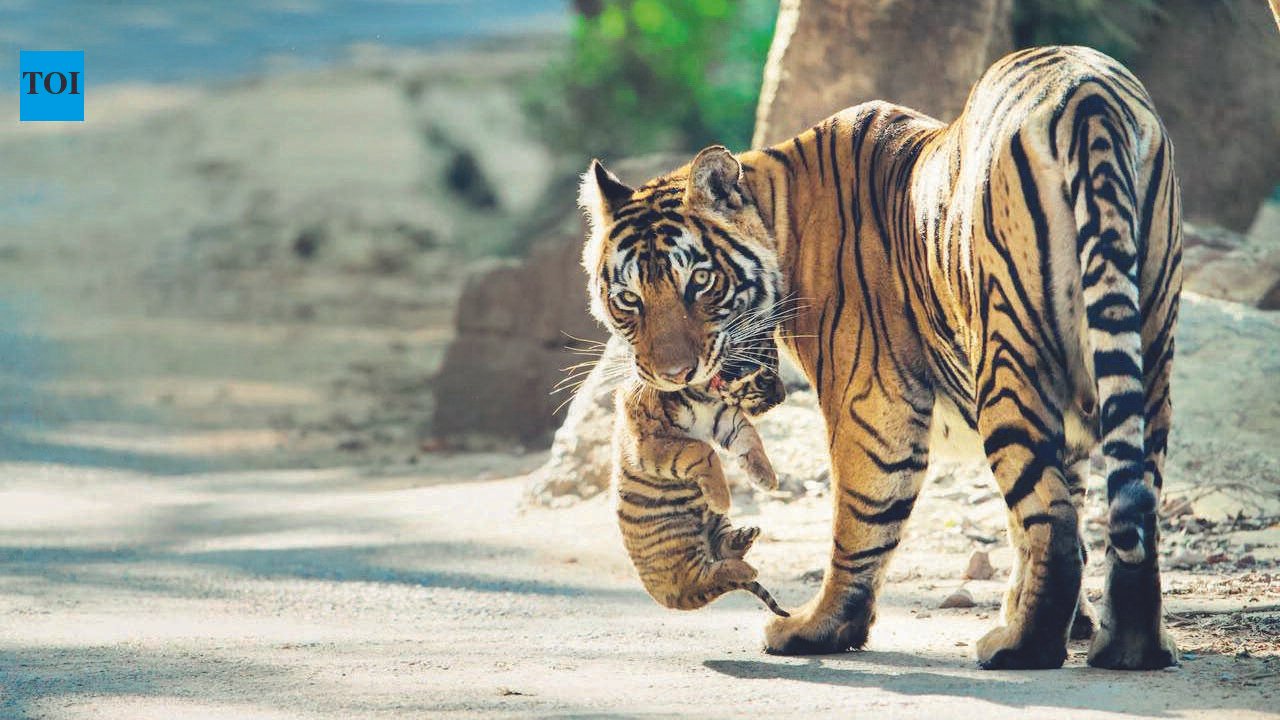
Jaipur: Tigress T-127 has been spotted with two cubs in Zone 7 of the tourism area of Ranthambore Tiger Reserve, raising hopes of another addition to Rajasthan’s largest tiger population.The tigress had been under close monitoring after changes in her physical appearance and behaviour suggested she had given birth. Forest officials tracked her movements using camera traps, field patrols and other scientific monitoring methods.Although T-127 has now been seen with two cubs, officials said the total litter size has not yet been confirmed as not all the cubs have been directly sighted. The official cub count will be announced only after complete verification.Divisional forest officer (DFO) Manas Singh said monitoring and protection measures would continue to ensure the cubs’ safety and uninterrupted development.Wildlife enthusiast Abhishek Chaudhary, who tracks Ranthambore’s tiger population, said T-127 is about six years old and is the offspring of tigress T-8 and tiger T-58. “Last year too, there were reports that T-127 had given birth, but no cubs were recorded,” he said.Officials said successful breeding reflects the reserve’s effective conservation and scientific management.Ranthambore currently supports 72 tigers, tigresses and cubs, including around 50 adults and 22 cubs, the highest tiger population in Rajasthan. The reserve’s tally is expected to increase once T-127’s litter is fully verified.Wildlife experts said the growing tiger population is an indicator of improving forest health, as tigers are apex predators and key markers of a healthy ecosystem. They noted that Ranthambore has emerged as one of India’s most successful tiger reserves for breeding and cub survival, supported by a robust prey base of sambar, chital and other herbivores.Experts, however, cautioned that the reserve is supporting significantly more tigers than its estimated carrying capacity of 40-50 animals. “Dispersing tigers are increasingly moving towards Mukundara Hills Tiger Reserve, Ramgarh Vishdhari Tiger Reserve and forests in neighbouring Madhya Pradesh, underscoring the need to expand habitats, strengthen wildlife corridors and accelerate the development of adjoining landscapes such as Kailadevi Wildlife Sanctuary,” an official said.


