



At least 103 villages in Chhattisgarh’s Bastar division that could not be reached during the 2011 Census because of Maoist insurgency will be counted this year, as government teams return to some of the remotest settlements in the region after gaining access to them for the first time in decades.

Villages such as Ghamandi, Pangud and Jatwar were surveyed earlier this year after government teams began entering the remotest areas in late 2025, according to census department and district officials. Some of these villages still have no motorable roads. Officials have reached them on foot and motorcycles, walking for miles, crossing streams and trekking through forests.
Also read: 45 projects to explore critical minerals in Bastar cleared
Villages missed in 2011 to enter Census records for first time
The exercise marks a significant expansion of the state’s reach into areas that remained outside the Census because of the Maoist insurgency. It will also provide the first official population count for villages that were missed in 2011, when security concerns prevented enumerators from entering them.
The Centre declared India free of Left Wing Extremism (LWE) in March this year, after the number of LWE-affected districts fell to zero. Narayanpur, which contains a large part of the Abujhmad region, is among 38 “Legacy and Thrust” districts that will continue to receive security and development support.
For the villages being counted this year, however, the change is more basic: households that were not reached during the previous population enumeration will now be visited by Census officials and entered into the country’s population count.
Also read: Sai presents Bastar development roadmap, industrial proposals during meeting with PM Modi
Officials trek through remote terrain to reach households
Bastar resident Anubhav Shori, a youth leader and district coordinator of ATREE (Ashoka Trust for Research in Ecology and the Environment), said, “Large parts of indigenous people were left out because of the Maoist insurgency in 2011. The PVTGs (particularly vulnerable tribal groups), especially in Abujhmad, were not in government records. Since 2011 there have been demographic changes in the region. The existing schemes are based on old data. Getting them covered under the Census will help the government plan development schemes.”
Shori also said that many indigenous families also migrated or were displaced, while many fled during the Salwa Judum movement in the mid-2000s when armed villagers attacked locals under the garb of targeting Naxals.
Also read: From red stronghold to retreat: Paparao’s surrender marks turning point in Bastar
Census teams learn Madia to build trust with tribal communities
“Reaching the villages was only part of the task, being understood was the other. In the interior most people speak Madia, so the surveyors were first taught the basics of dialect enough to introduce themselves and hold a simple conversation with the families in their own mother tongue,” said Namrata Jain, district magistrate of Narayanpur.
“The locals should also be comfortable sharing details with the government representatives, many of whom they are meeting for the first time. Our enumerators also visited the houses deep inside for the house listing operation,” she said.
The number of people who were not counted in 2011 cannot yet be established, officials said. Narayanpur district, which contains the largest part of Abujhmad, had a population of 139,820 in the 2011 Census, but the remotest villages were not covered. Government teams began entering these areas after October-November 2025, according to district officials. They have since collected administrative data on the villages and their residents.
Also read: Once off map and under Maoist control: Inside Abujhmad’s journey to government records
Abujhmad households to get their first official population count
A large part of Abujhmad falls under Narayanpur district. For decades, the forested region was one of the principal strongholds of Maoist insurgency, restricting the movement of government officials and security forces.
In May 2025, CPI(Maoist) general secretary Nambala Keshava Rao, also known as Basavaraju, was killed in an encounter with security forces in the Abujhmad forests.
The state government has also begun mapping Abujhmad, a forested area of around 5,000 sq km, with IIT Roorkee. It signed a memorandum of understanding with the institute earlier this year for the mapping exercise.
“Every enumerator is being trained in the local dialect. Classes and training sessions are also being conducted to help our citizens understand the Census and the benefits of them being recorded in government records,” Jain said.
“Many villages within Abujhmad and Orchha block will find their names in the census records for the first time. The people who lived there rarely appeared in government records. Abujhmad, loosely translated as the unknown hills, was an area once marked as unknown on the map, but now every household is finally being known and every person will be counted,” she said.
Also read: From Maoist heartland to bridges of hope: Chhattisgarh’s Abujhmad reconnects with the outside world
Street plays, local-language training used to prepare residents
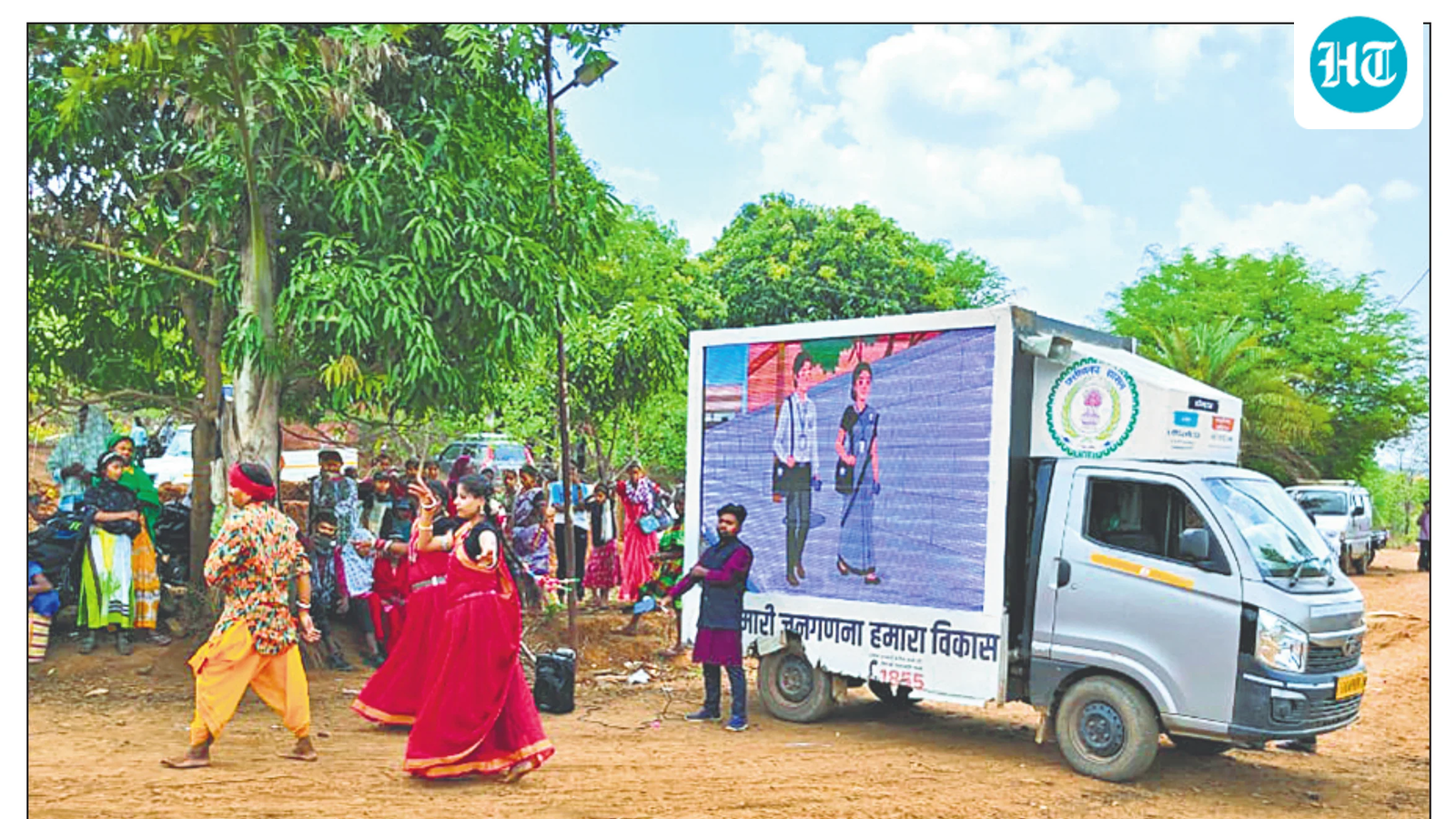
The administration is also using street plays and songs to prepare residents for the exercise.
“Training our enumerators in the local dialect is also helping us convince the tribal population in the remotest villages to send their children to school. Street plays are being held and we are also organising nukkad nataks in the villages to prepare people for the count and explain why it matters. These creative methods carry the message in a way that ordinary notices cannot. Every person will be counted,” Jain said.
The population enumeration phase of Census 2027 will involve 40 questions covering demographic, social, economic, educational and migration-related information, including age, marital status, nationality, disability, mother tongue, religion, caste or tribe, education and employment. For the first time, respondents will also be asked separately for particulars of their mother and father.
Kartikeya Sharma, director of Census Operations and Citizen Registration for Chhattisgarh, said the first phase of Census 2027, the house-listing and housing census, had accounted for the households missed during the 2011 exercise.
“In Bastar, more than 98% of expected households were covered through the mobile app-based data collection exercise,” Sharma said.
Also read: After decades, Red corridor gears up for tryst with freedom
Offline Census app helps teams work in areas without connectivity
The Census 2027 mobile application also has an offline mode, allowing enumerators to enter data without a mobile connection and synchronise it with the central server when connectivity becomes available. Sharma said this was particularly useful in forested and hilly areas such as Bastar, where mobile connectivity is patchy.
“All enumerators in all forested areas of the state, including Abujhmad, are teachers/local government staff from the hyperlocal area. They have been trained to ask questions in the language that the person being questioned is comfortable with,” Sharma said.
He said having enumerators drawn from local communities would help reduce barriers to access and communication and improve the reliability of data collection.


