


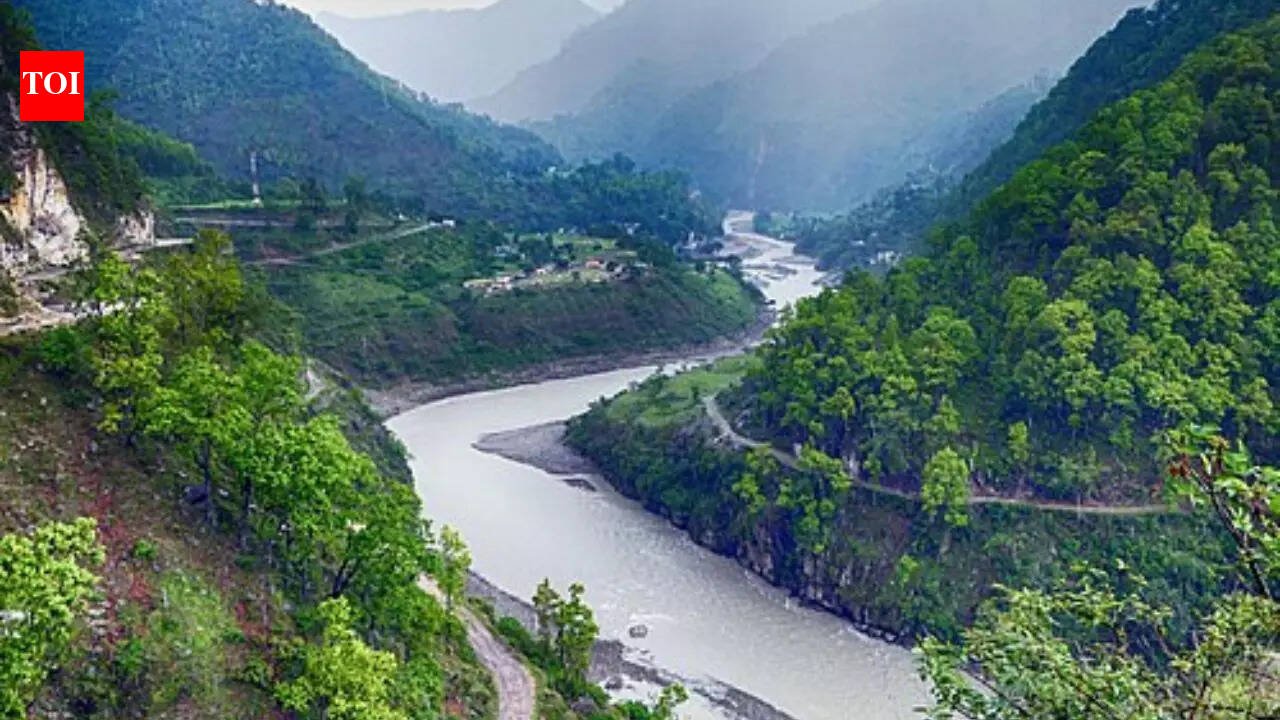
In the high Himalayas, water often carries colour with it. Some rivers run pale with glacier melt, others turn brown with monsoon silt. One river in northern India, rising near the eastern slopes of the Nanda Devi massif in Uttarakhand, has long been known for its darker appearance. Locally, it is called the Kali River, and in its upper reaches, it is sometimes referred to as Kala Pani, meaning black water. The name is linked to its deep, shadowed gorges and the heavy silt it carries through steep mountain valleys. Further downstream, it becomes known as the Sharda or Sarda River. This river, forming part of the boundary between India and Nepal, holds geographical, cultural and irrigation importance across the region.
The mysterious ‘Black River of India‘: Kali River’s dark waters, sacred roots, and Himalayan journey
The river known as the Black River of India is the Kali River, which later takes the name Sharda River. In the higher Himalayan stretches, people use the term ‘Kala Pani’. The dark tone of the water is often explained by the narrow gorges, forested slopes and suspended sediments that give it a shadowed look.The name Kali or Mahakali is also associated with the Hindu goddess Kali. The river, therefore, carries religious meaning as well as a physical identity shaped by landscape.
The Sharda River forms a natural boundary between India and Nepal
Rising in the Great Himalayas, the river flows generally southwest. For much of its upper and middle course, it marks the boundary between Uttarakhand in India and western Nepal. It descends from the mountains and, at Barmdeo Mandi in Nepal, enters the Indo-Gangetic plain.As it widens near the Sarda Barrage, it is more commonly called the Sarda River. It then crosses fully into India and moves southeast through northern Uttar Pradesh. Eventually, it joins the Ghaghara River southwest of Bahraich. The total length is about 480 kilometres.
The river supports pilgrimage routes and local irrigation systems
The origin region of the Kali River lies along the route of the Kailash Mansarovar Yatra, a major Hindu pilgrimage. Near the Lipu Lekh mountain pass stands a temple dedicated to Goddess Kali, from which the area of Kalapani takes its name.The Sarda Barrage near Banbasa in Uttarakhand plays a practical role in the plains. It feeds the Sarda Canal, completed in 1930, one of the longest irrigation canals in northern India. Water from the river supports farming across large parts of Uttar Pradesh. Quietly, it continues south.


