



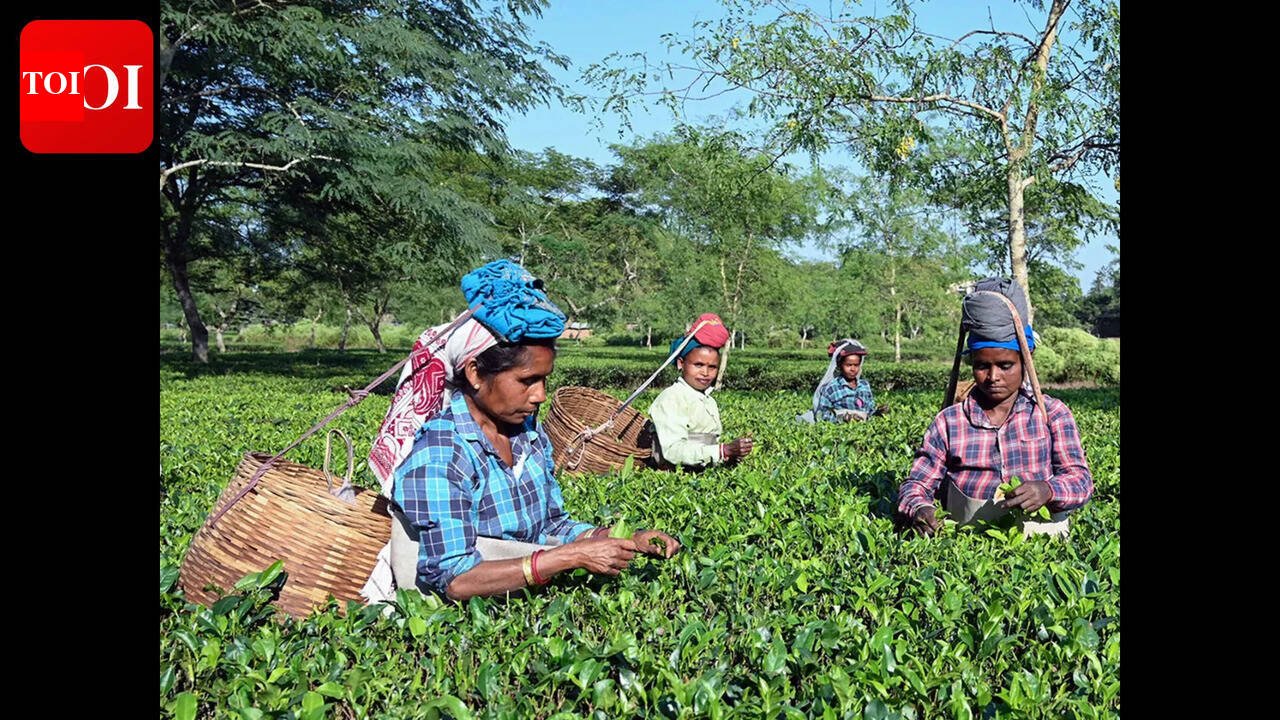
Dibrugarh: In upper Assam’s tea belt, land pattas have emerged as a key election issue among lakhs of tea garden workers belonging to the tea tribe or Adivasis. Families brought by the British nearly 200 years ago have lived for generations on tea estate land without ownership. This year, the BJP-led govt began distributing land pattas to Adivasi tea garden workers.In Dibrugarh’s Dinjoy Tea Estate alone, 260 families have received pattas. The govt described this as historic justice, granting legal rights over land their families had occupied for decades, in some cases for more than a century.CM Himanta Biswa Sarma visited Dinjoy to hand over the documents. For BJP, the move is a major campaign plank, with more pattas expected in subsequent phases covering 3.33 lakh families.The opposition argues that the larger promise remains unfulfilled, especially the demand for a daily wage of Rs 351, which has not been met during 10 years of BJP rule. They have also questioned the legality of granting pattas on land managed by private tea estate owners. Even so, many early beneficiaries appear supportive, with some openly backing another saffron wave in Assam.Kutharti Bhumij, father of Akash Bhumij, a permanent worker at Dinjoy Tea Garden and among the first to receive a patta, said, “There was always a fear that someday the tea garden management might ask us to leave this plot of land. We have not seen our homeland, said to be in undivided Bengal or Bihar. When the CM and PM assured us and handed over the pattas, who can evict us now?” Akash’s father received the patta at a ceremonial event attended by Prime Minister Narendra Modi in Guwahati, and the photograph from the event is widely saved on smartphones in the tea garden.Motilal Nayak, 40, a neighbour of Akash, has five children, most of them still underage. “I feared that if my children did not work in the tea garden after becoming educated, we would lose this plot of land. After retirement, would the management ask me to leave if my children did not work here?” he asked.After a life of hardship in a kutcha house, Motilal sees the patta as security. For families with slightly better incomes, pattas have also raised hopes of building concrete homes and improving living conditions inside the tea estates.Naren Bhumij, 47, a sardar of the tea garden, recalled how management had once blocked workers’ plans to build homes. “I am a fourth-generation tea garden worker of my family. Finally, we have rights in Assam. We got a plot of land we can call ours and build our own home,” he said.Adivasi families from Jharkhand, Purulia in present-day West Bengal, and the Chota Nagpur region were brought to tea gardens in Chabua and other parts of Assam more than a century ago. Today, these communities are largely spread across five upper Assam districts — Tinsukia, Dibrugarh, Golaghat, Jorhat and Charaideo — and remain electorally influential.Assam Chah Mazdoor Sangha (ACMS) sees the land patta issue as potentially decisive. ACMS central committee vice-president Nabin Keot said, “Land pattas for tea garden workers were a prime demand of several organisations, including ACMS. Till now, they depended on company quarters, and when someone stopped working, their families had to vacate. Even qualified children had to take up tea garden work so the family could retain housing. We thank the govt for starting the process, but it is huge and will take time to complete.”Tea garden voters play a determining role in around 35 assembly constituencies, mostly in upper Assam.Congress leader and former MLA Etuwa Munda, chairperson of the Chah Mazdoor Adivasi Congress department, questioned the govt’s claims. “Unless workers get dag and patta numbers reflected in circle office land documents, the govt cannot claim to have given pattas. This move is aimed at votes without completing the process,” he said.While the opposition is likely to raise the issue of delay, wages remain another major concern. Tea garden workers in the Brahmaputra Valley, which includes upper Assam, currently earn Rs 250 per day. The state govt recently announced a Rs 30 hike effective April 1, but this still falls short of the long-standing demand for Rs 351. Last year, the state assembly passed the Assam Fixation of Ceiling on Land Holdings (Amendment) Bill, a major policy step aimed at enabling the issue of pattas for about 2.18 lakh bighas of land.


