






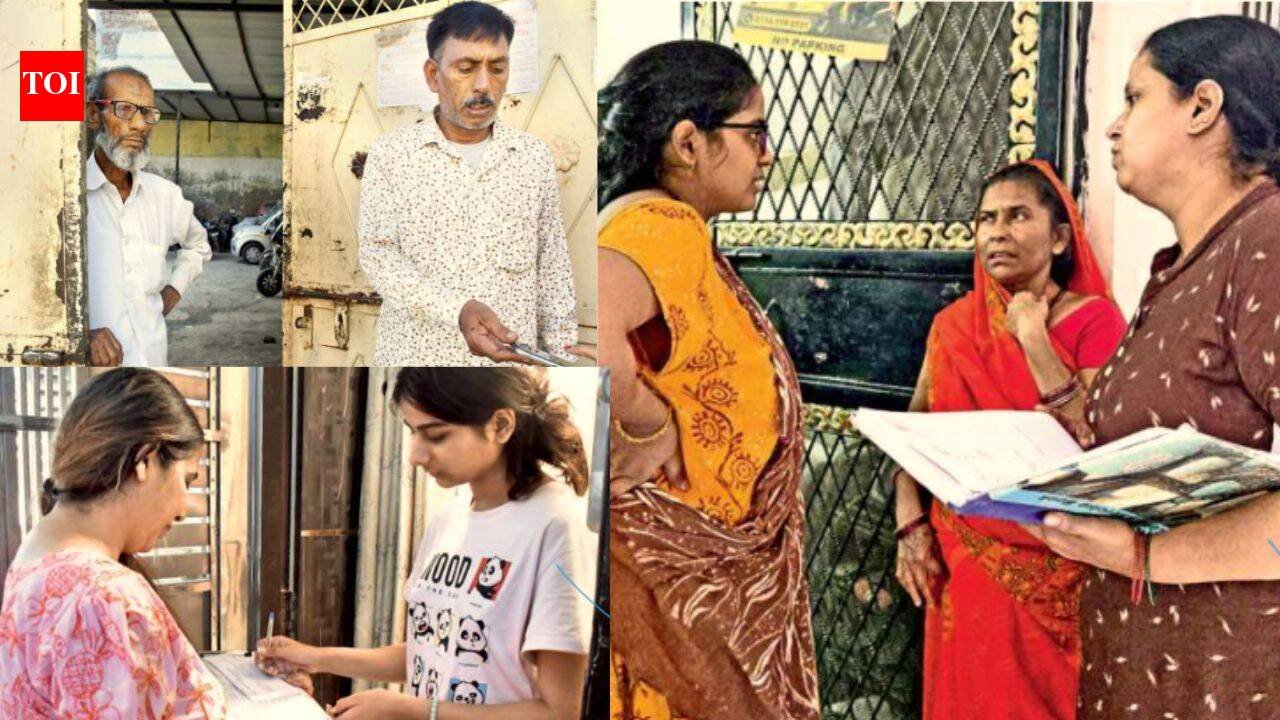
As Delhi grapples with lakhs of deletions from the draft electoral roll, questions about the Special Intensive Revision (SIR) have only got louder.Amid complaints, reservations and promises of 100% door-to-door coverage, TOI visited around 600 houses in Kirari, Govindpuri and Shalimar Bagh – residential pockets that have a high tenant and migrant population – and found that the coverage during the exercise has been patchy.Many BLOs are calling residents to a common point instead of going door to door. Some have contacted those receiving notices for logical discrepancies, but some problems seem beyond their control.For people living in rented accommodations in Delhi, some for several years, SIR has thrown up a problem beyond paperwork: some landlords are reluctant to let them use the rented address for voter registration, leaving residents struggling to establish their connection with the city.BLOs in all three areas said enumeration and verification work was over and corrections and replies to notices were being processed. The ground experience, however, was not uniform. Some residents said BLOs had visited repeatedly and completed the process, others reported no one had visited them.Delhi’s electoral roll listed 1.56 crore people in Jan 2025, days before the assembly elections. Even before SIR started in June, the roll had shrunk to 1.45 crore. The office of the chief electoral officer said it was a “routine exercise”.The draft electoral roll, which came out on Aug 31, lists around 97.5 lakh voters. Out of these, around 33 lakh have been listed to receive notices to correct ‘logical discrepancies’.TOI also found that several people missed BLO visits because they were not in the city and have found themselves out of the draft electoral roll, published on Aug 31. During its visits, TOI spoke to hundreds of residents, as well as BLOs, to understand how the process is working for them, or not, on the ground.Ratna Vihar, KirariA residential colony spread across around 10 lanes. TOI visited 126 houses in one lane and 170 in two others.Naresh, 32, an autorickshaw driver (PIC), said the SIR process for his family had been completed, but he had been asked to submit documents after receiving notices from EC. He said he submitted the same documents as his family members during enumeration, but only he received a notice for being unmapped to the 2002 SIR.He shifted permanently to Delhi from Bihar in 2015 after his parents died. “I got a notice as I did not know how to find my family’s names in the 2002 electoral roll. My wife and brother, however, have been included in the draft roll despite submitting the same documents as me,” he said.Preeti, who runs a shop in the lane, said a large number of residents were tenants who had been living in Delhi for several years, but were facing difficulties establishing their connection with the city through older documents.“Many of them moved to Delhi in 2017 and have been staying here since then. They have documents from their villages and towns in other states, but those are not being accepted here. They do not have any documents, except Aadhaar cards, linking them to,” she said. Her name is also missing from the draft roll.Some tenants said the problem began even before the documentation stage. Arun Singh, 48, said he had been living in the area for around five years, but his name did not figure in the draft rolls. “Nobody visited my building, which has four flats,” he said. He earlier lived in a different lane in the same locality.Residents also said tenants were particularly vulnerable to being left out because they frequently changed accommodation and had fewer documents establishing their current address. Some said the only document they currently had showing their Delhi address was their Aadhaar card.According to the local BLO, the area had around 1,300 voters before SIR and 900 remain on the rolls now. Verification of around 600 voters had been completed, while work relating to about 300 was still under way, the BLO said.The BLO, who lives in Rohtak and travels to Delhi for the exercise, said he had been working on SIR for months. He said he reports to the area every day and waits at the RWA president’s house for residents to approach him. The work, he said, was largely complete, with remaining cases being dealt with thorough corrections and verification.South GovindpuriGali No. 1 had 1,509 registered voters before SIR started. There are 800 now.Here, homes and shops, garages and godowns fight for space. The latter are usually located on the ground and first floors, with houses in higher floors. Almost each lane has a different BLO.A BLO posted in the area said the exercise was nearly complete, with around 20 people yet to be covered. A nearby college was also being used as a camp, where residents facing difficulties could approach officials for assistance.The BLO said several removals from the list were duplicate entries, while others were those who had shifted or died.“We have been living here for years, but because we are tenants, we cannot use the address without the owner’s consent. My landlord did not want me to use this address despite living here for two years. Before this, I was living in a house nearby, but faced the same problem there as well,” said Ashish, who is originally from Jhansi, and couldn’t register as a Delhi voter at all, despite having shifted to the city permanently.“The BLO requires a letter from the owner. Only then can we proceed. Otherwise, the owner may confront the BLO if they fill out our forms without asking for the owner’s consent,” he said.The BLO also confirmed that tenants were facing a problem. She said landlords feared that the frequent movement of tenants could result in official correspondence, banking-related communication or other documents continuing to reach the property after the tenant had moved out. She also said some owners cited concerns about their addresses being misused or being linked to police cases.CC Colony, Shalimar BaghTOI visited 185 houses. The number of voters in the colony has also fallen from around 965 earlier to about 700 now.The area was divided between two BLOs. Officials said the first phase had been completed and the second phase was focused on corrections, notices, hearings and cases where information was missing.While a majority of residents said BLOs had been regularly visiting the colony and meeting people for document verification, some said they had to go meet the BLOs, instead of the BLOs visiting them. Several residents said that on some occasions, they were asked to return the following day.A 77-year-old retired resident, Ram Lal Kataria said he had to make repeated visits to the BLOs for verification. He said that on two occasions, the BLOs asked him to return the next day, saying the work would be done later.“I just want the verification to be completed. Once I was there during the form-filling process, and when I went again, the BLO was busy,” he said.Another woman, Shanti, said she had moved to the area after getting married. She said her parents had died. “I have an Aadhaar card with a Delhi address, nothing else. I couldn’t find my parents’ documents or details. I was visiting some family members when the BLO came and my name is no longer on the rolls,” she said, adding that she later approached officials, but was told she did not have all the required documents.


