



During the men’s final of the JSW Indian Open in Mumbai in March this year, Spencer Lovejoy, a former top-60 player in the world and an incisive commentator, was asked what sets India’s squash star Saurav Ghosal, a former World No. 10, apart.
The 28-year-old American remarked, “Attention to detail! His shots are precise, planned and thoughtful. Each one has a purpose, and Saurav executes it at a very high level.”
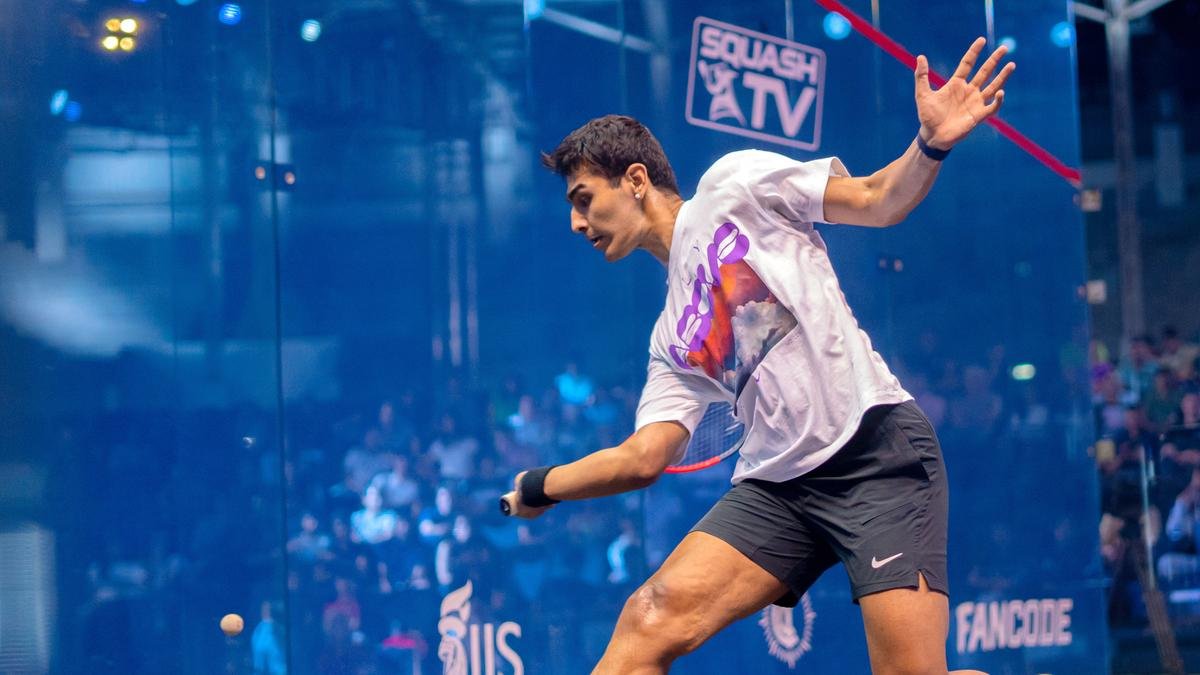
At the CCI Stadium in Brabourne, Abhay Singh channelled the veteran as he himself maintained an exceptionally high level throughout, defeating Veer Chotrani in the final and dropping just one game across the tournament.
This triumph — his first PSA title outside the Challenger circuit and his 12th overall — signals that he is gradually approaching the level of his senior, Saurav, and offers hope that he may carry the baton forward for Indian squash.
In an interview with The Hindu, the 27-year-old, ranked 25th in the world, spoke about his immediate goals, training with former World No.1 James Willstrop and Harinderpal Singh Sandhu, preparing for the Asian Games, and cultivating the mindset required to become India’s numero uno.
Excerpts:
In October 2025, you reached the top-30 in the world for the first time. How do you see the season gone by?
It’s because I’ve been working closely with my coaches James [Willstrop] and Harry [Harinderpal Singh Sandhu]. It’s nice to work with people you can trust a lot. They’re not just my coaches, but also my best friends. I’m excited to see what lies ahead.
What are some of the learnings you will carry forward from last year?
It’s getting closer to the Olympics. The Asian Games are on the horizon. You have to step it up and be more careful with your matches and results.
I think a lot of things didn’t go my way as well. I didn’t really look at last year as a very good year, to be very honest. Personally, there was room for improvement. I lost the Nationals to Velavan Senthilkumar. I lost the Indian Open final in May 2025. From the outside, it might have looked like a good year. But I think there was certainly room for much more.
Fortunately enough, we’ll get another year which will hopefully go my way. That’s what we’ll be looking forward to as a team.
As you go up the rankings, how do you look at the challenge of beating top 20 players in the world?
I’ve beaten top-ranked players. I beat Karim Abdul Gawad (World Champion, current World No.4 and former World No.1) in the 2025 Qatar Classic (Platinum Grade) and Farres Dessouky (WR 19) in the 2026 Windy City Open (Platinum).
It’s not really a hurdle. It’s just more about taking your chances when they arrive. That’s what good players do. There’s a big difference between almost beating a top player and beating a top player. That comes down to mentality and that comes down a lot to the individual that you are.
I think having that mentality has been a huge bonus for me. But that all comes from working with James. I think someone who has been World No. 1 in the sport can teach you a lot of good things.
The Asian Games this year is crucial. How are you gearing up for it?
I’m not really thinking so far ahead. But once the season is done at the British Open (May 30 to June 7), we’ll all sit down together.
Obviously, scheduling needs to be done for the Games. But until then, it’s a very calm, collected sort of scenario. I’m not someone to think very long-term. I like taking it maybe a week at a time.
Of your 12 PSA titles, 11 have come in Challengers. Any plans to shift to a higher level like Gold, Silver and Platinum?
My Challenger days are more or less done. I might play the one odd one here and there. But now it’s about going into the big events and just learning from all these things. It can be deceptive if you win an easy event. Maybe you think you’re playing super well. But then you go to a big event and you get absolutely hammered.
So, balance is good. But I think I’m focused now on just the bigger events. And when you’re playing guys in the top 5 or 10, they really expose your weaknesses.
Any specific areas you’ve identified to work on with coaches James and Harinderpal?
It’s the whole package, to be very honest. I don’t think it’s any specific area. Someone who’s a top 5 in the world maybe better than me at everything, right? It’s collectively taking all qualities and trying to improve them.
It’s like a lot about margins when it comes to scale of fitness.
It’s more about believing in yourself. I think I’m doing that pretty well.
Does the tag of India’s No. 1 come with any pressure?
Yes, it’s a responsibility. Would I rather be number 2 or number 3 and not feel these things? Or be number 1 and feel these things? You know the answer, right?
Obviously. So it’s good. I mean, pressure is prevalent in some ways. Being number 1 is an honour. Something I’ve grown up wanting to be.
How do you see the difference playing a Silver or a Platinum event and a Challenger?
In Challengers, you can have a bad week and still win. In Platinum, if you play badly, in 10 minutes the match will be over.
But at levels like this, bad days will be punished.
Playing in higher events — PSA Copper, Gold and Platinum — is a conscious and strategic decision with the Asian Games coming up?
Yeah, for sure. I can only play 12-15 events a year. So, if I can pick most of them to be big ones, then things will go well. Big events for now; that’s the plan.
In the current season, you have quite a few second round (round-of-16) exits. What are the lessons?
It’s all been positive, to be honest. This season has been good. Some of the results and the squash has been satisfactory.
There are still five to six events to go for the season to end. Hopefully, I stay as consistent as I was. And my ranking will go only upwards.
How is your mental approach when you take on higher-ranked players?
It’s always been the same. Higher or lower, I am very relaxed.
How does a typical training block look like for you in a packed PSA calendar?
Summers and winters are heavy and intense. I just had a three-week training block in Pontefract, England (before the JSW Indian Open from March 18 to 22), which was good. Hopefully, all that works and translates into some good results.
Now, India has three players in the world’s top 50 and Velavan Senthilkumar just is out of the top 50 (52).
It is a good time for Indian squash. Full credit to the boys.
What do you make of the pool of youngsters coming into Indian squash now?
Chotrani is doing well. Nineteen-year-old Ayaan Vaziralli, too shown a lot of promise. I think women’s squash is in safe hands. We don’t have to worry about it. But of course, depth is an issue in the women’s game. That will manage itself over the next few years.
Maybe some young ones will follow Anahat Singh’s footsteps. Obviously, I’m not writing myself off! I think I’m quite young as well.
Coming back to the Asian Games where the singles winner will automatically get a spot in the 2028 Olympics. Does that play in your mind?
It’s still like five months away. We have a long way to go. We are one of the best sides as far as team events go, being the defending champions.
What are your targets for the rest of the 2025-26 season?
Breaking into the world’s top 20 will be good. I’ll have to manage a few good upsets at the events coming up. That should be the main plan.
The World championships individuals will be held from May 8 to 16 at Giza, Egypt. Anything specifically planned?
In my first Worlds (2023), I lost in the first round. In the second Worlds (2025), I lost in the second. Hopefully, it gets better this time!
Is the 2028 Los Angeles Olympics on your mind?
It’s too far away. Two and a half years is a long time.


