



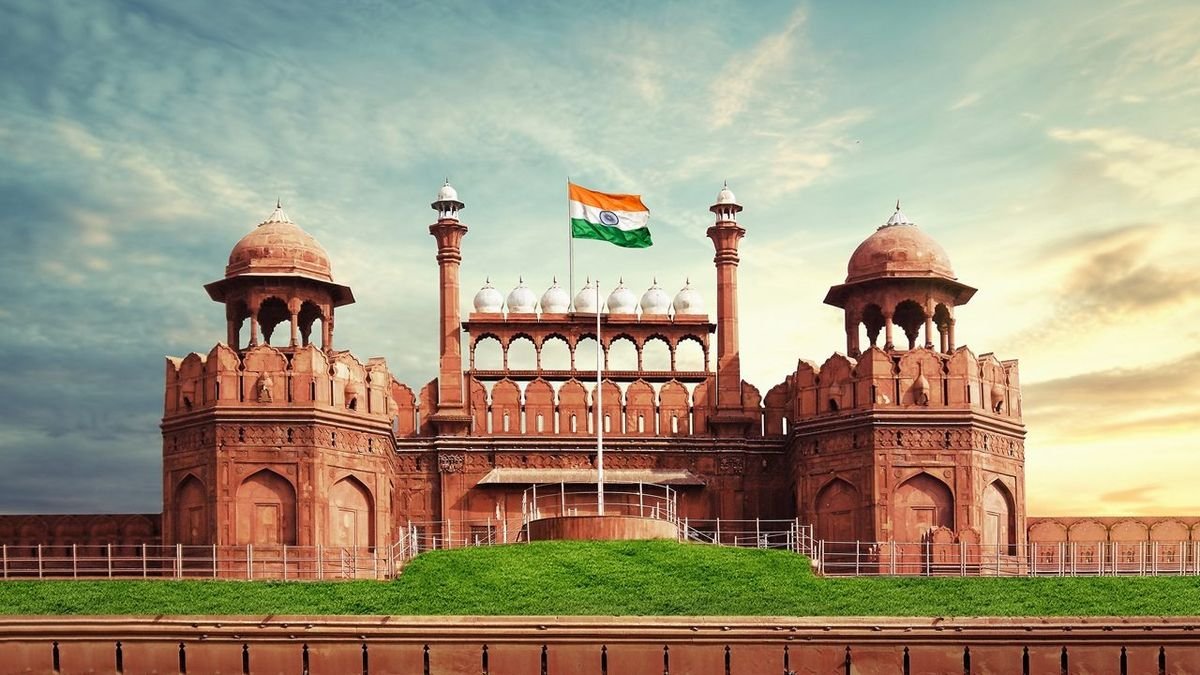
On 15 August 2026, India will raise its flag for the eightieth time. Seventy-nine years since the British left. Seventy-nine years since freedom arrived carrying both a promise and a question: What would we do with it? Every Independence Day, we remember the struggle, the marches, the prisons, the salt, the sacrifice, the long and wounded birth of a nation. But perhaps Independence Day is also a time to remember another inheritance, the ideas, inventions, practices and traditions that India has sent out into the world. Not as a boast, not as a claim staked on history, but as a quiet reckoning with the ways in which knowledge travels, leaving one civilization, entering another, and finally becoming so ordinary that nobody remembers where it began.
One of India’s most influential contributions came from mathematics. Its story was not the work of one mathematician alone. In the fifth century, Aryabhata developed a place-value system that depended on the idea of an empty position, creating what we might call a silent zero. Although he did not use a separate written symbol for zero, his system required a placeholder to distinguish numerical values according to their position.
More than a century later, Brahmagupta gave that silence a mathematical identity. In the seventh century, he described zero, or Shunya, as a number in its own right and established rules for calculating with it. Together with the decimal and place-value systems, their work transformed calculation and gave the world a numerical language in which stars could be measured, economies could be built and machines could think. The mobile phone in your hand, the satellite circling above you and the spreadsheet waiting for its next figure all carry, somewhere inside their intricate machinery, the inheritance of that ancient Indian insight.
But India’s mathematical imagination did not end with zero. Indian scholars made significant advances in algebra, geometry, astronomy, trigonometry and the calculation of pi. Aryabhata wrote about the rotation of the Earth and developed methods for calculating astronomical positions. The Sulba Sutras contained early geometrical knowledge, while later mathematicians such as Bhaskara II explored ideas that anticipated aspects of algebra and calculus.
These achievements remind us that mathematics is not merely a collection of formulas. It is a way of asking the universe to reveal its pattern. Chess travelled in a different way. It began, historians broadly believe, in the form of Chaturanga, a game of war and strategy played in India during the Gupta period. Its pieces represented the forces of an army: infantry, cavalry, elephants and chariots.
Over centuries, the game moved through Persia and the Arab world before reaching Europe, changing shape as it travelled. Today, a chessboard can be found in a schoolroom in Srinagar, a café in Paris, a park in Moscow or a championship hall in Chennai. India’s gift was not only the game. It was the idea that conflict could be studied, contained and transformed into thought.
India’s contributions to language were equally profound. Panini’s Ashtadhyayi, composed more than two thousand years ago, presented Sanskrit grammar through an extraordinarily precise system of rules. Its structure has drawn the attention of modern linguists and computer scientists because of its formal, almost algorithmic quality. It showed that language could be observed not only as poetry and expression, but also as a system with patterns, structures and transformations.
In India, language was not simply a tool for communication. It was a universe to be examined. The country’s reputation as a centre of learning is older than its modern universities. Takshashila and Nalanda were places where students and scholars gathered from different regions to study medicine, astronomy, philosophy, grammar and logic. Nalanda, in present-day Bihar, drew scholars from China and Central Asia. It belonged to an age when knowledge did not always arrive divided into departments, syllabi and examination halls. It moved more freely, like water finding its level.
India’s medical traditions also travelled through time and across borders. Ayurveda developed a holistic approach to health, placing attention on diet, herbs, daily routines and the relationship between body and mind. The Charaka Samhita explored internal medicine, while the surgical writings attributed to Sushruta described procedures and instruments that reveal the sophistication of early Indian surgery. These traditions have immense historical significance. Their modern use, however, must be approached responsibly.
Ancient systems may inform contemporary wellness, but they cannot replace evidence-based clinical care. India also made remarkable advances in metallurgy. The Iron Pillar of Delhi, known for its resistance to corrosion, remains a striking example of ancient Indian metalworking. Indian wootz steel, produced through a sophisticated crucible process, became renowned for its quality and influenced the development of famous Damascus blades. Behind these achievements lay an understanding of heat, carbon, minerals and materials that was practical, experimental and highly refined.
Few Indian traditions have travelled as visibly as yoga. Once practised by relatively small circles of seekers, yoga now appears in schools, studios, hospitals, gyms and living rooms across the world. It has been stretched, commercialised, branded and sometimes separated from its philosophical roots. Yet beneath the mats, the postures and the breath-counting remains an old proposition: that the body is not merely a machine carrying the mind, but a doorway into it.
The United Nations recognised 21 June as the International Day of Yoga in 2014, and UNESCO placed yoga on its Representative List of the Intangible Cultural Heritage of Humanity in 2016. Long before institutions gave it official recognition, people had already discovered what the practice could offer: a pause in a world that profits from permanent motion.
India’s philosophical gifts have travelled even further. Buddhism carried ideas of compassion, mindfulness and freedom from suffering across Asia and eventually into the wider world. Jainism placed non-violence and respect for all living beings at the centre of spiritual life. Sikhism brought together equality, courage, devotion and service. And then there was ahimsa, non-violence, not as weakness and not as surrender, but as a force capable of unsettling an empire. Mahatma Gandhi transformed it into a method of mass resistance.
Martin Luther King Jr. studied and adapted its principles during the American civil rights movement. Others, in different countries and different struggles, found in it a way to confront power without becoming its mirror. India’s gifts have not travelled only through books and laboratories. They have travelled in song, spice, fabric, rhythm and story. Indian cotton and textiles were traded across the ancient world. Hindustani and Carnatic music carry centuries of listening. Bharatanatyam and Kathak turn the body into language. Indian food crosses borders in tiffin boxes, restaurants, kitchens and family recipes altered by migration.
Indian cinema, made in many languages and many emotional registers, has created its own geography of longing. Its songs travel farther than its plots. Its faces become familiar in places where the languages are not. The world may not understand every word, but it recognises the gesture: the mother waiting, the lover returning, the family breaking and remaking itself. These are not small things.
A culture survives not only in monuments, but in what people hum while washing dishes, in what they cook when they are homesick and in the stories they tell their children before sleep. Modern India has continued to send its ideas outward. The Indian Space Research Organisation has shown that ambitious scientific work need not always be accompanied by extravagant spending. The Mars Orbiter Mission, launched in 2013, entered Mars orbit on 24 September 2014 on its first attempt. ISRO describes it as India’s first interplanetary mission and notes that its success demonstrated the country’s ability to carry out a complex mission in a cost-effective manner.
But science is not a miracle performed by a nation. It is the result of people: scientists, technicians, teachers, programmers, machinists, students and workers whose names rarely appear in celebration speeches. The same is true of the Universal Serial Bus, now so familiar that its name has almost disappeared into everyday language. Indian-American computer architect Ajay V. Bhatt led the team at Intel that developed the technology. The device that connects our phones, cameras, hard drives and laptops is another reminder that innovation often arrives quietly, then becomes indispensable.
India’s scientific contribution also includes the work of Jagadish Chandra Bose in radio and plant science, the development of fibre-optic communication by Narinder Singh Kapany and the achievements of Indian doctors, engineers, researchers and entrepreneurs working across the world. The story of India’s gifts is therefore not a straight line from an ancient past to a glorious present. It is a river with many streams. Some flow from Sanskrit texts and temple schools. Some come from laboratories, universities and space centres. Some emerge from workshops, kitchens, farms, weaving communities and ordinary homes.
There is a danger, however, in making a catalogue of India’s achievements. A country can become so enchanted by its ancient glory that it forgets the living people standing in its shadow. What does it mean to praise Nalanda while schools crumble? To celebrate Ayurveda while public hospitals struggle? To speak of the wisdom of non-violence while hatred is made profitable? To celebrate the sophistication of Indian mathematics while children are denied the education needed to understand it?
To claim the generosity of Indian civilization while dissenters are silenced, minorities are frightened and the poor are asked to be grateful for survival? The question is not whether India has given the world great things. It has. The more difficult question is whether India is still willing to give the world what its oldest traditions demanded of it: curiosity without arrogance, knowledge without ownership, strength without cruelty, faith without hatred and progress without the destruction of the vulnerable.
Zero teaches us that absence can contain possibility. Astronomy teaches us to look beyond the limits of the earth. Chess teaches us that every move alters the board. Yoga teaches us to breathe before we act. Language teaches us that every word carries a history. Metallurgy teaches us that patient knowledge can outlast its makers.
Music teaches us that memory can be carried in sound. Ahimsa teaches us that power need not resemble violence. Perhaps these are not merely India’s gifts to the world. Perhaps they are instructions sent back to India from its own past. So, when the flag rises on 15 August, let it not be only a symbol of what India once overcame, or a banner beneath which we recite what India once achieved.
Let it be a question moving through the country, from the ramparts of the Red Fort in Delhi to the paddy fields of Punjab, the apple orchards of Kashmir and the fishing villages of Kerala; from the farmers who read the sky, to the weavers who preserve memory in thread, to the students building robots in Atal Tinkering Labs, to the scientists sending India’s imagination beyond the earth: What will we do with what we have inherited?
Because a nation is not made great by the treasures it locks inside its history. It is made great by what it protects in the present, by what it imagines for the future, and by whether, after giving the world zero, India can still find a way to make sure that no one, no child, no community, no language and no memory is treated as if they count for nothing.
(The author is a columnist)


