






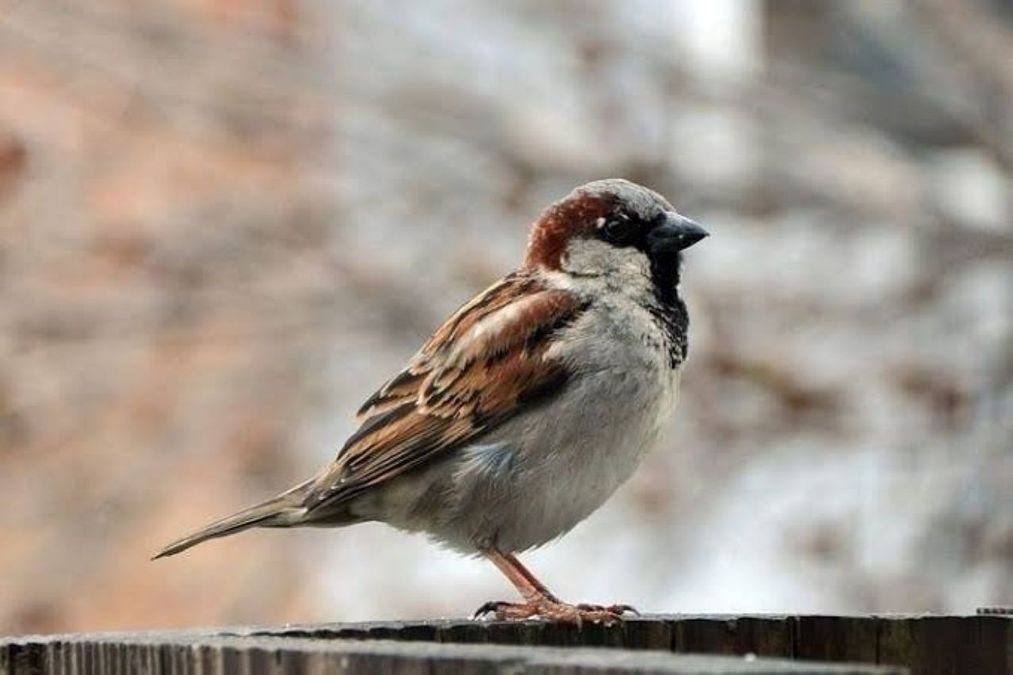
Once a familiar presence in every courtyard, walls, roof and garden, the house sparrow (Passer domesticus) is now drawing attention as its numbers decline throughout the world. Kashmir Valley too is witnessing a drastic decline in its population and is restricted to a few suitable areas only. It was once an extraordinarily adaptable bird, capable of living alongside humans in both rural and urban settings.
Traditional houses inadvertently provided it with everything it needed for nesting and breeding: small openings in walls, gaps beneath roofs, structural crevices and other spaces where it could build its loosely constructed nests of dried grass, leaves, feathers, pieces of paper, string and other materials available nearby. Besides, the densely branched trees and shrubs in the vicinity of human settlements also provided them with suitable nesting sites. Alas! All these nesting and breeding sites vanished, so did the house sparrows.
Gardens, open spaces and traditional agricultural practices also provided a steady supply of insects, seeds and other food. Much of this has also changed due to shifts in agriculture and lifestyle practices. This also contributes to the declining populations of house sparrows. This is a concern for us, not merely because they are beautiful birds, but because their disappearance tells us something about the changing condition of our environment.
There was a time when the chirping of sparrows was an inseparable part of our mornings. Their association throughout the day was nature’s call, harmonising the daily chorus. Today, however, the familiar house sparrow has become increasingly difficult to find in many urban, semi-urban, and rural areas due to the reasons highlighted above. The question, therefore, is not simply where the sparrows have gone or why they have vanished. The more important question is what kind of environment we are creating at the cost of modernisation and lifestyle.
Remembering the sparrows that nested around the walls of our old house, making use of the leftover holes in the brickwork, and underneath spaces in the wooden rafters is no less than a nostalgia for me. Those times were beautiful although simple. The grass and other material hanging loosely outside their nests would convey the story of a harmonious life they lived, and the supportive environment we provided. Alas! Gone are the times, gone are the sparrows and gone are the stories of chaer and kontur.
During childhood in the late eighties, in winters we used to place basket traps with rice bait fixed just for fun to catch sparrows and later release them, much to our joy and satisfaction. Sometimes, we may even use stairs to climb the house walls and look for the sparrow eggs in the nest, out of curiosity to know how many young sparrows are expected soon in our courtyards. The house sparrow may be small, but its story is a reminder that nature does not exist only in forests and mountains. It existed harmoniously around us, thanks to the presence of male and female sparrows, alongside the other urban birds.
During childhood, drying paddy was a closely monitored household activity because sparrows and other grain-eating birds frequently fed on the exposed grains kept for sun drying. We would commonly place scarecrows or other frightening objects resembling humans or predators around the drying paddy on tarpaulin or traditional grass mats to deter the birds from eating the paddy. This was a routine practice, repeated across households and embedded in the seasonal cycle of paddy processing.
Today, the need for such vigilance has diminished considerably, coinciding with a marked decline in sparrow abundance and, in some places, their apparent absence. It is a vernacular indicator of ecological change, a sign of the altered relationship between households, agriculture, and bird populations.
House sparrows are a surprisingly resilient survivor, as the research suggests. However, their decline has raised important questions about their generalist habit, resilience and the changing relationship between people, cities and nature. Modern concrete buildings, plastered walls, tiled roofs and sealed structures leave nothing for sparrows to nest. Wall cavities and roof gaps have disappeared behind plaster, concrete and tiles. Household paths and open spaces have been concretised, while lawns are increasingly maintained with pesticides and other chemicals.
The result is a double crisis for the sparrow: a shortage of nesting sites on one hand and a shortage of food on the other. Their niches are gone. Their home range has not only shrunk but vanished. They have lost the breeding spaces. Sparrows do not make long journeys; instead, they remain within a relatively small area around their feeding and roosting sites.
This makes the places where they live especially important to their survival. Where suitable cavities remain in concrete constructions, sparrows may have to compete with other cavity-nesting or urban birds. For example, competition from common mynas and pigeons may be one of the additional factors associated with sparrow decline.
The optimum life span of a sparrow is 2-5 years, with 3 being the average. Young nestlings are initially fed protein-rich insects by the parent sparrow for their rapid growth. As they mature and leave the nest, their diet becomes increasingly varied and often includes grains and other plant-based foods. The species’ ability to adjust its digestive processes may contribute to this dietary flexibility. But this dietary flexibility comes with risks and may actually have invited trouble for them.
Food that is spoiled or contaminated, as well as exposure to unfamiliar chemical pollutants or toxins due to severe ecological chemical contamination, can pose serious threats to birds living in heavily modified environments. That may explain one of the other reasons behind their decline, because substantial population declines have been reported across their home range since the 1970s throughout the world.
Therefore, rapid urbanisation, lifestyle changes, changes in construction practices, changes in agricultural practices, loss of vegetation, reduced availability and chemical-contaminated insects and seeds, and changes in the design of modern buildings all contribute to the problem for the vanishing sparrow.
As villages become towns and traditional kachha structures are replaced by modern concrete buildings, grass lawns and mud paths are replaced with concrete layovers, familiar feeding and nesting spaces disappear, and problems for house sparrows increase. Although scattered populations of house sparrows are visible in some areas, that does not rule out their continued threat.
The sparrow has not simply disappeared; the habitat that once allowed it to live alongside us has disappeared. Sparrows are vanishing; that is a threat to us, a threat to our existence.
(The author is Associate Professor of Zoology, Islamia College of Science and Commerce, Autonomous, Srinagar)


